Deep-Set Eyes · Wispy · Hybrid
The wispy lash map for deep-set eyes, built in Hybrid — zone order, where the length peaks, and the point this one usually goes wrong.
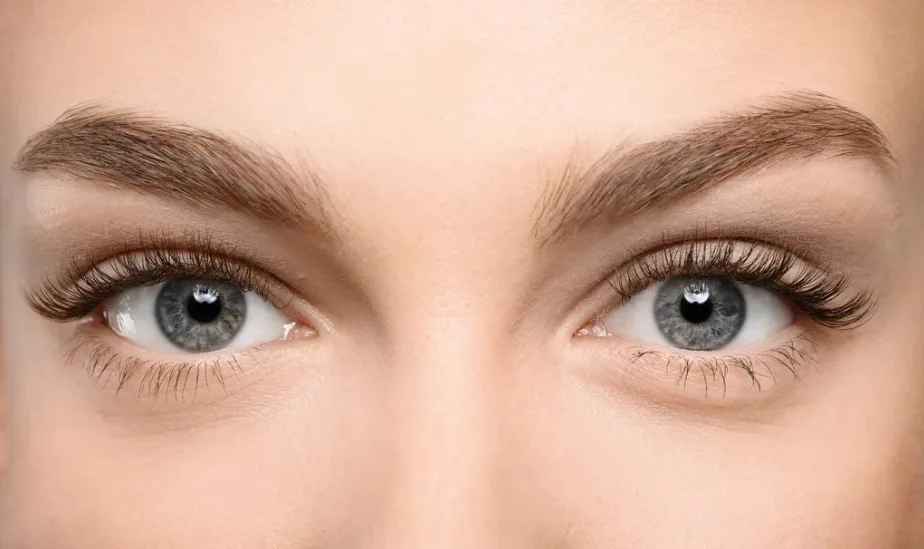
- ShapeDeep-set — the lash line lives under bone, so it starts out darker than the lid around it.
- EffectWispy, mixed: spikes and fans in groups, with real low points between them.
- Where everyone strugglesThe dips do the work. A spike only reads if the lashes beside it are clearly shorter.
Why Why it is laid out this way
Most wispy work is described by its spikes, but on a recessed eye the low points are what make it visible. Light reaches the lash line through the gaps, and a set with shallow dips has no gaps to let it in — the texture merges into one dark edge. Build the valleys first and the spikes take care of themselves.
The order the zones go on, and where the fans land
- Draw the soft curve underneathA low wide peak across the middle, a very short inner end, a gentler taper outward. Everything sits on this.
- Work in small groupsOne spike with fans stepping down either side of it, then a clear low point before the next group starts.
- Take the low points properly lowThe lashes between groups sit well under their zone's mapped length, not a fraction under it.
- Keep the spikes short of the limitA spike is only a little longer than its zone. Long enough to stand out, short enough to stay out of the bone's shade.
- Weight the groups toward the middleMost groups sit across the two peak zones. One at most near either end, none in the corner zones.
- Vary the group sizeThree lashes, then five, then four. Equal groups turn the whole thing into a repeat.
The length curve on deep-set eyes
The curve under the texture is the same modest hill a natural set would use, because the texture is what carries the interest and the base only has to hold it up. On this shape the rise and fall between groups is doing something particular: each dip is a route for light to reach a lash line that would otherwise sit in continuous shade. That is why the depth of the low points matters more than the height of the spikes.
Where does a wispy map go wrong on deep-set eyes?
Deep The physics underneath
Spikes are heavy for their size and they sit on ordinary lashes. Below is how each technique handles that.
The same map, built four ways
- Classic 1:1
- Singles make the low points cleanly, which on this map is the more important half of the job. They cannot make a spike as crisp as a closed fan, so the highs come out softer.
- Handmade volume
- Fans build the shoulders of each group — the lashes stepping down either side of a spike — at a weight the base can absorb. Being able to close a fan tight is also how you make the spike itself.
- Promade / pre-made fans
- Fast for the shoulders, and consistent in a way that is faintly against the spirit of the map. Their bases are also the wrong footprint for the very short lashes at the low points.
- Woven / clover
- It spans several lashes at once, so it bridges exactly the dips this build depends on. Using it here fills in the low points you spent the appointment creating.
Spread angle versus weight
The shoulders of each group are where fan spread earns its keep, and the peak zones are where it costs the most — those fans are longest and any width there turns into twist within days. Spikes are the opposite problem: a spike is a fan closed almost flat, so all its mass sits on the lash's own line and behaves like one thick strand. Wider on the shoulders, tightest at the top of each group.
What a deep-set lash line can carry
- Deflection is what ends this set, not shedding. A spike that leans a few degrees drops below the line it was standing above, and on a deep-set eye it lands in shade instead of in view.
- Every spike is a long single object on one anchor, so it pays the full length penalty with none of a fan's weight discount. Budget them individually rather than counting them as texture.
- Groups fail as groups. If one shoulder fan is on a weak lash it sags into the low point beside it, and the shape of that whole group is gone even though nothing has fallen off.
Where this map fails first
The low points disappear before the spikes do. As the base lashes grow out and rotate, the dips fill visually and the line closes into a continuous edge, which on this shape is the same as it going dark. The spikes are still there and the client still says the set looks flat, because without the valleys they have nothing to stand above. Refilling the low points rather than adding more spikes is what restores it.
FAQ Common questions
Why do the low points matter more than the spikes?
Because they are how light reaches a lash line that sits in shade. A spike is only visible against something clearly shorter, and on a deep-set eye a shallow dip reads as no dip at all.
How long should a spike be here?
Only a little longer than its zone. There is a bone directly above the lash line, and a spike that reaches for real drama arrives in shadow rather than in view.
Where should the groups sit?
Mostly across the two middle zones, with at most one toward each end and none in the corner zones. The middle is the part of the lid facing forward, so it is where texture pays.
Why does my wispy set look heavy on deep-set clients?
Usually the fill has crept up to the spike height, or the groups are too close together. Both turn a set of separate highlights into one continuous dark band.
Print this page or save it as PDF — the diagrams are drawn to stay readable in black and white on plain paper. Or download the diagrams below as SVG. No account, no fee, nothing to sign. Every file carries this page’s address, so wherever it ends up it can be traced back here.
Teaching from these? The offer, and how to credit it.
Also in: Deep-Set eyes · Wispy · Hybrid
Read next: what makes a lash map wispy rather than spiky · questions clients ask about lash extensions