Deep-Set Eyes · Wispy · Volume
The wispy lash map for deep-set eyes, built in Volume — zone order, where the length peaks, and the point this one usually goes wrong.
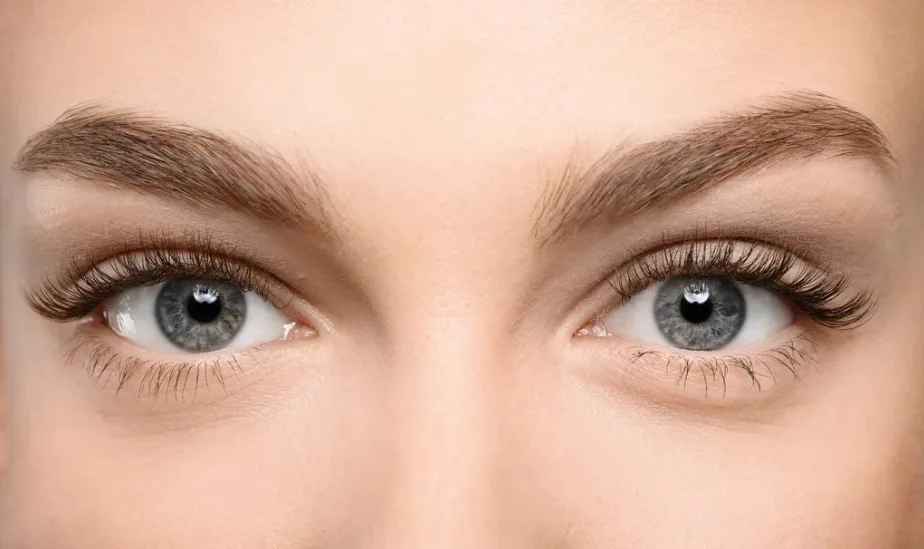
- ShapeDeep-set — a prominent brow bone leaves the lash line permanently under-lit.
- EffectWispy, in fans: closed fans standing over a deliberately open base.
- Where everyone strugglesYou have one budget of material. Spend it on texture and the base stays thin.
Why Why it is laid out this way
Think of the whole set as a fixed amount of material this eye can wear before it starts looking heavy, and then decide what to buy with it. A dense base and a full set of spikes will not both fit — try it and the line goes solid, which on a recessed eye means the whole face reads tired. This build buys the texture and lets the base stay obviously airy.
The order the zones go on, fan by fan
- Lay a sparse base layerOpen fans at the mapped length, spaced wider than you would on any other shape. Gaps are budget, not laziness.
- Close the spikes properlyA spike is a fan closed until it is effectively one strand. A half-open one splays and reads as a blot.
- Stand the spikes over the middlePlace them across the two peak zones and just inside them, where the lid actually faces forward.
- Step the neighbours downThe fans either side of each spike sit shorter than it, so every spike has something lower to stand against.
- Skip the second layer entirelyThe spikes are the second layer on this cell. Adding another one is how the set turns into a band.
- Keep the corners bare of textureThe first and last zones stay base only, short and narrow, with nothing standing above them.
The length curve on deep-set eyes
The underlying line is a modest hill with a wide top and an inner end kept very short, chosen so the base can stay quiet while the spikes carry the look. On this shape the point of texture is optical rather than decorative: separate lashes catching separate highlights are what stop a shaded lash line reading as one dark edge. That only happens if the base is open enough for the spikes to have something to stand out from.
Where does a wispy map go wrong on deep-set eyes?
Deep The physics underneath
Everything on this cell is a fan of some kind. The difference between them is how much of the load sits on the lash's own line.
The same map, built four ways
- Classic 1:1
- A single strand can make a soft highlight but never a crisp one, so a classic version of this map is a gentler thing entirely. It is the safer choice if the natural lashes are frail.
- Handmade volume
- The base and the spikes both come from the same tool, opened wide for one and closed flat for the other. Fine strands are what let a set carry visible texture on an eye with no room for extra weight.
- Promade / pre-made fans
- Reliable for a base, and a poor substitute for a hand-closed spike, because the spike's whole value is being tighter than a fan has any business being. Mixing the two tends to show as inconsistent highlights.
- Woven / clover
- It spans neighbouring lashes and so closes the gaps that let light into the socket. On the one map where openness is the product, that is the wrong trade.
Spread angle versus weight
Spread is the whole difference between the two elements here: the base fans are opened wide to cover ground cheaply where the lengths are modest, and the spikes are closed flat so all their mass sits on the lash's own line. The peak zones are where the spikes live and where the base fans should be narrowest, because that is where the lengths are greatest and a wide fan twists soonest. Wide low down, tight at the top.
What a deep-set lash line can carry
- The set ends by leaning, not by falling off — a spike that loses a few degrees drops below the base line and, on a lid this recessed, straight into shade.
- A closed fan is mechanically one thick strand and the longest thing on the map, so it pays the length penalty in full and gets none of volume's weight discount.
- The base can only be as light as the client's weakest zone allows, and a spike placed on a lash from that zone will sag no matter how well the rest of the set is built. Choose spike anchors by strength, not by spacing.
Where this map fails first
The spikes rotate first, and rotation is worse than loss here. A spike that turns onto its side shows its narrow edge, stops catching light and leaves a dark stroke in the middle of the set where the highlight used to be. Because the base is deliberately sparse, there is nothing around it to disguise the change. Closing each spike properly at application and keeping them modest in length is most of the fix.
FAQ Common questions
Why keep the base so sparse on a volume set?
Because the material this eye can wear is limited, and the texture is what makes it work. A dense base plus spikes exceeds the budget and the line goes solid, which makes a deep-set eye look further back.
Should I add a second layer as well as spikes?
No. The spikes are already the second layer on this map. Adding another one lifts the base to meet them and there is no texture left, only more weight.
How tightly does a spike need to be closed?
Tight enough to behave as a single strand. A half-closed fan splays, drops below where you placed it and reads as a dark patch rather than a defined lash.
How is this different from the hybrid wispy map?
The hybrid builds groups from singles and fans with deliberate low points between them. This one keeps a uniformly open base and puts all the interest into the closed fans standing over it.
Print this page or save it as PDF — the diagrams are drawn to stay readable in black and white on plain paper. Or download the diagrams below as SVG. No account, no fee, nothing to sign. Every file carries this page’s address, so wherever it ends up it can be traced back here.
Teaching from these? The offer, and how to credit it.
Also in: Deep-Set eyes · Wispy · Volume
Read next: what makes a lash map wispy rather than spiky · questions clients ask about lash extensions