Downturned Eyes · Wispy · Hybrid
The wispy lash map for downturned eyes, built in Hybrid — zone order, where the length peaks, and the point this one usually goes wrong.
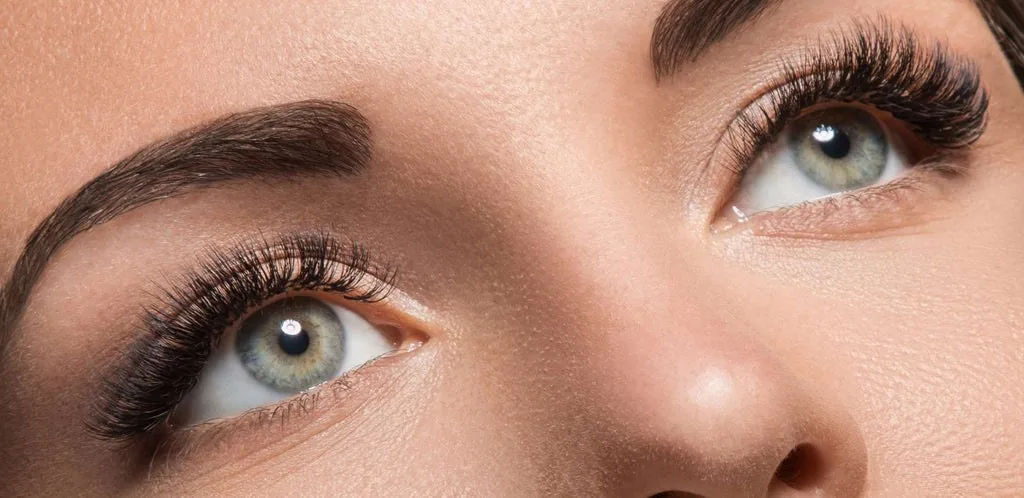
- ShapeDownturned — the lash line drops away toward the outer corner.
- EffectWispy on a mixed base: fans between the spikes, spikes only over the middle.
- Where everyone strugglesThe base fans exist to close gaps, not to grow. Only the spikes are allowed to be long.
Why Why it is laid out this way
The awkward part of a wispy set is the space beside each long strand, and a mixed base is the standard cure for it. Fans between the spikes keep the line looking continuous, so the flutter reads as texture rather than as missing lashes. What none of that changes is where the spikes are allowed to live on a downturned lid.
The order the zones go on, and where the fans land
- Fan the base through the middleNarrow fans across the two zones either side of the centre, at base lengths. They are filler, so they never lead the map.
- Place spikes on strong hostsPick out the sturdiest lashes over the pupil for the tall strands. Choose the lash first, then decide the height.
- Break up the rhythmVary how many base lashes sit between spikes. Regular spacing is the tell that gives a mixed set away.
- Shrink the spikes outwardPast the centre, spikes get shorter and stop entirely before the last two zones.
- Keep the corner simpleOuter zones are short base lashes on the strongest curl, no texture at all. That plainness is the lift.
The length curve on downturned eyes
The line climbs hard into the centre and steps down evenly afterwards, and on this map the climb is the spike zone. The base fans do not appear on the diagram at all — they live in the spaces between the plotted points, holding the line together where a single-strand wispy set would show daylight. Read the outer half as the part deliberately left with nothing interesting on it.
Where does a wispy map go wrong on downturned eyes?
Deep The physics underneath
The layout above assumes the spikes are affordable. Below is what each one actually costs and what the base does to help.
The same map, built four ways
- Classic 1:1
- Single strands make the cleanest spikes, since one long strand on one strong lash is easy to judge and easy to place. They are also the honest way to keep count of what you are hanging over the middle of the eye.
- Handmade volume
- The base of this cell. Fine strands opened a little close the gaps beside each spike, which is what stops the flutter reading as sparseness. Their contribution is coverage, and they should never be the longest thing in their zone.
- Promade / pre-made fans
- Quick and even, so they suit the base zones where sameness is invisible under the texture. Used as spikes they behave like one solid strand rather than a fan, so count them against the spike budget and not the base.
- Woven / clover
- Broad, repeating coverage that fills the very gaps this effect wants. Under the centre they can work as a foundation, but they cannot be part of what the client sees as the wispy edge.
Spread angle versus weight
Base fans on this map have one job: bridge the space beside a spike without becoming visible in their own right. Open them only to the width that closes the gap, because a wide base fan sitting under a tall strand makes a small dark island, and a row of dark islands across the middle of the lid reads as clumping. In the two outer zones, drop the fans entirely rather than narrowing them further — plain short strands are lighter and hold their curl better on the smallest lashes of a falling line.
What a downturned lash line can carry
- Two different loads share this map: a spike is one tall strand carried alone, while the base fans are ordinary coverage spread over many lashes. When a set like this sags, it is almost always the spikes and almost never the base.
- A spike buys its drama entirely with reach, which means it pays the full price — more material, further from the root, on a single host. That is why the budget is a handful over the middle rather than a scatter across the lid.
- The base can be pushed harder than the spikes because it is short and shared. If a client's lashes are only just holding the map, thin the spikes first and leave the base intact — the set will read fuller, not sparser.
Where this map fails first
The spikes go first, as they do on any wispy map, and here their neighbours make it worse: a leaning tall strand catches on the base fans beside it and drags them out of position. The result is a small tangle in the middle of the lid rather than a clean gap. Meanwhile the outer zones simply thin, which on this map costs almost nothing because they were mapped short and plain from the start.
FAQ Common questions
What are the base fans actually for on a wispy map?
Closing the gaps beside each spike so the texture reads as flutter rather than as missing lashes. They add coverage, never length.
How many spikes should a downturned wispy set have?
Fewer than most reference photos suggest, and all of them over the middle. Each one is a tall strand carried by a single lash, so treat them as a budget you spend rather than a pattern you fill.
Can spikes go in the outer zones if they are short?
A short spike is just an uneven base lash, which on this shape reads as untidy rather than lifted. Keep the last two zones plain and let curl handle them.
My wispy sets go tangled in the middle by week three. Why?
Leaning spikes catching their neighbours. Put the spikes on stronger hosts, take a step off their height, and keep the base fans beside them narrow.
Print this page or save it as PDF — the diagrams are drawn to stay readable in black and white on plain paper. Or download the diagrams below as SVG. No account, no fee, nothing to sign. Every file carries this page’s address, so wherever it ends up it can be traced back here.
Teaching from these? The offer, and how to credit it.
Also in: Downturned eyes · Wispy · Hybrid
Read next: what makes a lash map wispy rather than spiky · questions clients ask about lash extensions