Round Eyes · Wispy · Classic 1:1
The wispy lash map for round eyes, built in Classic 1:1 — zone order, where the length peaks, and the point this one usually goes wrong.
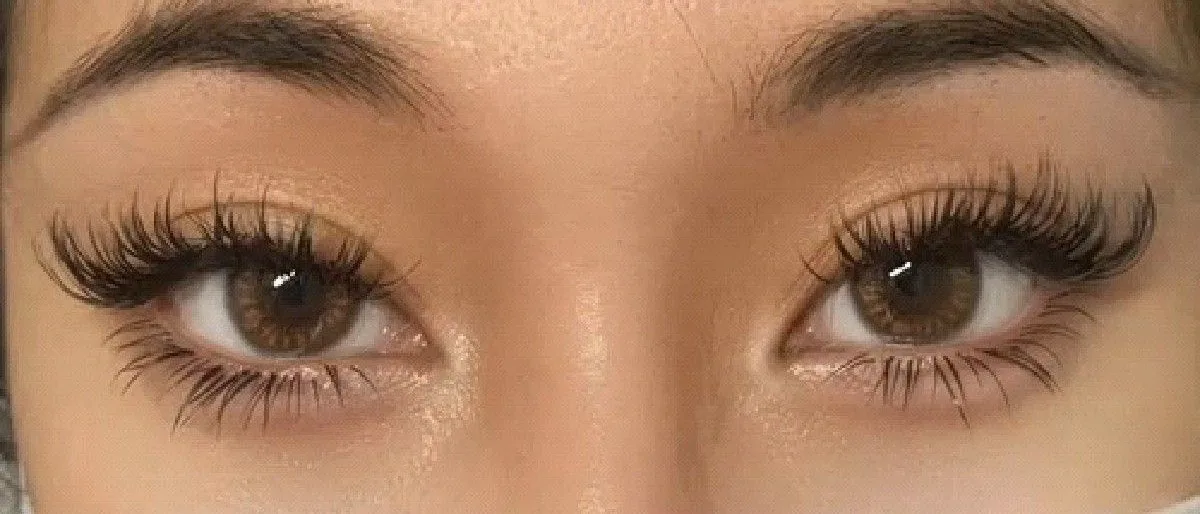
- ShapeRound — big and open, and short from corner to corner.
- EffectWispy in single strands: a long outer top with spaced tall points.
- Where everyone strugglesSpikes belong in the outer third only. Centre spikes make the eye rounder.
Why Why it is laid out this way
Spikes are punctuation. A few of them, placed well, break a lash line into something with movement; the same number scattered across the middle of a round eye simply makes it look wider open. This map keeps the base leaning outward with its longest stretch in the outer half, and puts every tall strand past the centre.
The order the zones go in
- Run the base out, not upStep the base lengths up from a short inside and hold the two zones before the corner at full length.
- Step down once at the cornerThe final zone comes back slightly. It keeps the top from ending in a blunt edge.
- Place spikes past the centreTall single strands go in the outer third and nowhere else. Inboard of that they add height, not length.
- Space them unevenlyLeave irregular gaps between the tall strands. Regular gaps turn a wispy set into a row of teeth.
- Keep spikes fineA spike is the longest thing on the map, so it has to be the finest thing you can place there.
The length curve on round eyes
The base above has a long level top sitting in the outer half rather than a single peak, which gives the spikes somewhere to stand without one zone dominating. The step down at the corner keeps the finish soft. Everything about this profile is horizontal, because the tall strands are already supplying all the vertical interest a round eye can take.
Where does a wispy map go wrong on round eyes?
Deep The physics underneath
A spike is not a decoration mechanically. It is the longest single object on the set, sitting on one follicle.
The same map, built four ways
- Classic 1:1
- Every spike here is a plain long strand, which makes this the most honest version of the effect: what you place is what the lash carries. It also means the tall points cannot be made lighter by any trick, only shorter or finer.
- Handmade volume
- A closed fan can stand in for a spike and gives you a way to make one lighter than a single strand of the same length. That is genuinely useful on the outer third, where the host lashes are the finest on the lid.
- Promade / pre-made fans
- Their even width is wrong for the tall points and fine for the base, so if they appear they belong under the level top. A ready-made spike also tends to be denser than one you close yourself.
- Woven / clover
- It ties neighbouring lashes into one unit, and a wispy edge lives on strands being visibly separate. Useful only if you need to close a gap in the base, never anywhere the texture shows.
Spread angle versus weight
Single strands have no spread, so all the mass of a spike sits on the lash's own line — which is the one thing making a long tall point survivable out in the outer third. Anything widened out there hangs off the line and turns, and a spike that has turned reads as a stray. When in doubt on this map, go narrower and shorter rather than wider.
What a round lash line can carry
- A spike concentrates everything this shape's outer lashes are bad at holding: maximum length, maximum reach, one host follicle, and no neighbours sharing the load.
- Spikes bend before they shed, and a bent spike looks worse than a missing one. That is the argument for placing fewer and finer than you think the look needs.
- The base is what determines whether the set survives — a level top across two zones puts near-full length on lashes that are already shortening toward the corner, so the base is not the easy part.
Where this map fails first
The tall points in the outer third go first, and they go by leaning rather than by falling out. Each one is the longest strand on the map, sitting on a fine corner lash with the lid already curving away, so it deflects at the smallest provocation — a pillow, a towel, a hand rubbed across the eye. A leaning spike drags the whole edge down with it visually, which is why the set can look tired while the count is still fine. Fewer spikes, finer strands, and the map ages far better.
FAQ Common questions
How many spikes does a wispy set need?
Fewer than most techs place. On a round eye a handful across the outer third is enough, because every extra one adds height to a shape that does not want it.
Why can't the spikes go over the centre?
Centre spikes stand above the highest part of the lid arch, so they exaggerate roundness and read as surprise. Out past the middle the same strand reads as length.
How much taller than the base line should a spike be?
Enough to be seen and no more — roughly a couple of zones' worth of extra length. Beyond that the strand cannot hold itself up on a fine outer lash.
Can you do wispy properly in classic 1:1?
Yes. Wispy is a spacing effect rather than a density effect, so single strands do it cleanly, and the tall points stay predictable because there is no fan to open or close.
Print this page or save it as PDF — the diagrams are drawn to stay readable in black and white on plain paper. Or download the diagrams below as SVG. No account, no fee, nothing to sign. Every file carries this page’s address, so wherever it ends up it can be traced back here.
Teaching from these? The offer, and how to credit it.
Also in: Round eyes · Wispy · Classic 1:1
Read next: what makes a lash map wispy rather than spiky · questions clients ask about lash extensions