Round Eyes · Wispy · Volume
The wispy lash map for round eyes, built in Volume — zone order, where the length peaks, and the point this one usually goes wrong.
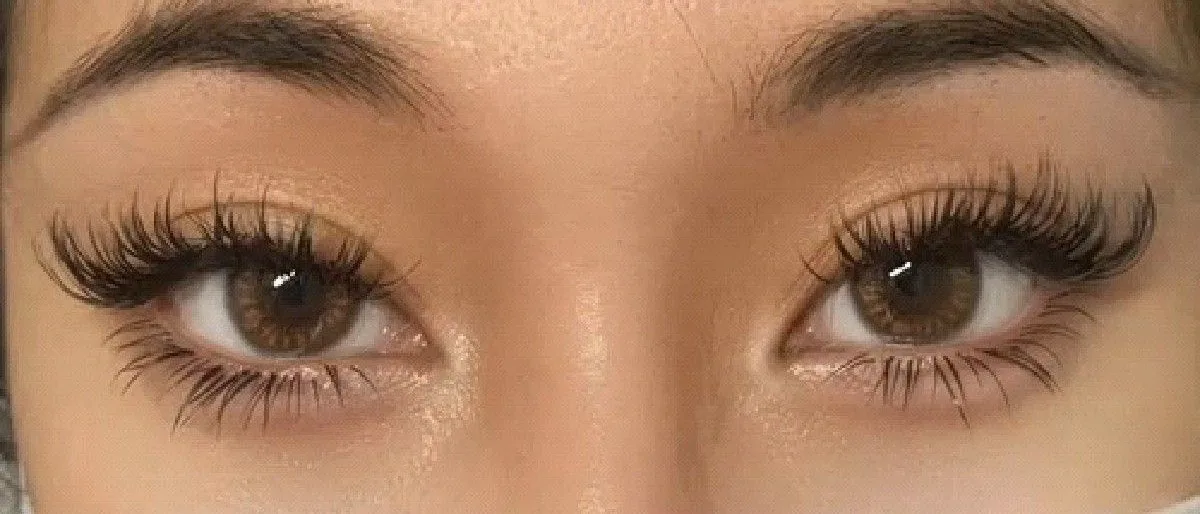
- ShapeRound — an open, circular set with a steep central curve.
- EffectWispy in fans: a full base carrying scattered tall points past the centre.
- Where everyone strugglesA dense middle plus tall points is two mistakes at once on this shape.
Why Why it is laid out this way
This is the heaviest map in the round set and the one that most often comes back looking nothing like the photo. Density and texture pull against each other: the fuller the base, the less a tall point stands out, and a full base across the middle of a round eye reads as extra height on its own. Build it like an unfinished hem — solid where it starts, coming apart on purpose as it goes out.
The order the zones go on, fan by fan
- Lay the base as a shapeFans rising from a short inner corner to a level top across the two zones before the corner, then one step down.
- Keep the middle leanNarrow the fans over the centre zones. A dark, full centre is the first thing that makes this shape look startled.
- Spike the outer third onlyTall points go past the middle, standing clear of the base. Nothing tall anywhere inboard of that.
- Never spike a loaded lashChoose host lashes that are not already carrying your widest fans. Spread the two loads across different follicles.
- Scatter, do not layerTall points are a handful of separate strands. As soon as they line up, you have built a second layer instead.
The length curve on round eyes
The base profile above climbs, holds level for two zones out past the middle and eases once at the corner — the level stretch is what gives the tall points room to sit without any single zone spiking. Volume does not change those lengths, it changes how much of the base you see, and every extra bit you see is contrast you take away from the texture. On this shape, restraint in the middle zones is what makes the outer third legible.
Where does a wispy map go wrong on round eyes?
Deep The physics underneath
A full base and tall points are two separate loads landing on one strip of lash line. The arithmetic is in how you distribute them.
The same map, built four ways
- Classic 1:1
- Single strands are the honest reference for the tall points and the right answer wherever the host lash is doubtful. In a set this full they also give you a way to place texture without adding another fan base to the corner.
- Handmade volume
- Only a fan you build yourself can be lean over the middle and generous on the inner run, which is the exact distribution this cell needs. It also lets you close a fan right down to serve as a tall point where a single strand would be too coarse.
- Promade / pre-made fans
- One width across a map that needs three is the standing risk, and the middle zones are where that shows first. Their firmer base also sits higher, which is contrast stolen from the texture above it.
- Woven / clover
- Sharing a bond across neighbours is a sensible way to carry a dense base over the strong middle lashes without loading any one of them. Keep it away from the outer third, where the tall points need their host lashes free and independent.
Spread angle versus weight
The two level zones are where the base and the texture meet, and spread decides which of them wins. Open fans there and the base rises visually until the tall points are barely above it; keep them closed and the same lengths read as a clean line with points standing off it. Width is worth having on the short inner zones and worth nothing at the top of this map.
What a round lash line can carry
- Splitting strands buys coverage cheaply, and on this cell the saving should pay for the tall points rather than for a denser base. Spend it twice and the outer third is carrying both bills.
- A tall point on a lash that already holds a wide fan is the quiet overload here — nothing on the map looks wrong, and that one follicle is carrying more than any other on the lid.
- The level top runs across two zones where the natural lashes have already begun to shorten, so the ceiling on this map is set by a stretch of lash line that is neither the strongest nor the finest. Check it before deciding how full the base gets.
Where this map fails first
The texture goes first and the density outlasts it. Tall points out past the middle are the longest, most exposed objects on a full set, so as they lean and shed the edge smooths back into the base and the wispy look is gone by the second week. What is left is a dense set with its weight in the middle, which is the least flattering thing you can leave on a round eye. That is the argument for a lean centre from day one: it is also how the set will look when it ages.
FAQ Common questions
Can a volume base carry wispy texture properly?
It can, if the base stays lean where the tall points are. Density and texture compete for the same visual space, so a full base under a spike cancels it.
Where do the tall points go on a round eye?
Past the middle, in the outer third. Anywhere inboard of that they add height above the highest part of the lid and the eye looks startled.
How do I stop the set looking heavy?
Narrow the fans across the centre zones and let the fullness sit on the inner run and the outer base. The eye reads a full middle as a wider open eye, whatever the lengths are doing.
Should the same lash carry a wide fan and a tall point?
No. Split those two loads across different follicles, or you build a handful of overloaded lashes that fail in patches and take the outer edge with them.
Print this page or save it as PDF — the diagrams are drawn to stay readable in black and white on plain paper. Or download the diagrams below as SVG. No account, no fee, nothing to sign. Every file carries this page’s address, so wherever it ends up it can be traced back here.
Teaching from these? The offer, and how to credit it.
Also in: Round eyes · Wispy · Volume
Read next: what makes a lash map wispy rather than spiky · questions clients ask about lash extensions