Deep-Set Eyes · Cat-Eye · Classic 1:1
The cat-eye lash map for deep-set eyes, built in Classic 1:1 — zone order, where the length peaks, and the point this one usually goes wrong.
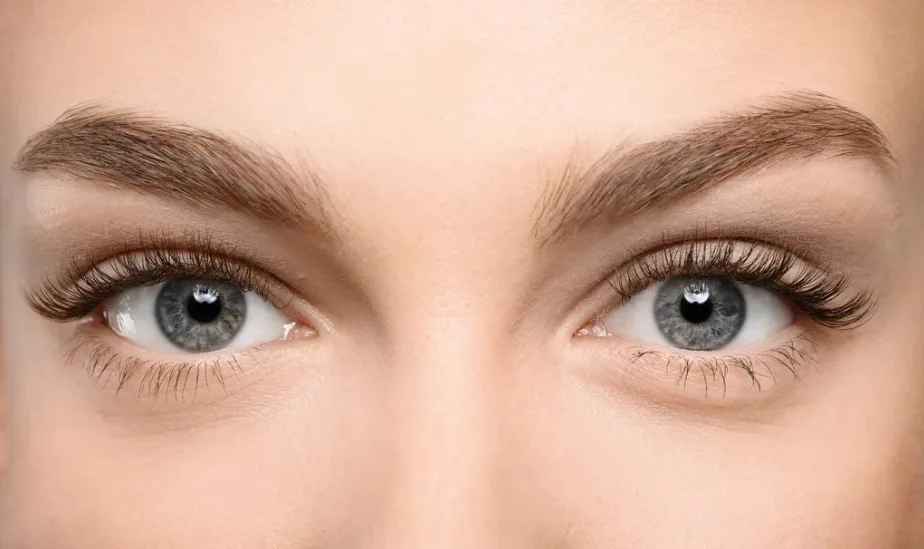
- ShapeDeep-set — the eye sits back under a strong brow bone, in its own shadow.
- EffectCat-eye, single lashes: a slow climb to a peak just inboard of the corner.
- Where everyone strugglesThis map is conditional. If her outer corner falls, it is the wrong map.
Why Why it is laid out this way
A cat-eye is the one effect here you should be ready to talk a client out of. Weight at the outer corner pushes a recessed eye further back into its own shade, so this map only earns a place when the outer corner already sits level or lifted. What you build then is a slow climb, not a corner spike.
The order the zones go in
- Test the corner firstEyes open and relaxed, look at where the outer corner sits. Level or lifted, carry on; falling, remap.
- Open with the shortest zoneThe innermost zone is the shortest thing on the lid, well under a third of the peak.
- Climb a hair per zoneEven steps outward, no jumps. The climb is what reads as a cat on this shape, not the corner itself.
- Hold the peak over two zonesRun the longest length across the two zones just inboard of the corner so nothing spikes alone.
- Step the last zone back downThe outermost zone returns a touch under the peak, keeping build off the corner proper.
- Open the curl as length growsThe longest zones take the most open curl on the set. A strong curl at full length aims the tips into the bone.
The length curve on deep-set eyes
The curve climbs from almost nothing at the inner corner to a flat peak held over two zones, then eases. On a recessed lid, length is read as forward projection rather than height, so a gradual climb pulls the whole line out toward the viewer instead of hanging a flag on one corner. The step down at the end is what keeps the cat from turning into corner drag.
Where does a cat-eye map go wrong on deep-set eyes?
Deep The physics underneath
That is the layout settled. What a lash line living in shade will actually hold up is a separate question.
The same map, built four ways
- Classic 1:1
- One strand per lash keeps the corner build honest — you can count exactly what you have added to the zones doing the risky work. The cost is that extra fullness has to be bought with thickness, and thickness on this shape shows up as more shade.
- Handmade volume
- Fans would darken the climb without thickening any single strand, splitting one strand's mass into several fine ones. Real saving, real temptation: the discount invites a denser corner than a recessed eye can wear.
- Promade / pre-made fans
- Fast across a long climb, at the price of a fixed base node under every lash including the corner ones. You gain consistency and lose the ability to thin a fan where the lid falls away.
- Woven / clover
- A repeating spread lays width along the line, and width across a shaded corner reads as one dark block rather than separate lashes. If it appears at all, keep it inboard of the peak.
Spread angle versus weight
There are no fans on this map, but the same question decides how you set each strand: anything that spreads the line sideways at the peak adds darkness without adding reach. On a deep-set corner, darkness is already the thing working against you. Set each peak lash on its own axis and let length do the projecting.
What a deep-set lash line can carry
- Deflection arrives long before shedding. Once a peak strand carries more than it can hold straight it drops a few degrees, and on a lid set this far back those few degrees put the tip behind the socket line.
- Length is charged twice — more mass, further from the root — and it lands here on the shortest, finest lashes on the lid, so the same length is a bigger ask at the corner than anywhere else.
- The peak's ceiling is set by its thinnest strands, not its average. On a client with a patchy outer third the cat is unbuildable even when the map is right.
Where this map fails first
The last zone goes first and takes the effect with it. It holds the finest, steepest lashes on the lid, it sits where the lid curves away from the bond, and it meets the pillow every night. Because a cat is a shape rather than a density, losing a handful of corner lashes does not read as thinner — it reads as the cat gone. Building that zone a step under the peak leaves less to lose.
FAQ Common questions
Can deep-set eyes wear a cat-eye at all?
Only conditionally. If the outer corner already sits level or lifted, a softened cat works; if it falls, corner weight deepens both the droop and the recessed look.
Why does the outermost zone come back down?
So the effect lives on the climb rather than on the corner. The eye still reads elongation, but the finest lashes are not asked to carry the longest extensions.
Should the curl get stronger toward the corner?
No. Curl and length trade against each other under a brow bone — the longer the zone, the more open the curl, or the tips end up pointing back into the socket.
Why single lashes rather than fans for this map?
Because the risk here is added darkness at the corner, and singles are the easiest build to keep countable. Fans are cheaper by weight but harder to hold back once you start.
Print this page or save it as PDF — the diagrams are drawn to stay readable in black and white on plain paper. Or download the diagrams below as SVG. No account, no fee, nothing to sign. Every file carries this page’s address, so wherever it ends up it can be traced back here.
Teaching from these? The offer, and how to credit it.
Also in: Deep-Set eyes · Cat-Eye · Classic 1:1
Read next: what a cat eye lash map actually is · questions clients ask about lash extensions