Deep-Set Eyes · Cat-Eye · Hybrid
The cat-eye lash map for deep-set eyes, built in Hybrid — zone order, where the length peaks, and the point this one usually goes wrong.
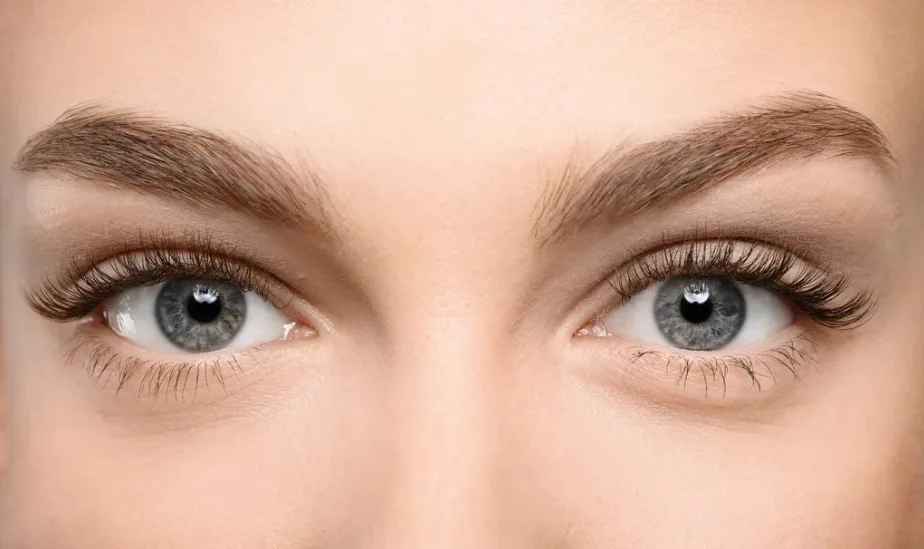
- ShapeDeep-set — a prominent brow bone holds the lash line back in shade.
- EffectCat-eye, mixed singles and fans: the climb is textured, the corner is not loaded.
- Where everyone strugglesTexture has to stay open. Crowded spikes turn the whole line into one dark bar.
Why Why it is laid out this way
Mixing singles and fans buys something specific on this shape: a line that reads full without going solid. A recessed lash line is already the darkest thing on the face, and anything solid there sinks the eye further. Hybrid lets the climb toward the outer zones gain presence through separation rather than through mass.
The order the zones go on, and where the fans land
- Confirm the corner liftsOnly run a cat here if the outer corner sits level or above the inner one. Everything below assumes it does.
- Lay the single-lash spineSet the base length of every zone in singles first, inner to outer, so the climb exists before any texture goes on.
- Drop fans in the middle zonesSoft fans through the mid-lid fill the gaps the singles leave without adding a new height.
- Scatter spikes, never rowsA few closed fans above the base line, spaced far apart. Close-packed spikes read as a dark row in the socket.
- Peak across the two outer-centre zonesThe longest work sits inboard of the corner and stays there for two zones before it eases.
- Let the corner sit lowerFinish a step under the peak so nothing long hangs off the corner lashes themselves.
The length curve on deep-set eyes
Every zone climbs by roughly the same amount, which is why the line reads as one continuous stretch rather than a corner accent. Under a brow bone the eye judges lashes by how far forward they come, not how high they rise, so an even climb pushes the whole line toward the viewer. Holding the top length over two zones gives the effect somewhere to sit that is not the corner.
Where does a cat-eye map go wrong on deep-set eyes?
Deep The physics underneath
Texture is a look upstairs and a load problem downstairs. Each of the four builds pays for it differently.
The same map, built four ways
- Classic 1:1
- Singles carry the climb itself, which is the part of this map that must not wobble. They are also the only element whose weight you can judge by eye while you work.
- Handmade volume
- The fans do the filling. Splitting the mass across several fine strands is what lets the mid-lid gain body without gaining the darkness a thicker single would bring here.
- Promade / pre-made fans
- Handy for the repetitive mid-lid filling, but the base node is fixed and you cannot narrow one fan for a zone that is already crowded. On a shaded line, a slightly bulky root shows earlier than you expect.
- Woven / clover
- Its spread repeats, and a repeating pattern is the opposite of what texture is for on this map. Anything that regular in the outer zones flattens the whole effect back down.
Spread angle versus weight
At the peak, a wider fan buys width along the lash line while the eye here is asking for reach out of the socket. Width there stacks shadow sideways; reach is what makes the eye look less set back. Keep the outer-centre fans narrow and spend the fullness in the middle zones where the lid is already forward.
What a deep-set lash line can carry
- The bending limit is reached when the lash can no longer hold the extension level — on this map that shows as the peak zones losing a few degrees, which is enough to tuck the tips back under the brow.
- A spike is one thick object on one lash and the longest thing on the set, so budget each one as if it were a heavy single, not as a fan.
- Texture makes the weakest-strand rule sharper, not softer. One under-strength lash carrying a spike sags visibly against its neighbours, where the same lash carrying a fan would only look slightly low.
Where this map fails first
Two failures, on two clocks. The spikes go first because each is heavy for its anchor and rotates rather than sheds — a turned spike lies flat and stops catching any light at all. The corner goes second and slower, thinning until the climb has no top. Neither shows on a closed eye at the mirror, which is why they get blamed on the client.
FAQ Common questions
How many spikes belong on a deep-set hybrid cat?
Fewer than you think. Space them so each has clear lashes on both sides — the effect comes from separation, and a shaded lash line loses separation faster than an open one.
Should the fans or the singles carry the length?
The singles. They set the climb and the peak; the fans fill between them at or just under the base length so texture never becomes a second, competing shape.
Why does the corner stay shorter than the peak?
Because a recessed eye reads corner weight as heaviness rather than lift. Stopping the length inboard gives the stretch without asking the corner lashes to carry it.
Is hybrid better than classic here?
Different, not better. Hybrid keeps the line from going solid, which matters on a shaded lid; classic is easier to keep light and easier to control if the client's lashes are fine.
Print this page or save it as PDF — the diagrams are drawn to stay readable in black and white on plain paper. Or download the diagrams below as SVG. No account, no fee, nothing to sign. Every file carries this page’s address, so wherever it ends up it can be traced back here.
Teaching from these? The offer, and how to credit it.
Also in: Deep-Set eyes · Cat-Eye · Hybrid
Read next: what a cat eye lash map actually is · questions clients ask about lash extensions