Deep-Set Eyes · Cat-Eye · Volume
The cat-eye lash map for deep-set eyes, built in Volume — zone order, where the length peaks, and the point this one usually goes wrong.
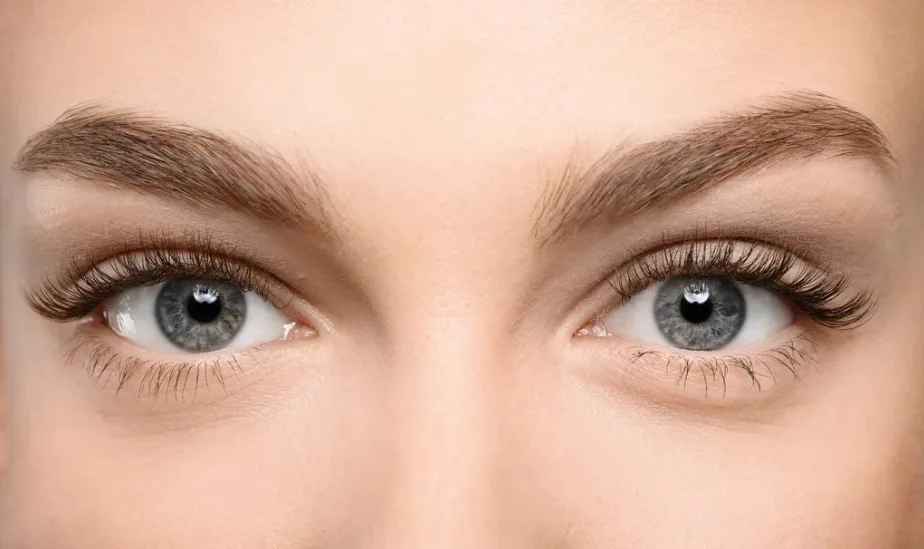
- ShapeDeep-set — the lash line sits back beneath the brow bone and stays in shade.
- EffectCat-eye, in fans: two light layers climbing to a peak short of the corner.
- Where everyone strugglesDensity is not the goal on this shape. Fans here buy reach, not blackness.
Why Why it is laid out this way
Fans are usually a way to add fullness, and fullness is exactly what a recessed eye cannot spend freely. Under a brow bone, more material in the line just deepens the shade the eye is already sitting in. So this build uses the volume discount the other way round — several fine strands where one thicker one would have gone, for the same silhouette at less mass.
The order the zones go on, fan by fan
- Check the corner sits highThe whole map is contraindicated on a low outer corner. Confirm before you open a single fan.
- Set a base layer, wide spacingWork the base layer at the mapped length with the fans deliberately spaced. Gaps are the point on this lid.
- Build the climb in the baseThe base layer carries the whole length gradient, inner corner to peak. The top layer never changes the shape.
- Add a narrow top layerA second, narrower fan layer sits at or just under the base length, angled forward rather than upward.
- Hold the peak two zones inThe longest fans run over the two zones inboard of the corner and stop there.
- Ease the last zoneFinish under the peak, with the narrowest fans on the set on the corner lashes.
The length curve on deep-set eyes
The gradient rises steadily and then flattens, so the effect lives on the whole outer half rather than on one corner. On this shape length translates into projection out of the socket, which is why the climb is worth more than a spike would be. Two layers of light fans get to the same visual weight as one heavier build while leaving the line able to move.
Where does a cat-eye map go wrong on deep-set eyes?
Deep The physics underneath
The fan is the tool, but the ceiling belongs to the natural lash underneath. Here is what each build actually asks of it.
The same map, built four ways
- Classic 1:1
- Predictable and easy to keep light, but the only way to make the outer climb more visible is a thicker strand — the one change this shape punishes hardest.
- Handmade volume
- The reason for this cell. Halving strand diameter cuts each strand's stiffness and mass sharply while the coverage falls only in proportion, so a fan reaches the mapped length for less load than a single of the same look.
- Promade / pre-made fans
- They keep a two-layer build consistent over a long appointment, which matters when the top layer must not outgrow the base. The node sits at the root where the lever is shortest, but you lose the per-zone spread control this map leans on.
- Woven / clover
- It covers a lot of lash line per bond, which sounds ideal until you remember the outer zones need separation to read at all. Reserve it for the inner base layer, if anywhere.
Spread angle versus weight
Opening a fan does not add mass, it moves the mass sideways off the lash's centre line, and the lash answers by rotating until the load hangs straight down. At the peak zones, where the fans are longest, that rotation is what turns a mapped climb into a flat outer half. Narrow fans through the outer zones, wider ones inboard where the load is short.
What a deep-set lash line can carry
- The first limit is angle, not attachment. A peak fan that droops a few degrees is still glued on and still lost, because on a deep-set lid the tip has moved back into the shade rather than out of it.
- Every extra unit of length adds mass and moves the whole load further from the root at the same time, so the outer zones spend their allowance twice as fast as the inner ones on this map.
- A layered build shares nothing between layers. Each fan rests on its own lash and the thinnest lash in the peak zone sets what the peak can be, no matter how strong its neighbours are.
Where this map fails first
The peak zones fail first and they fail by rotating, not by dropping off. They hold the longest fans on the set, so they carry the most twist, and once a fan turns onto its side it stops projecting forward. The client reads it as the set having gone flat rather than sparse, usually somewhere around the middle of the cycle. Narrow fans and a corner built a step lower are what slow it down.
FAQ Common questions
Does volume make a deep-set eye look heavier?
It can, if you use it for density. Used for reach — fine strands replacing a thicker single at the same length — it puts less material in the shade, not more.
How should the two layers differ?
By width and angle, not length. A spaced base layer sets the gradient and a narrower top layer angled forward adds separation without building a second height.
Where exactly does the peak sit on this map?
Over the two zones just inboard of the outer corner, held flat, then eased down for the last zone so the corner lashes carry the least.
Why do the outer fans have to be narrow?
Because they are the longest, so any width there produces the most twist. A narrow fan tracks the lash's own line and keeps the tip pointing out of the socket.
Print this page or save it as PDF — the diagrams are drawn to stay readable in black and white on plain paper. Or download the diagrams below as SVG. No account, no fee, nothing to sign. Every file carries this page’s address, so wherever it ends up it can be traced back here.
Teaching from these? The offer, and how to credit it.
Also in: Deep-Set eyes · Cat-Eye · Volume
Read next: what a cat eye lash map actually is · questions clients ask about lash extensions