Deep-Set Eyes · Doll / Open-Eye · Classic 1:1
The doll lash map for deep-set eyes, built in Classic 1:1 — zone order, where the length peaks, and the point this one usually goes wrong.
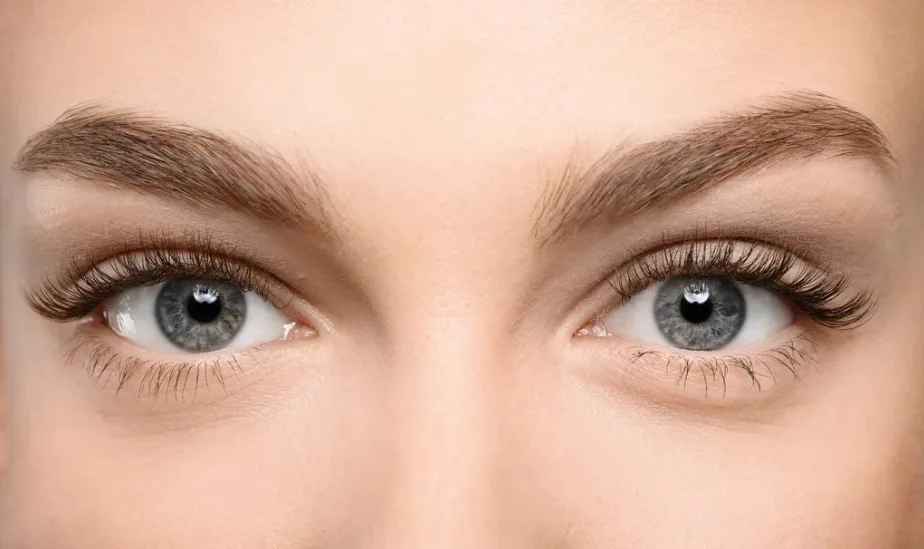
- ShapeDeep-set — the eye sits back, so the middle of the lid is the part nearest the front.
- EffectDoll, single lashes: one clear peak dead centre, both corners short.
- Where everyone strugglesKeep it fine. A heavy line on a shaded lid buries the eye you are trying to open.
Why Why it is laid out this way
This is the default map for the shape, and the reason is geometry rather than fashion. The middle of the lid is the only part of a recessed eye that sits properly forward, so length placed there travels out toward the viewer instead of vanishing under bone. Everything either side of it steps back down.
The order the zones go in
- Find the true centreMark the middle of the lash line with her eyes open, not the middle of the closed lid — they are rarely the same point.
- Build one peak thereThe longest zone is the centre and nothing else competes with it. One peak only.
- Fall away both sidesStep down evenly toward each corner. The drop is quicker than it feels right to make it.
- Take both corners very shortInner and outer both finish around a third of the peak. Both are tucked back under bone and neither pays for length.
- Stay fine throughoutChoose the lightest strand that still shows. On this shape thickness is read as shadow, not as fullness.
The length curve on deep-set eyes
The curve is a single hill with its top in the middle and both ends dropped almost to nothing. Length only works here when it has somewhere to go, and the centre is the one zone with clear air in front of it — the corners sit behind the brow bone's line and give nothing back for the extra length. Making the fall steep rather than gentle is what makes the eye look opened rather than merely lashed.
Where does a doll map go wrong on deep-set eyes?
Deep The physics underneath
The map decides where length goes. What follows decides how much of it the lash underneath will still be holding in four weeks.
The same map, built four ways
- Classic 1:1
- One strand, one anchor, and a peak you can weigh by eye — which is the whole reason this cell is the teaching version of the deep-set map. The limit is that the centre can only be made fuller by making it thicker.
- Handmade volume
- Would let the centre look denser without a heavier strand, since mass drops steeply as strands get finer while coverage does not. On this map the saving is best spent holding the peak's length, not widening the line.
- Promade / pre-made fans
- Consistent and quick, but every fan arrives with its base already decided. On a map whose whole argument is keeping the corners minimal, a fixed base is one more thing to keep off the last two zones.
- Woven / clover
- Coverage per bond is its strength and the corners here do not want coverage. If it goes anywhere it goes either side of the peak, where the lid is still forward.
Spread angle versus weight
There are no fans in this build, so the only spread you control is the gap between neighbouring lashes at the peak. Set them close enough that the centre reads as one continuous rise and no closer — a crowded centre on a shaded lid turns from a peak into a blot. Judge it with her eyes open, from in front, not from above.
What a deep-set lash line can carry
- A lash bends before it lets go, and on this map the bend is the failure: the centre peak dropping a few degrees puts its tips back inside the socket line, which is the exact thing the map was built to escape.
- Length is the expensive variable because it adds mass and lengthens the lever together, so the peak zone is always the first place a client's own lashes tell you no.
- The centre zone is not uniform. Its ceiling belongs to its finest lashes, which is why the same peak length that looks effortless on one client drags on the next.
Where this map fails first
Failure here is central, not at the edges, which is unusual. The centre holds the longest strands on the set and it is the only zone where a few degrees of droop change what the client sees in the mirror. As the peak softens the eye slides back toward the socket and the set reads as tired rather than as sparse. Building the peak at the shortest length that still opens the eye is what buys the extra fortnight.
FAQ Common questions
Why is a centre peak the standard map for deep-set eyes?
Because the middle of the lid is the part of a recessed eye that sits forward. Length there projects out where it can be seen, while the same length at either corner is swallowed by the brow bone.
Should both corners really be that short?
Yes. Both ends tuck back under bone on this shape, so length there costs weight and shows almost nothing. Dropping them steeply is what gives the peak its contrast.
How light does the line need to be?
Light enough that the lash line reads as separate lashes rather than as a band. Thickness on a shaded lid registers as extra shadow, and shadow is what makes a deep-set eye look set back.
Can I add a second peak at the outer corner?
No. Two peaks split the attention and the outer one lands in the deepest part of the recess, so it costs weight and returns nothing.
Print this page or save it as PDF — the diagrams are drawn to stay readable in black and white on plain paper. Or download the diagrams below as SVG. No account, no fee, nothing to sign. Every file carries this page’s address, so wherever it ends up it can be traced back here.
Teaching from these? The offer, and how to credit it.
Also in: Deep-Set eyes · Doll / Open-Eye · Classic 1:1
Read next: open eye versus doll — one family, two intents · questions clients ask about lash extensions