Deep-Set Eyes · Doll / Open-Eye · Hybrid
The doll lash map for deep-set eyes, built in Hybrid — zone order, where the length peaks, and the point this one usually goes wrong.
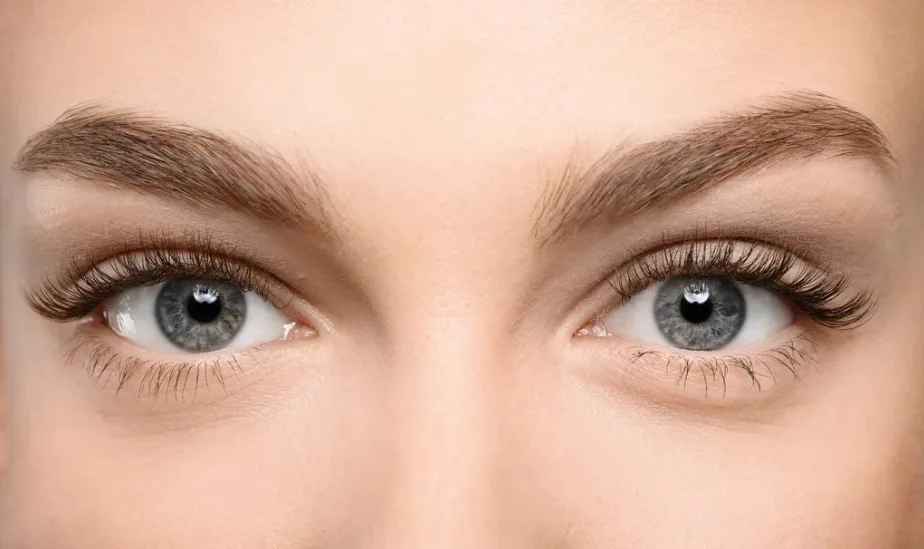
- ShapeDeep-set — a heavy brow bone keeps the lash line back and dim.
- EffectDoll, mixed: a centre peak with texture concentrated on the peak alone.
- Where everyone strugglesTexture belongs in the middle. Spikes near either corner sit in the dark and do nothing.
Why Why it is laid out this way
The open-eye map and hybrid texture want the same thing on this shape — attention pulled to the centre of the lid, where the eye actually reaches forward. Where they can fight is weight: every fan and every spike is more material sitting in a line that is already shaded. The build below spends texture in one zone and keeps the rest sparse.
The order the zones go on, and where the fans land
- Set the centre firstPlace the longest singles across the middle of the lash line before anything else goes on.
- Fall steeply to both endsStep down quickly each way. The last zone at each corner is roughly a third of the centre.
- Bridge the gaps with fansFans go at or just below the mapped length of their zone, filling gaps without raising the outline.
- Spike the peak onlyA handful of closed fans in the centre zones, spaced apart. That is the only place a spike returns anything here.
- Leave the corners plainNo spikes, no wide fans, nothing long in the last zone at either end.
- Check it from the frontStep round and look at her straight on with her eyes open. From above, everything looks like it clears the bone.
The length curve on deep-set eyes
One hill, top in the middle, both sides falling faster than a natural map would. The centre is the part of a recessed lash line with air in front of it, so it is where extra length and extra texture are both worth paying for. Toward each corner the lid tucks back behind the bone and the return on anything you add there drops toward zero.
Where does a doll map go wrong on deep-set eyes?
Deep The physics underneath
Two elements, two load stories. Below is what the singles, the fans and the spikes each cost the lash carrying them.
The same map, built four ways
- Classic 1:1
- The singles own the outline: the peak height and the two steep falls. Keeping the shape in singles means the shape stays exactly where you put it, whatever the fans do later.
- Handmade volume
- Fans do the filling either side of the peak, and being able to narrow one by hand matters most in the centre where the longest work sits. Fine strands buy the fill at a fraction of the mass a thicker single would need.
- Promade / pre-made fans
- Useful for the repetitive zones flanking the peak. The catch on this map is that a ready-made base is the same size in the last corner zone as in the middle, and the corners here want the smallest footprint on the set.
- Woven / clover
- Its repeating spread is fine as an inner filler and wrong at the peak, where the whole effect depends on a few deliberate irregularities. Regularity is what this build is trying to avoid in the centre.
Spread angle versus weight
At the peak the choice is between a fan that covers width and one that reaches forward, and this shape always wants reach. A wider spread also pulls its own legs off the lash's axis, so the centre — carrying the longest work — is where a wide fan will twist soonest. Narrow at the top of the hill, wider on the way down if you need the fill.
What a deep-set lash line can carry
- The ceiling shows up as a sagging angle rather than a lost lash: when the centre lashes give way by a few degrees the peak tips slide back under the brow line and the open look goes with them.
- A spike is the heaviest single object on this map and the longest, so it pays the length penalty twice — count each one against the peak's budget as if it were two ordinary lashes.
- Mixed builds hide their weakest links. A fan on an under-strength lash only looks slightly low, but a spike on the same lash sags right out of line, which is why spike placement should follow the strongest lashes in the centre.
Where this map fails first
The centre goes first because that is where everything long lives. Spikes rotate under their own weight and lie down, the fans around them settle, and the peak loses the height that made the eye look open. Because the corners were built short, nothing else changes at the same time, so the client describes it as the set going flat in the middle. That description is accurate and it is the map working exactly as designed, just past its date.
FAQ Common questions
Where do spikes go on a deep-set doll map?
In the centre zones only, spaced apart. That is the part of the lid that sits forward, so it is the only place a long spike catches light rather than disappearing into the recess.
Should the fans be as long as the singles?
No, at or just under the length of their zone. The singles carry the outline; if the fans reach the same height the peak turns into a flat top.
Why do both corners drop so hard?
Because both ends of a deep-set lash line sit behind the brow bone. Length there adds load and returns almost nothing visible, so the map spends it in the middle instead.
How do I check the peak actually clears the bone?
Look at her from directly in front with her eyes open and relaxed. Viewed from above, everything looks like it clears — that angle is what makes deep-set sets look better in the chair than in daylight.
Print this page or save it as PDF — the diagrams are drawn to stay readable in black and white on plain paper. Or download the diagrams below as SVG. No account, no fee, nothing to sign. Every file carries this page’s address, so wherever it ends up it can be traced back here.
Teaching from these? The offer, and how to credit it.
Also in: Deep-Set eyes · Doll / Open-Eye · Hybrid
Read next: open eye versus doll — one family, two intents · questions clients ask about lash extensions