Deep-Set Eyes · Natural · Classic 1:1
The natural lash map for deep-set eyes, built in Classic 1:1 — zone order, where the length peaks, and the point this one usually goes wrong.
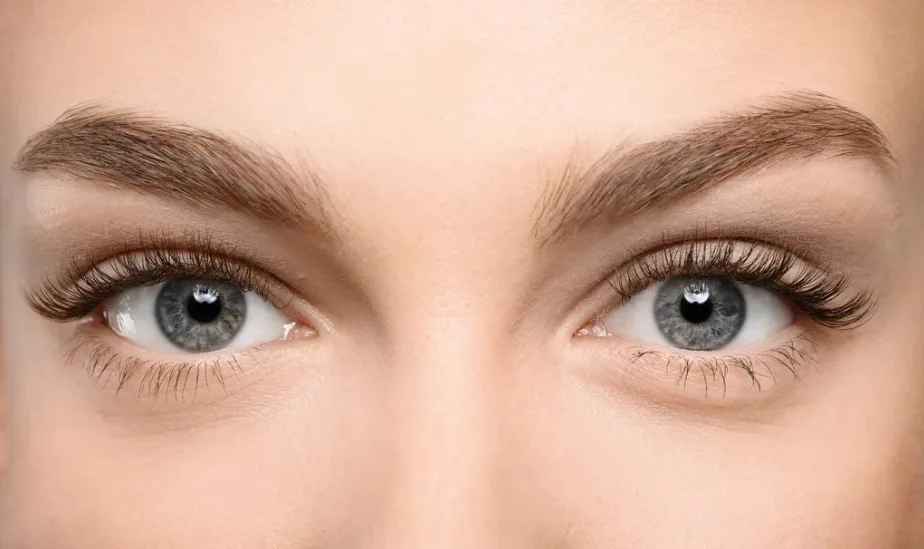
- ShapeDeep-set — a strong brow bone sits over the lash line and limits how high it can go.
- EffectNatural, single lashes: a wide gentle peak across the middle, tapering both ways.
- Where everyone strugglesEvery bit of curl you add has to be paid for in length. Stronger means shorter.
Why Why it is laid out this way
There is a fixed amount of headroom between a deep-set lash line and the bone above it, and a natural set is the map that lives comfortably inside it. The peak is wide rather than tall, so no single zone is pushing at the limit. Nothing here is corrective — it is the version of this shape that simply looks rested.
The order the zones go in
- Start tiny at the inner cornerThe first zone is the shortest on the map by a distance, well under half the peak.
- Climb in even stepsThree unhurried steps up to the peak. Nothing on this map should surprise the eye.
- Run the peak over two zonesHold the top length across the two middle zones so the high point is broad, not sharp.
- Taper out, but not to nothingThe outer end finishes noticeably longer than the inner one. Both ends taper; they do not taper equally.
- Trade curl against lengthKeep the curl soft through the peak. If you want more curl anywhere, take that zone shorter to pay for it.
The length curve on deep-set eyes
The curve is a low, wide hill sitting slightly toward the outer half, with the inner end much shorter than the outer. That asymmetry matches the lid itself, which has the least room at the inner corner and a little more toward the outer third. Keeping the peak broad instead of pointed means the longest zones never have to reach for the limit of what the bone allows.
Where does a natural map go wrong on deep-set eyes?
Deep The physics underneath
The map above is chosen so nothing is working at its limit. Here is where that limit actually sits.
The same map, built four ways
- Classic 1:1
- One strand on one lash, which on a map this plain means every choice is visible and nothing is hidden by density. It is also the lightest way to build the broad peak, provided you resist making it thicker to compensate.
- Handmade volume
- Would let the peak look denser at the same length by splitting the mass across finer strands. On a natural map that saving is best left unspent — the whole effect depends on the line staying open.
- Promade / pre-made fans
- Even and quick, but they arrive with their base already formed and their spread already chosen. A plain map gives you nowhere to hide an inconsistent root.
- Woven / clover
- Its spread repeats identically from bond to bond, and a repeat is the one thing a natural set cannot contain. The eye finds a rhythm before it finds a lash.
Spread angle versus weight
No fans on this build, but the same logic decides how close the peak lashes sit. Two neighbours set too close behave like one wide object — more shade on the line, no more reach out of the socket. On the two peak zones, aim for the widest gap that still reads continuous from the front.
What a deep-set lash line can carry
- The first thing to go is the angle. A peak lash that loses a few degrees on this shape has moved its tip from open air into the bone's shadow, which the client notices as the set fading rather than as anything falling out.
- Because length adds mass and lever at the same time, a broad peak of moderate length costs less than a narrow peak of ambitious length and looks better on this eye anyway.
- The finest lashes in a zone set what that zone can carry. A natural map is forgiving of a weak lash line only if you let the ceiling drop with it rather than holding the length and hoping.
Where this map fails first
The outer taper is the first thing to lose. Those lashes are fine, steeply angled and constantly rubbed, and once they thin the line ends abruptly instead of easing. On a deep-set eye an abrupt end pulls the whole set back toward the socket, which is why this map keeps the outer end longer than the inner in the first place — there is something left when a few go.
FAQ Common questions
Is a natural map really the default for deep-set eyes?
It is the resting default. A centre-weighted open-eye map corrects more, but a broad natural peak works on any deep-set client and asks the least of the lash line.
Why is the inner corner so much shorter than the outer?
The inner corner is the deepest, narrowest part of the socket, so length there is both invisible and in the way. The outer third has more room and keeps a little length to stop the eye closing up.
Why does stronger curl mean shorter length here?
Because a curl bends the tip upward and there is a bone directly above it. Add curl without shortening and the tip travels into shade — the set measures long and looks short.
Should the peak be one zone or two?
Two on this map. A broad top keeps every individual lash below the limit of what the shape allows, and it reads as rested rather than as styled.
Print this page or save it as PDF — the diagrams are drawn to stay readable in black and white on plain paper. Or download the diagrams below as SVG. No account, no fee, nothing to sign. Every file carries this page’s address, so wherever it ends up it can be traced back here.
Teaching from these? The offer, and how to credit it.
Also in: Deep-Set eyes · Natural · Classic 1:1
Read next: questions clients ask about lash extensions