Deep-Set Eyes · Natural · Volume
The natural lash map for deep-set eyes, built in Volume — zone order, where the length peaks, and the point this one usually goes wrong.
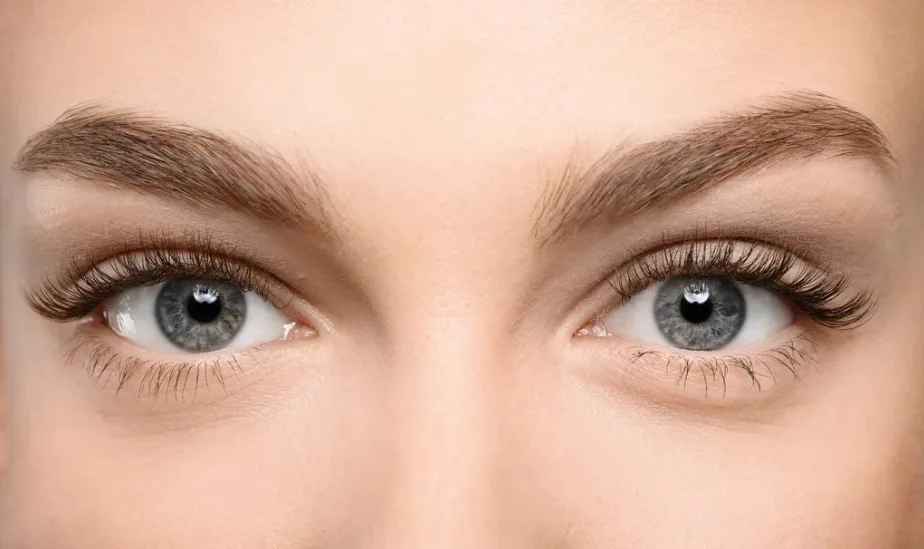
- ShapeDeep-set — the brow bone overhangs, so the lash line reads darker than it is.
- EffectNatural, in fans: a wide easy peak built from the finest strands you work with.
- Where everyone strugglesFans here replace thickness, not lightness. More material means a duller eye.
Why Why it is laid out this way
A natural set asks for a lash line that looks like it grew that way, and volume can deliver that or destroy it depending on what you spend the fans on. Split into fine strands, a fan gives the same silhouette as a thicker single at a fraction of the load, which is the version this shape wants. Used for density instead, it turns a recessed line into a painted one.
The order the zones go on, fan by fan
- Build the whole curve in one layerShort inner end, even climb, the top length held across two middle zones, a gentler fall outward.
- Keep the fans fine and fewFewest strands that still close the gap. On this lid the count is a cost, not a feature.
- Space them deliberatelyLeave visible air between fans. Air is what keeps the line reading as lashes under the shade.
- Add a light second layer mid-lid onlyA restrained upper layer across the strongest central lashes, at the same mapped length as the first.
- Leave the inner corner single-layeredThe narrowest part of the lid stays one thin layer of the tightest fans on the set.
The length curve on deep-set eyes
The line rises in three steps, holds flat over the two middle zones, then eases outward and finishes higher at the outer end than at the inner. Nothing on the curve is at the limit of what the bone above allows, which is what makes it survivable as well as calm. The fans exist so that peak can be reached on strands light enough for the natural lash to hold level for the whole cycle.
Where does a natural map go wrong on deep-set eyes?
Deep The physics underneath
Fans lower the weight per unit of look. They do not lower the lever, and on this shape the lever is what runs out first.
The same map, built four ways
- Classic 1:1
- Honest and easy to keep light, but the only lever on fullness is strand thickness, which is the one adjustment a recessed lash line punishes.
- Handmade volume
- The reason to be here: several fine strands cost far less in mass than one strand thick enough to look the same, and you can tighten each fan for the zone it lands in. Spend the discount on keeping the line airy, not on closing it up.
- Promade / pre-made fans
- They hold a two-layer set even across a long appointment. What you give up is the ability to make the inner fans smaller than the middle ones, which on this map is the difference between a quiet inner corner and a crowded one.
- Woven / clover
- It closes gaps efficiently, and the gaps are what this build is protecting. Wrong tool for a map whose whole effect depends on the line staying broken.
Spread angle versus weight
Spread moves mass sideways; it never moves it forward, and forward is the only direction that helps a deep-set eye. Across the two peak zones the fans are longest, so any width there produces the most twist and the most shade for the least gain. Tight fans on the top of the curve, a little more spread on the short inner steps where neither cost matters.
What a deep-set lash line can carry
- Deflection sets the ceiling long before adhesion does. When a peak fan leans a few degrees on this shape its tips leave the light and enter the socket's shade, and the client reports a set that has gone dull rather than one that is falling out.
- Length remains the expensive choice even in fine strands, because it adds mass and extends the lever together — a fan is cheaper than a single of the same look, not cheaper than a shorter fan.
- Layers stack, loads do not. Every fan hangs off its own natural lash, so the weakest lashes in the mid-lid decide whether the second layer is a good idea at all.
Where this map fails first
This map fails by losing its shape rather than its density. Shedding is random, so a few lashes go from each zone and the careful three-step climb between the inner corner and the peak levels off into one length. On a bright eye that would still look fine; on a deep-set one the flattened line has no zone reaching forward and the eye slides back. Rebuilding the climb, not just the count, is what a refill on this cell is for.
FAQ Common questions
Is volume a good idea on deep-set eyes at all?
Yes, if you use it to lighten rather than to fill. Fine strands fanned reach the mapped length for less load than a thicker single, which is exactly what a recessed lash line needs.
How many strands should a fan have here?
As few as will close the gap to the next lash. The count is a cost on this shape, because every extra strand darkens a line that is already sitting in shade.
Which zones get the second layer?
Across the strong central lashes only, at the same length as the first. Kept off the inner corner and the outer tail, it adds body where the lid faces forward and nowhere else.
Why does this set look flat before the refill is due?
Because random shedding erases the climb between zones before it erases the fullness. The length gradient is what makes the eye look open, so it is the first thing you notice going.
Print this page or save it as PDF — the diagrams are drawn to stay readable in black and white on plain paper. Or download the diagrams below as SVG. No account, no fee, nothing to sign. Every file carries this page’s address, so wherever it ends up it can be traced back here.
Teaching from these? The offer, and how to credit it.
Also in: Deep-Set eyes · Natural · Volume
Read next: questions clients ask about lash extensions