Deep-Set Eyes · Squirrel / Fox · Volume
The squirrel lash map for deep-set eyes, built in Volume — zone order, where the length peaks, and the point this one usually goes wrong.
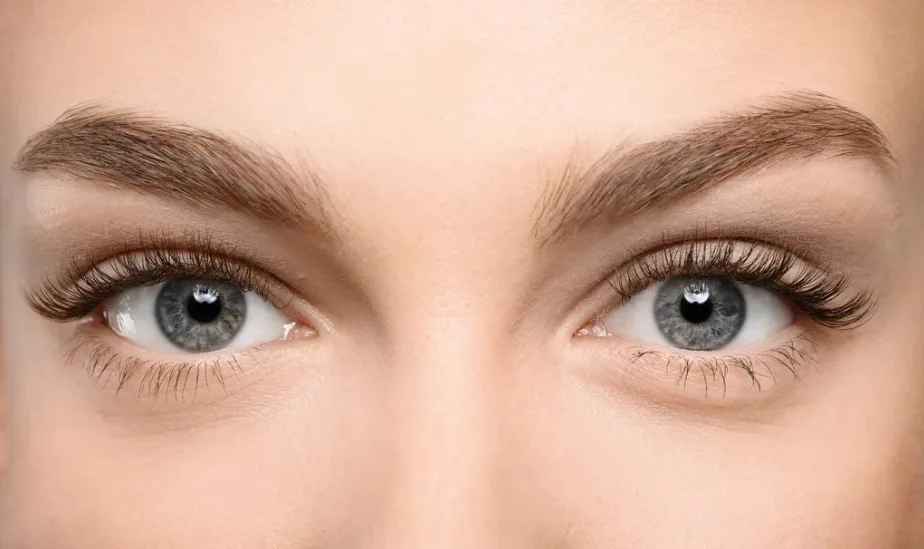
- ShapeDeep-set — headroom above the lash line varies with the brow, and it is never generous.
- EffectSquirrel, in fans: a fast rise to a peak under the arch, then a long walk down.
- Where everyone strugglesFans fill gaps sideways. Fill in the climb and the lift you mapped disappears.
Why Why it is laid out this way
The whole point of this map is the difference between how fast it goes up and how slowly it comes down, and fans are very good at erasing that difference without anyone noticing. Every gap you close on the rising zones makes the climb look gentler than you drew it. Build the shape first, then fill only where filling does not flatten it.
The order the zones go on, fan by fan
- Set the peak under the brow's high pointDrop a line from the top of her arch to the lash line with her eyes open, and put the top length there.
- Keep the rising zones sparseFewer fans, wider apart, on the three zones before the peak. The climb needs to look quick.
- Use the tightest fans at the topPeak fans are the longest on the set, so they are the narrowest. Reach matters more than width there.
- Add a second layer over the peak band onlyOne extra layer across the peak and the zone either side, at the same length. It stops before the corner.
- Walk the fall down in even stepsThree descending zones, each a little shorter and a little narrower than the last.
- Leave the corner single and smallThe outer end keeps mid-height with one thin layer of the smallest fans you make.
The length curve on deep-set eyes
A short inner end, three brisk steps up, a flat top of two zones under the arch, then a long slope to a mid-height corner. Under a heavy brow the arch is the one place with real clearance overhead, so the peak is placed by her face rather than by the lid's midpoint. The slope is long because a deep-set eye that ends abruptly at the outer third looks narrower than it is.
Where does a squirrel map go wrong on deep-set eyes?
Deep The physics underneath
The map is decided by her brow. What the lash line will actually hold is decided below.
The same map, built four ways
- Classic 1:1
- The most reliable way to keep the rising zones sparse, because a single strand can only fill so much. It runs out of road when the peak needs more presence than a light strand can give.
- Handmade volume
- The case for this cell: the peak under the arch is where you most want body and least want weight, and hand-made fans let you tighten each one for exactly that band.
- Promade / pre-made fans
- Steady work across a long descending slope, which is the part of this map that drifts when you are tired. The fixed spread is a real cost at the peak, where narrow is the whole point.
- Woven / clover
- Broad coverage per bond makes short work of the slope and makes nonsense of the climb, which relies on gaps to look fast. Keep it off the rising zones entirely.
Spread angle versus weight
Under the arch the fans are longest, so a wide spread there costs the most twist for the least return — width lays material along the line while this shape is short of reach out of it. The rising zones need their gaps, so they take narrow fans too, for a different reason. That leaves the middle of the slope as the only band where a wider fan is genuinely useful.
What a deep-set lash line can carry
- Bending, not shedding, sets the limit. A peak fan that leans by a few degrees has traded the clearance under the arch for the shade beside it, and the lift goes with it.
- Length adds mass and lever at once, so a peak placed where the room already exists can be shorter than one placed anywhere else and still look higher — the cheapest trade on this shape.
- The peak band carries both layers, so its weakest lashes decide the whole build. If those lashes will not take two fans, the answer is one layer at the mapped length, not two shorter ones.
Where this map fails first
The zone immediately outboard of the peak is the weak spot on this cell. It carries near-peak length on lashes already thinner than the mid-lid, and it is where the second layer stops, so there is a join in the build exactly where the load is still high. When it goes, the flat top loses its outer half and the map reads as an open-eye set that drifted. Ending the second layer a zone earlier costs almost nothing and moves the join to safer ground.
FAQ Common questions
Why do the rising zones stay sparse?
Because the climb is the effect. Fans close gaps, and a closed gap raises how the line reads even when the length is unchanged, so a filled-in climb arrives at the peak looking flat.
How far does the second layer go?
Across the peak and one zone either side, then it stops. Beyond that the lashes are finer, the lid curves away and the extra layer is weight where nobody is looking.
Should the fans get narrower toward the corner?
Yes. The corner lashes are the finest on the map and the shortest, so they take the smallest fans on the set — and the slope wants to lose width as it loses length.
How is this different from a volume open-eye map?
Placement and pace. The open-eye map peaks in the centre and drops hard on both sides; this one peaks under the brow's high point and comes down slowly to a corner that keeps real length.
Print this page or save it as PDF — the diagrams are drawn to stay readable in black and white on plain paper. Or download the diagrams below as SVG. No account, no fee, nothing to sign. Every file carries this page’s address, so wherever it ends up it can be traced back here.
Teaching from these? The offer, and how to credit it.
Also in: Deep-Set eyes · Squirrel / Fox · Volume
Read next: fox eye and squirrel lash mapping, and how they differ · questions clients ask about lash extensions