Downturned Eyes · Cat-Eye · Hybrid
The cat-eye lash map for downturned eyes, built in Hybrid — zone order, where the length peaks, and the point this one usually goes wrong.
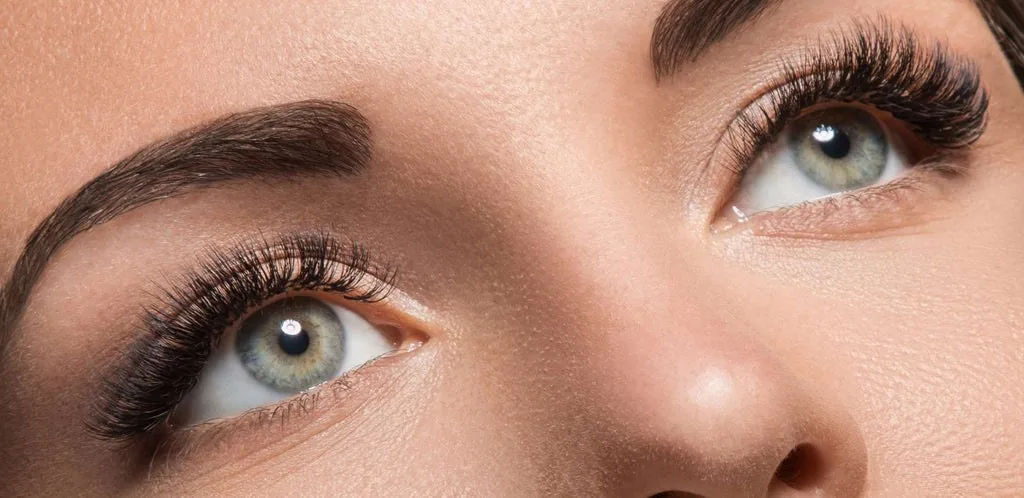
- ShapeDownturned — the outer corner already falls.
- EffectCat-eye, in hybrid — but the peak stops short of the corner.
- Where everyone strugglesNever put your longest lashes at the outer corner. It reads sad, not lifted.
Why Why it is laid out this way
Downturned eyes tilt down at the outer corner, and the cat-eye is the effect clients ask for most and the one that goes wrong fastest. Pile length on a corner that already falls and you amplify the droop. The working version fakes elongation with curl and peak placement, and hybrid texture keeps it from looking crisp or heavy.
The order the zones go on, and where the fans land
- Peak before the corner, not at itLongest zone short of the outer corner. The eye still reads elongated, with no weight on the droop.
- Let curl take over where length stopsPast the peak, step length down while curl strengthens. Lift comes from curl angle, not length.
- Mix single lashes and fansBlend classic strands with soft fans for a textured, less uniform edge than pure classic or volume.
- Add spike texture, sparinglyA scatter of closed-fan spikes just above the base — a wispy edge, not a full second layer.
- Keep the tail lighter than the peakFinal zones stay shorter and lighter. Tail length is the line between a lifted cat and a sad one.
The length curve on downturned eyes
Every downturned correction fights gravity at the outer corner, and length loses that fight — a longer lash at the tail points further down. Curl wins it: a stronger curl throws the tip up while a shorter length keeps the weight off. Placing the peak before the corner gives the stretch of a cat-eye without loading the droopy part.
Where does a cat-eye map go wrong on downturned eyes?
Deep The physics underneath
Here the decisive quantity is not mass. It is the lever arm — and curl is the only tool that shortens it.
The same map, built four ways
- Classic 1:1
- A single strand puts its mass on the lash's own line — the most predictable thing to hang off a falling corner. That's why the spine (peak and tail) is often classic even inside a hybrid.
- Handmade volume
- Fans between the spine strands buy density at the usual discount. Spend it inboard, in the zones not fighting gravity.
- Promade / pre-made fans
- Fast and consistent, and easy to over-use in the corner because they're fast. Small node mass, but it lands on the lashes least able to argue — make the corner the exception.
- Closed fans — spikes
- A spike is a fan closed to almost no spread: mechanically a single thick strand, all mass on the axis, and the longest thing on the set. Budget it as a classic lash — a scatter, never a layer.
Spread angle versus weight
Bending load is mass × the horizontal distance from root to the extension's balance point. Curl cuts that distance without changing mass — the more curved, the more length goes up instead of out, so the centre of mass sits closer to the root and the tip sits higher. That is why 'lift with curl, not length' is a rule: length adds mass and lever together, curl subtracts lever and adds height.
What a downturned lash line can carry
- Corner lashes are the shortest, finest and steepest-angled on the lid, so the same extension acts through a longer lever there — and a textbook cat asks exactly these to carry the longest strands.
- So the objection isn't only aesthetic: the corner is overloaded, and the same mistake looks sadder immediately and sheds sooner. One cause, two symptoms — the second usually blamed on glue.
- Hybrid only helps if the mix is deliberate: singles carry the shape, fans carry density, neither does the other's job.
Where this map fails first
The tail, visibly. The peak sits on strong mid-lid lashes and holds; the corner thins, survivors rotate outward along the angle they were fighting, and the shaped line collapses into the droop it was built to hide. Because the effect is a shape, not a density, the failure isn't 'sparser' — it's the effect disappearing. Map the tail light so there's less to lose.
FAQ Common questions
Can you do a cat-eye on downturned eyes?
Only a lift-modified one. A textbook cat that piles length on the outer corner is contraindicated — it deepens the droop. The working version peaks before the corner and lifts with curl.
The tail already falls — so where does the lift come from?
Curl. Strengthen the curl angle toward the tail while stepping length down, so the tip throws up and no extra weight hangs off the corner.
Why map this in hybrid rather than classic or volume?
Hybrid blends single lashes and fans — a textured edge softer than a crisp classic cat and lighter than full volume, which suits a shaped, lift-first line on a delicate corner.
Where does the peak go on a downturned cat map?
Short of the outer corner, under the arch rather than at the tail — faking a cat-eye's elongation while keeping weight off the droop.
Print this page or save it as PDF — the diagrams are drawn to stay readable in black and white on plain paper. Or download the diagrams below as SVG. No account, no fee, nothing to sign. Every file carries this page’s address, so wherever it ends up it can be traced back here.
Teaching from these? The offer, and how to credit it.
Also in: Downturned eyes · Cat-Eye · Hybrid
Read next: what a cat eye lash map actually is · questions clients ask about lash extensions