Downturned Eyes · Natural · Volume
The natural lash map for downturned eyes, built in Volume — zone order, where the length peaks, and the point this one usually goes wrong.
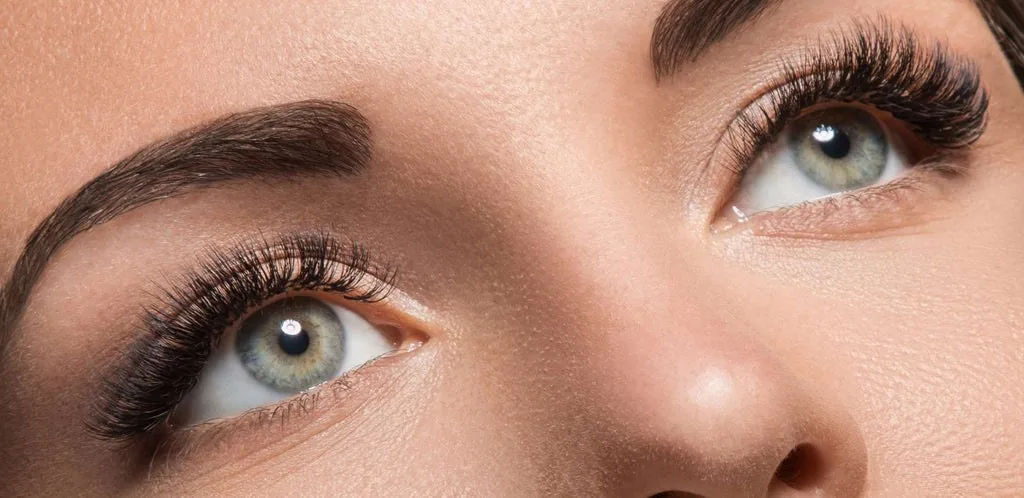
- ShapeDownturned — the outer end of the lash line finishes below the inner end.
- EffectNatural fullness in fans: soft, even, and short enough not to feed the droop.
- Where everyone strugglesFullness is bought with fine strands, not with reach. Nothing outboard gets longer.
Why Why it is laid out this way
Clients who ask for natural and full are asking for two things that usually fight, and on this eye shape the usual referee — a bit more length — is not available. Fans settle it: several fine strands read as more lash without the reach that would push the outer end further down. The brief still caps how wide those fans are allowed to be.
The order the zones go on, fan by fan
- Set the ceiling earlyChoose the top length as if this were a single-strand set, then never exceed it. Fans change fullness, not the map.
- Open gently through the middleFan width rises with the length curve, zone by zone, so density and height arrive together.
- Run the top flatTwo neighbouring zones share the longest length and the widest fans. A flat top spreads the load and hides the map.
- Close down going outwardPast the top, narrow the fans as the lengths drop. The outer half should be visibly lighter, not just shorter.
- Curl the last zones harderSmall narrow fans on a strong curl finish the tail. Angle is the only lift this map is allowed.
The length curve on downturned eyes
The curve is low and broad because a natural brief will not tolerate a peak, and the two-zone top exists to spread the work across more lashes than a single high zone would. In fans, read the same curve twice: once as length, once as how many strands are in each fan. Where the two curves stay in step, the set looks like her own lashes on a good day; where density runs on past the length, it looks like a volume set that shrank.
Where does a natural map go wrong on downturned eyes?
Deep The physics underneath
Placement is above. What follows is the one trade that lets a set be fuller without being longer, and where on this lid you are allowed to spend it.
The same map, built four ways
- Classic 1:1
- The reference point for this cell: it can match the map's lengths exactly but can only look fuller by getting thicker, and thickness on the outer zones of this shape is the last thing you want. Useful as spine lashes through the top zones.
- Handmade volume
- Why this cell exists. Splitting a strand into several finer ones gains coverage faster than it gains mass, so the top of the map can be full at a length that leaves the corner alone. Keep the strand count modest or the natural read goes.
- Promade / pre-made fans
- Reliable width and quick placement, with a slightly firmer base. On a natural set their sameness is the issue rather than their weight — identical fans in a row make the lash line look printed.
- Woven / clover
- They deliver more coverage per bond than this brief has any use for, and their fixed spread runs across the lash line. Nothing in a low, broad natural map benefits from that much width.
Spread angle versus weight
On this cell spread is capped by the brief before it is capped by physics: past a certain width the set simply stops looking natural, and that limit arrives well before the lash gets into trouble. Within it, the useful move is to let the widest fans coincide exactly with the two top zones and to close every zone after them by a step. A narrow fan sitting on a strongly curled outer lash reads as a lifted tip, while the same fan opened wide reads as a smudge on the part of the lid that is already low.
What a downturned lash line can carry
- This map runs well under any real load ceiling, so the honest limit is aesthetic: the line starts looking applied long before any lash starts bending, and that limit is the one to respect.
- The reason it stays safe is that the top is broad and short — the same coverage is carried by more lashes at less reach, which is why a natural volume set survives on lash lines that will not hold a peaked map.
- Even here, the thinnest lashes in the two top zones set the standard. Give them a smaller fan than their neighbours, since a single sagging fan in a flat top is visible precisely because there is no peak to distract from it.
Where this map fails first
Failure on this cell is usually a refill artefact rather than a mapping one. Fans get replaced where the gaps are most obvious, and the most obvious gaps sit just outboard of the top, so over two or three visits the density quietly walks toward the corner while the lengths stay where you left them. The set turns heavy at the low end without a single wrong length on the lid. Re-read the density against the map at every refill, not just the lengths.
FAQ Common questions
Can volume look natural on downturned eyes?
Yes, if the fans stay narrow and the lengths stay modest. What breaks the illusion is width, not the fact that fans are being used.
Why not just add a bit of length instead of fans?
Because length on this shape is charged twice — it loads the smallest lashes at the outer end and it points the eye further down. Fans buy fullness without asking for either.
How do I stop the outer corner looking heavy?
Narrow the fans in step with the falling lengths. If density stays flat while length drops, the tail reads as a dark band no matter how short it is.
The set was perfect and now looks bottom-heavy after two refills. Why?
Fans tend to get added where gaps show, which is usually just past the top. Check the density profile against the original map before topping up.
Print this page or save it as PDF — the diagrams are drawn to stay readable in black and white on plain paper. Or download the diagrams below as SVG. No account, no fee, nothing to sign. Every file carries this page’s address, so wherever it ends up it can be traced back here.
Teaching from these? The offer, and how to credit it.
Also in: Downturned eyes · Natural · Volume
Read next: questions clients ask about lash extensions