Downturned Eyes · Squirrel / Fox · Classic 1:1
The squirrel lash map for downturned eyes, built in Classic 1:1 — zone order, where the length peaks, and the point this one usually goes wrong.
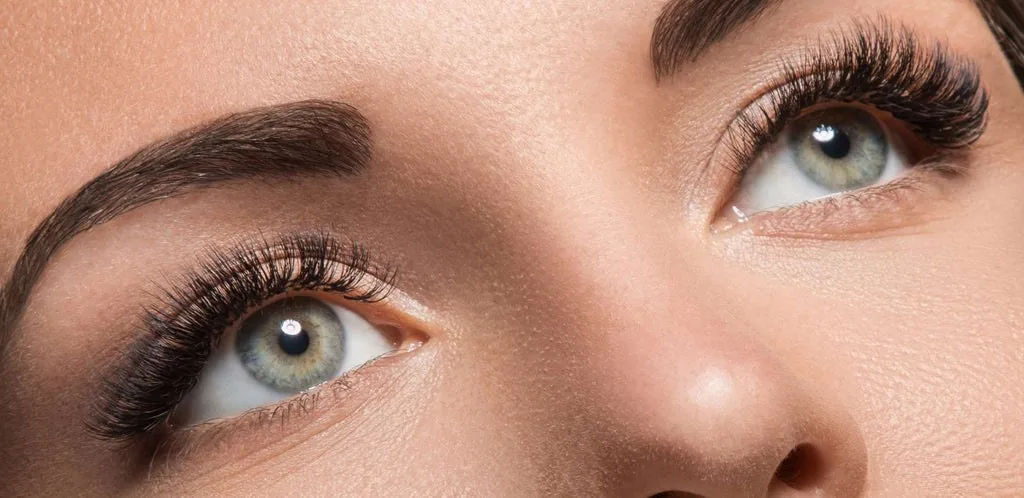
- ShapeDownturned — the lash line runs downhill from the middle to the outer corner.
- EffectSquirrel: the high point sits past centre but well inside the corner.
- Where everyone strugglesMove the high point outward and this becomes the map this shape must not have.
Why Why it is laid out this way
Squirrel sits between the open-eye map and the cat, and on a downturned client that middle ground is the useful part. The high point lands around seven-tenths of the way along the lid — far enough out to stretch the eye, far enough in to leave the falling corner alone. In single strands, the position of that one zone is more or less the whole product.
The order the zones go in
- Mark the seven-tenths pointFind the spot roughly two-thirds to three-quarters along the lash line and treat it as fixed before mapping anything else.
- Start low and stay lowThe first three zones climb slowly and stay well under the high point. A lazy start is what makes the rise read.
- Jump once into the peakThe step from the fourth zone into the fifth is the big one. That single move is what the client reads as lift.
- Brake hard afterwardsThe two zones past the peak fall faster than the climb rose, finishing near the length of the second zone.
- Curl the braking zones upAs those last lengths drop away, step the curl up so the shortened tail still points above the line of the lid.
The length curve on downturned eyes
This curve is not symmetrical, and the asymmetry is the design. The climb is gradual and late, so the inner two-thirds of the eye stays quiet; the fall after the peak is quicker than the climb, so the corner is left with almost nothing on it. On a lid that already slopes down, that steep braking section is not a stylistic flourish — it is the part that keeps the peak from turning into a slide.
Where does a squirrel map go wrong on downturned eyes?
Deep The physics underneath
Above is where to put the lengths. Below is why the zone you put them in is also the zone that argues back hardest.
The same map, built four ways
- Classic 1:1
- This cell, and an unforgiving one: the peak is a run of long single strands on lashes that are already past the strongest part of the lid. Nothing beside them shares the load, so a peak mapped one step too tall shows within a fortnight.
- Handmade volume
- Fans would let the peak keep its presence at less reach, which is a genuine option on a client whose outer-middle lashes are fine. Working in singles, presence and reach are the same purchase.
- Promade / pre-made fans
- Fast, consistent and easy to keep placing past the peak because the rhythm carries you. The braking zones are meant to shrink, so this is exactly where speed costs you the shape.
- Woven / clover
- Their spread runs along the lash line and this map's argument is about height at one particular point. Used through the peak they broaden it into a plateau, which is a different effect entirely.
Spread angle versus weight
With one strand per lash there is nothing to spread, so the peak has only two dials and one of them is free. Every bit of the stretch is bought with reach on lashes sitting where the lid has started to curve away from you, which is why this is the least forgiving cell in the squirrel row. When the peak height and the natural lash disagree, take the height down a step and add the difference in curl — a slightly shorter peak still reads as a peak, a bent one does not.
What a downturned lash line can carry
- The ceiling here is a bending peak, not a shedding one: when the longest single strands lean forward, the seven-tenths high point rounds off and the map reads as a long flat set with everything still attached.
- Reach is charged twice at the peak. It adds material and moves the balance point outward, and past the middle of this lid outward also means further down the slope, so the same length behaves worse here than it would over the pupil.
- The peak zone's weakest lashes decide its height. One lash mapped to the zone average instead of to itself leaves a notch in the top of the curve, and on a shaped map a notch is visible from across a room.
Where this map fails first
Everything about this map is one zone, so that is where it fails. The peak carries the longest strands on the set, sits past the strongest part of the lid, and gets no help from its neighbours because they were deliberately mapped short. When it leans, the stretch flattens and the eye goes back to sloping. The braking zones outlast it easily, which is the point of mapping them small in the first place.
FAQ Common questions
How far out should a squirrel peak sit on downturned eyes?
About seven-tenths of the way along the lash line. Further in and it becomes an open-eye map; further out and it starts loading the corner that already falls.
Why does the taper after the peak have to be so steep?
Because a slow taper leaves length on the falling part of the lid. The steep drop is what tells the eye the line stops rising and never starts sloping.
Is squirrel safer than a cat-eye on this shape?
Considerably, since its high point sits inboard of the corner. It still needs the taper — a squirrel with a lazy outer half behaves like a mild cat.
Can I do this map on short natural lashes?
Only if the outer-middle lashes are strong enough to carry the peak. If they are the thinnest on the lid, choose a map whose high point sits over the middle instead.
Print this page or save it as PDF — the diagrams are drawn to stay readable in black and white on plain paper. Or download the diagrams below as SVG. No account, no fee, nothing to sign. Every file carries this page’s address, so wherever it ends up it can be traced back here.
Teaching from these? The offer, and how to credit it.
Also in: Downturned eyes · Squirrel / Fox · Classic 1:1
Read next: fox eye and squirrel lash mapping, and how they differ · questions clients ask about lash extensions