Downturned Eyes · Squirrel / Fox · Hybrid
The squirrel lash map for downturned eyes, built in Hybrid — zone order, where the length peaks, and the point this one usually goes wrong.
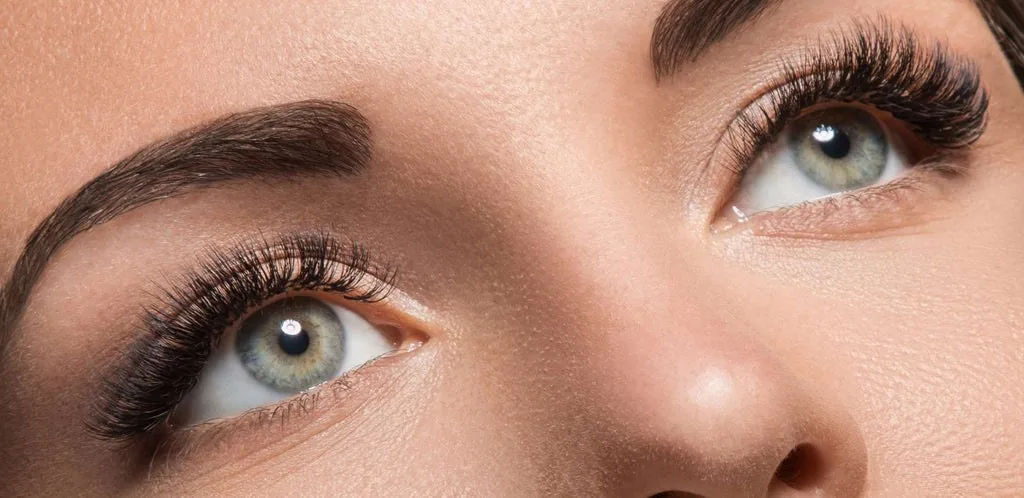
- ShapeDownturned — the outer third of the lash line runs downhill.
- EffectSquirrel with mixed texture: a defined high point past centre, a soft taper after it.
- Where everyone strugglesTexture stops where the taper starts to bite. The last zones stay plain.
Why Why it is laid out this way
A squirrel map lives or dies on one high point, and mixed texture is the fastest way to blur it. Handled the other way round it earns its place: singles hold the shape, fans keep the steeply falling outer zones from looking bare at a length that has to stay short. Think skeleton first, then skin.
The order the zones go on, and where the fans land
- Fix the high pointSet the peak zone about seven-tenths along the lid before any texture decisions. It does not move afterwards.
- Build the peak in singlesUse plain strands through the high point so its top edge stays clean and its load stays predictable.
- Fan the falling zonesPast the peak, narrow fans hold visible density while the lengths drop away fast. Short does not have to mean sparse.
- Scatter texture inboard onlyAny longer, spikier lashes belong between the third and fifth zones, never after them.
- Leave the corner plainThe final zone is single strands, short, on the strongest curl of the set. Nothing decorative goes there.
The length curve on downturned eyes
The curve climbs late, spikes once and then drops faster than it rose. Mixed texture works against the second half of that unless you place it deliberately, because anything long and irregular in the falling zones reads as length still being there. Use the fans for density and the singles for shape, and the diagram survives contact with the texture.
Where does a squirrel map go wrong on downturned eyes?
Deep The physics underneath
Placement is settled. What follows is how each way of building a lash behaves either side of a high point that has to stay sharp.
The same map, built four ways
- Classic 1:1
- The shape-carrying half of this cell. All the mass on one axis makes the peak's behaviour predictable, and predictability is what a map with a single high point needs most.
- Handmade volume
- The covering half. Fine strands opened just a little let the falling zones read as finished while their lengths collapse, which no single strand can do at that size. Keep them out of the peak so its edge stays clean.
- Promade / pre-made fans
- Their fixed width is convenient in the taper, where you want the same modest spread repeated. Their consistency is a problem inboard, where the texture depends on nothing looking repeated.
- Woven / clover
- One bond, a lot of lateral coverage, and no way to narrow it as the map falls. On this cell they belong nowhere near the taper and would flatten the peak if used there.
Spread angle versus weight
The interesting spread decisions on this map are all after the peak, since the peak itself is single strands. The falling zones need just enough fan width to look continuous, because a steeply tapering outer half that is also visibly gappy stops reading as design and starts reading as shedding. Open them a step past that and the taper turns dark, which on this shape reads as weight at the low end of the eye — the exact thing the steep drop was built to avoid.
What a downturned lash line can carry
- Mixed textures fail unevenly: the fans in the taper cycle out faster than the single strands in the peak, so the map's shape outlives its coverage and the outer half goes see-through first.
- The peak still sets the load ceiling. Long single strands on outer-middle lashes are the heaviest single item on this map, and if they lean the texture below them cannot rescue the shape.
- Match every placement to its host lash rather than to the pattern. In the taper the hosts are the smallest on the lid, so a narrow fan there is not a lesser version of the plan, it is the plan.
Where this map fails first
The peak and the taper age at different speeds, which is what makes this cell distinctive. The single strands at the high point lean before they shed, and the fans in the falling zones shed before they lean. A set three weeks old often shows a soft high point over a see-through outer half — the same set that looked defined and finished on the day. Rebuild the peak at refill first; the taper can be topped up in less time than it takes to explain it.
FAQ Common questions
Should the peak be fans or single strands on a hybrid squirrel map?
Single strands, in most cases. The high point is judged on how clean its top edge looks, and mixed weights there leave it notched.
Why use fans after the peak rather than more singles?
Because those zones have to be short and still look finished. A narrow fan gives continuity at a length where a single strand would just look sparse.
Where can I put spiky texture on this map?
Between the middle of the lid and the peak. Past the peak it fills in the drop, and on a downturned eye filling in the drop is how a squirrel turns into a droop.
The outer half looks thin after a couple of weeks. Is the map wrong?
Probably not — the fans in the taper are on the smallest lashes and cycle out first. That is a refill interval question rather than a mapping one.
Print this page or save it as PDF — the diagrams are drawn to stay readable in black and white on plain paper. Or download the diagrams below as SVG. No account, no fee, nothing to sign. Every file carries this page’s address, so wherever it ends up it can be traced back here.
Teaching from these? The offer, and how to credit it.
Also in: Downturned eyes · Squirrel / Fox · Hybrid
Read next: fox eye and squirrel lash mapping, and how they differ · questions clients ask about lash extensions