Downturned Eyes · Squirrel / Fox · Volume
The squirrel lash map for downturned eyes, built in Volume — zone order, where the length peaks, and the point this one usually goes wrong.
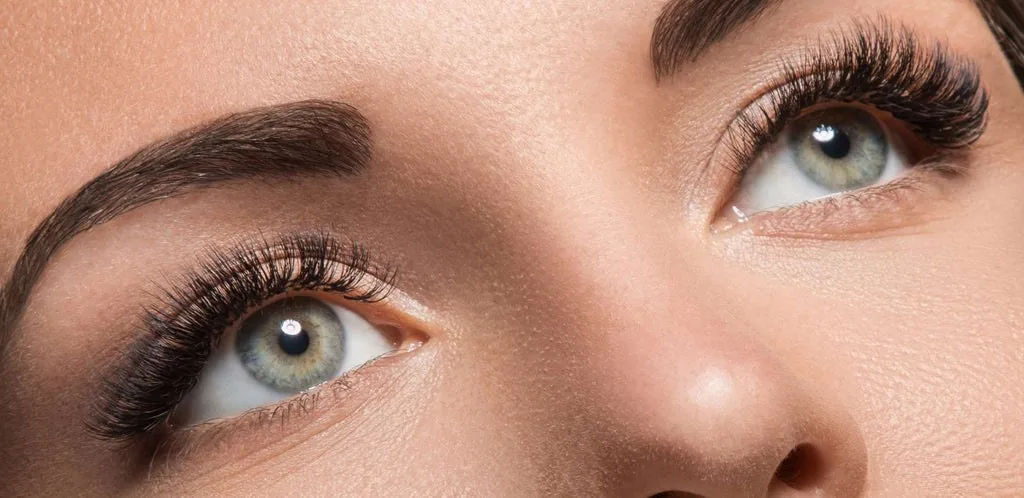
- ShapeDownturned — past the middle, the lash line heads for a lower corner.
- EffectSquirrel in fans: one high point past centre, made wide rather than tall.
- Where everyone strugglesWidth is how you shorten the peak. Using both dials at once is how you lose it.
Why Why it is laid out this way
Fans change one thing on a squirrel map, and it is the thing that matters on this eye shape. A wide fan at the high point reads as much as a longer single strand would, so you can hold the stretch with less reach hanging over the sloping part of the lid. That trade only pays if you actually take the shorter length.
The order the zones go on, fan by fan
- Keep the first zones quietNarrow fans, short lengths, low density through the inner third. This map wants nothing happening early.
- Trade height for widthAt the high point, choose the shorter of two workable lengths and open the fan a step wider to make up for it.
- Make the peak a pointOnly one zone gets the full width and length. Two wide zones side by side turn a peak into a shelf.
- Collapse both dials after itThe two outer zones drop in length and close in width together, ending near the second zone's length.
- Angle the last zone upSmall narrow fan, strongest curl. On the corner, angle is the only thing you are still allowed to add.
The length curve on downturned eyes
The curve rises late, hits one zone hard and then falls faster than it climbed. In fans there is a second curve you are drawing at the same time — fan width — and it has to follow the same route. Where the two agree, the eye reads a clean lifted point; where width lingers after length has dropped, it reads as a dark tail on an eye that is already sloping.
Where does a squirrel map go wrong on downturned eyes?
Deep The physics underneath
The map is above. Below is the exchange rate between width and reach, and why on this lid it runs in only one direction.
The same map, built four ways
- Classic 1:1
- Sets the benchmark this cell is trying to beat: to make the high point read, a single strand has to be long, and long is what the outer half of this lid punishes. Still useful as an anchor lash through the peak.
- Handmade volume
- The whole argument for this cell. Coverage from several fine strands lets the peak read at a shorter length, and you can close the spread zone by zone as the map drops away. Both halves of that matter here; using the first without the second wastes it.
- Promade / pre-made fans
- Consistent width is a good fit for a single-zone peak where every fan should look alike. In the taper their fixed spread works against you, because the taper's job is to keep getting narrower.
- Woven / clover
- Maximum lateral coverage per bond, which is the opposite prescription for a map whose outer zones are meant to be thinning out. If they appear at all, keep them inboard where nothing is falling yet.
Spread angle versus weight
Spread is the currency this cell trades in: opening the peak fan buys back the length you decided not to use, because width adds its coverage near the root rather than out at the tip. There is a limit — past a certain spread the outer legs of the fan sit far enough off the lash's axis to twist, and a twisted fan at the high point costs you the entire map. Practically, open the peak until it looks continuous with its neighbours, take a step of length off in exchange, and close the spread by a step in each zone after it.
What a downturned lash line can carry
- Fans move the ceiling on this map but do not remove it — the peak zone is still the heaviest thing on the lid, and when it starts to lean the stretch goes even though nothing has shed.
- The reason the trade works is that width and reach are not charged the same: coverage added near the root barely moves the balance point, while coverage added at the tip moves it a long way, and on the outer half of this lid a moved balance point is also a lowered one.
- The peak's thinnest lashes cap what the zone can hold. Give them a narrower fan rather than the zone standard, because a single collapsed fan at the high point leaves a dent where every eye is looking.
Where this map fails first
The high point rotates before anything else happens on this set. Those are the widest fans on the lid, sitting on lashes past the strongest part of the line, and rotation is how a wide fan relieves the twist it has been carrying since the day it went on. The client sees a set that is still full but no longer lifted, which is why she will describe it as growing out oddly rather than as a problem. Narrowing the peak by a step at the next refill usually settles it for good.
FAQ Common questions
Does volume let me shorten the peak on a squirrel map?
That is the main reason to use it here. A wider fan reads as much as a longer strand, so you keep the stretch with less reach over the falling part of the lid.
Can the peak cover two zones in volume?
Better not. Two wide zones side by side turn the high point into a shelf, and the outer edge of that shelf sits exactly where this shape cannot take weight.
How narrow should the last zone be?
Narrow enough that it reads as a taper rather than a border. It should be the smallest and lightest fan on the set, on the strongest curl.
Why does my volume squirrel lose its shape before it loses lashes?
The peak fans are turning flat rather than falling off. Check their spread and their base — rotation at the high point is this map's standard failure.
Print this page or save it as PDF — the diagrams are drawn to stay readable in black and white on plain paper. Or download the diagrams below as SVG. No account, no fee, nothing to sign. Every file carries this page’s address, so wherever it ends up it can be traced back here.
Teaching from these? The offer, and how to credit it.
Also in: Downturned eyes · Squirrel / Fox · Volume
Read next: fox eye and squirrel lash mapping, and how they differ · questions clients ask about lash extensions