Hooded Eyes · Cat-Eye · Classic 1:1
The cat-eye lash map for hooded eyes, built in Classic 1:1 — zone order, where the length peaks, and the point this one usually goes wrong.
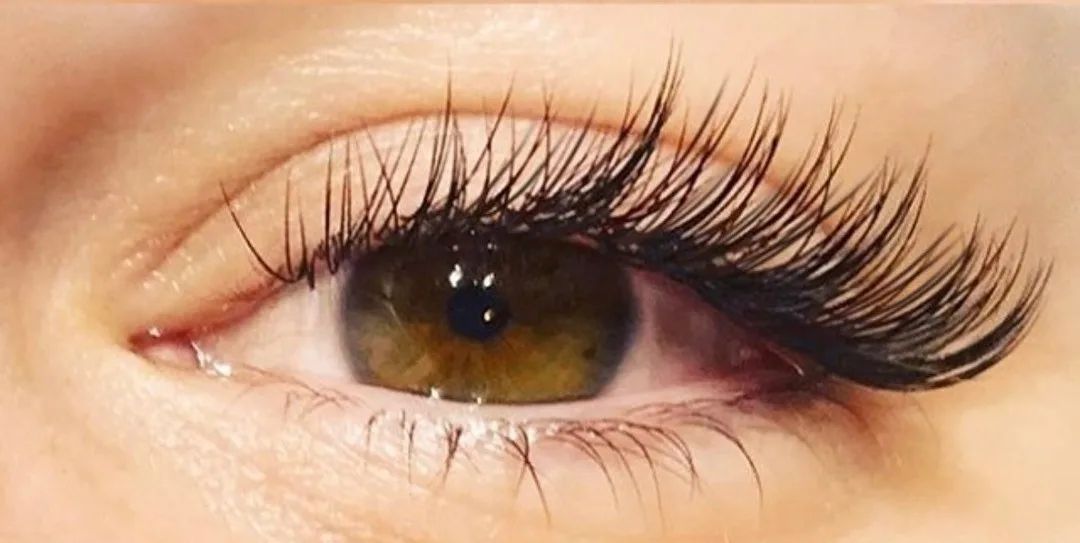
- ShapeHooded — lid skin drapes over the lash line once the eye opens.
- EffectCat-eye in singles: length climbs outward, then eases at the very end.
- Where everyone strugglesPeak one zone before the corner. The last zone comes back down.
Why Why it is laid out this way
Cat-eye is the one hooded request the trade still argues about — some teachers call it the best fit for the shape, others say it drags a hooded outer corner further down. Both are right about different maps: it works if the climb stops before the very end, where the eye is still visibly open. Classic makes that call unforgiving, because one strand per lash leaves nothing to disguise a peak placed a zone too far out.
The order the zones go in
- Mark the drape lineSit her up, eyes open and relaxed, and see how far the lid skin reaches. Anything below that line is length you will never see.
- Keep the inner zone lowestInnermost singles are the shortest on the map and stay there. That corner is under the deepest cover on most hooded lids.
- Climb a hair per zoneEven steps outward with no shortcuts. The elongation is carried by the slope, so the slope has to be readable.
- Peak second from the endLongest singles in the second-to-last zone, in open air rather than under skin.
- Ease the last zone backFinal zone returns a touch below the peak. That single step is what separates a lifted tail from a falling one.
The length curve on hooded eyes
The diagram climbs steadily and then gives one step back, and that last step is doing the correction. On a hooded eye the outer end is where lid skin sits heaviest, so a peak there is both hidden and pulled down. Moving it one zone inboard puts the longest strands where they show and lets the tail read as a taper instead of a droop.
Where does a cat-eye map go wrong on hooded eyes?
Deep The physics underneath
Above is where the length goes. Below is why a single strand is the least forgiving way to put it there.
The same map, built four ways
- Classic 1:1
- This cell. The climb is made of length alone, and on a hooded outer zone length costs twice over — more mass, further from the root. What you get back is bare hardware: nothing sits between strand and lash on the corner least able to argue.
- Handmade volume
- Fans would build the same rising line with less material per lash, which matters most at the top of the climb. The cost is fiddling in the zone you can least afford to fiddle in, because the drape hides your placement angle while you work.
- Promade / pre-made fans
- Repeatable width makes each step of the climb land cleanly, and it is fast across a long slope. The bonded base is bulkier, and out at the tail the lid presses that base sideways instead of letting it wrap the lash.
- Woven / clover
- Lateral width across a rising line blurs the steps until the slope stops being readable, which is the only thing this map has. Keep it inboard where the curve is short and flat, or leave it out.
Spread angle versus weight
Nothing here is fanned, so every bit of load sits on the strand's own line and all of it is bought with length. That makes the peak zone the only real argument: don't widen anything, take the peak a touch shorter than instinct says. Visible or hidden is decided by placement; held or dropped is decided by length.
What a hooded lash line can carry
- The ceiling on this map lives at the outer-centre peak. Those lashes are finer and shorter than mid-lid ones, and you have just handed them the longest extension on the set.
- In singles, length is the expensive variable because it adds mass and reach in the same move. One zone longer at the peak costs far more than the step looks on the diagram.
- The step back at the last zone is mechanics, not styling. It lifts the largest demand off the lashes with the least behind them, which is why this tail outlives a textbook cat's tail.
Where this map fails first
The peak goes before the corner does, which surprises people. Zone six carries the longest strands on lashes that are already thinning toward the end, and it sits exactly where lid skin settles when the eye relaxes. Highest demand meets steady pressure, so by the fill you see the top of the climb flattening while the tail still looks fine. Work that zone first when she comes back.
FAQ Common questions
Is a cat-eye safe on hooded eyes?
Only the version that peaks before the corner. Built all the way to the end it deepens the droop, which is why some trainers ban it outright; built one zone earlier it elongates and stays visible.
Why step the last zone down instead of holding the length?
The final zone is the most covered and the least supported. Coming back a hair keeps the elongation and takes the load off the lashes that give up first.
Can classic carry enough drama for a cat-eye here?
Yes, if the climb is even. The drama comes from the angle of the line rather than density, and one strand per lash keeps the lid light enough that the angle stays where you put it.
How do I check the peak clears the lid skin?
Look at her sitting upright with the eyes relaxed, never lying back. Reclined, the lid pulls open and every map looks like it clears.
Print this page or save it as PDF — the diagrams are drawn to stay readable in black and white on plain paper. Or download the diagrams below as SVG. No account, no fee, nothing to sign. Every file carries this page’s address, so wherever it ends up it can be traced back here.
Teaching from these? The offer, and how to credit it.
Also in: Hooded eyes · Cat-Eye · Classic 1:1
Read next: what a cat eye lash map actually is · questions clients ask about lash extensions