Hooded Eyes · Doll / Open-Eye · Classic 1:1
The doll lash map for hooded eyes, built in Classic 1:1 — zone order, where the length peaks, and the point this one usually goes wrong.
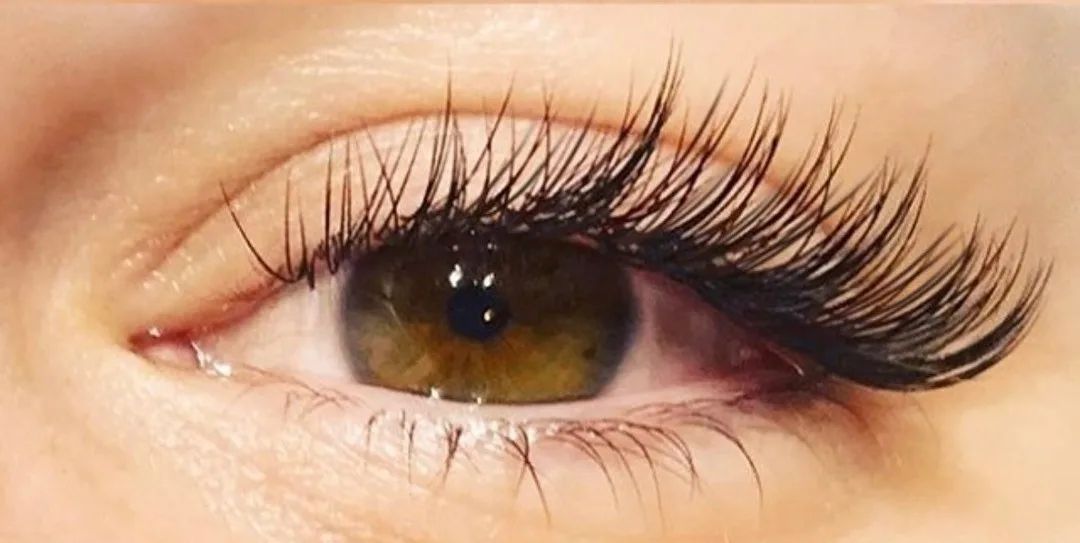
- ShapeHooded — skin sits over part of the lash line the moment the eye opens.
- EffectDoll: one arch centred in the middle of the lid, both corners short.
- Where everyone strugglesMild hooding only. On a deep hood a centre arch makes the eye look smaller.
Why Why it is laid out this way
Doll rounds the eye by putting everything in the middle and almost nothing at either end. That is a bold thing to do on a hooded lid, because the middle is usually where the skin sits lowest — so this map earns its place only when the fold is light enough that the centre lash line still shows. Classic keeps the test honest: one strand per lash, no density to disguise a peak that isn't clearing.
The order the zones go in
- Run the open-eye testUpright, looking straight ahead. If the centre of her lash line disappears, choose a different effect before you open a tray.
- Start both corners tinyInner and outer zones are the shortest on the whole map, and equally short. The roundness comes from what you leave out.
- Rise quickly to the middleLength climbs faster than on any other hooded map — two big steps in and you are near the top.
- Crown the centre zoneLongest singles dead centre, tall enough to stand clear of the skin above them.
- Mirror the fallCome down on the outer side in the same steps you came up. An arch that leans stops reading as round.
The length curve on hooded eyes
The diagram is a symmetrical arch, and symmetry is the whole effect — a round eye is one where the middle is the tallest point and neither end pulls the look sideways. On a hooded lid the arch has a second job: it is the only part of the map that has to punch above the skin, so the centre is where all the height gets spent. Everything either side is deliberately underfed to keep the eye looking wide rather than long.
Where does a doll map go wrong on hooded eyes?
Deep The physics underneath
One strand, one anchor, and a map that concentrates everything in four or five lashes' worth of lid. That concentration is worth thinking about.
The same map, built four ways
- Classic 1:1
- This cell, and the cleanest way to test whether the centre really clears. Everything you put on her is visible as itself, so if the arch fails you know it was placement and not weight.
- Handmade volume
- Fans in the centre would give the same height for less material per lash, useful when the arch has to be tall. The risk is that density in the middle of a hooded lid reads as bulk, and bulk closes an eye faster than length opens it.
- Promade / pre-made fans
- Steady width makes the arch tidy and the mirrored fall easy to match. Ready-made bases are bulkier at the root though, and the centre of a hooded lid is where root bulk is most visible.
- Woven / clover
- Wide, even coverage across the middle sounds like a doll's best friend. In practice it fills the gap between the lash line and the skin above it, which is the gap this whole map exists to protect.
Spread angle versus weight
There is no fan spread on this cell, so the equivalent question is spacing: how much clear air you leave between one strand and the next across the arch. Pack the centre too tightly and singles start touching as the lid presses down, which turns your arch into a solid band. On a hooded eye that band is exactly what makes the eye look smaller.
What a hooded lash line can carry
- The centre zone holds the longest strands on the map, and it does not get to spread that demand — an arch this steep means four or five lashes are doing all the visible work.
- Every extra step of length at the crown raises the load and pushes it further out along the lash at the same time. This is why doll maps are the fastest to sag when you go one step past what she can hold.
- Look at the thinnest lashes in the centre band, not the strongest. If there are gaps in her own middle lashes, this arch is being carried by fewer anchors than the diagram suggests.
Where this map fails first
It fails in the middle, which is unusual — most maps thin at an end. The crown carries the longest singles on the finest support the map gives itself, and it sits directly under the part of the lid that rests lowest. When it goes, the arch flattens and the whole effect reverts to a plain natural set while the corners still look perfect. That is the tell: a doll set that ages into a natural one.
FAQ Common questions
Can hooded eyes wear a doll map at all?
With mild hooding, yes. With a deep fold the centre arch fills the visible gap and closes the eye further, so the effect works against itself.
How short should the corners really be?
Shorter than feels comfortable. The roundness is created by the contrast between a tall middle and two quiet ends, and half-hearted corners kill it.
Why classic instead of fans for this effect?
Because bulk in the centre of a hooded lid reads as a closed eye. Single strands buy height without adding body where the skin is already close.
What is the quickest way to tell if the arch clears?
Have her sit up and look straight ahead before mapping. Reclined in the chair, the lid stretches open and everything looks like it works.
Print this page or save it as PDF — the diagrams are drawn to stay readable in black and white on plain paper. Or download the diagrams below as SVG. No account, no fee, nothing to sign. Every file carries this page’s address, so wherever it ends up it can be traced back here.
Teaching from these? The offer, and how to credit it.
Also in: Hooded eyes · Doll / Open-Eye · Classic 1:1
Read next: open eye versus doll — one family, two intents · questions clients ask about lash extensions