Hooded Eyes · Squirrel · Classic 1:1
The squirrel lash map for hooded eyes, built in Classic 1:1 — zone order, where the length peaks, and the point this one usually goes wrong.
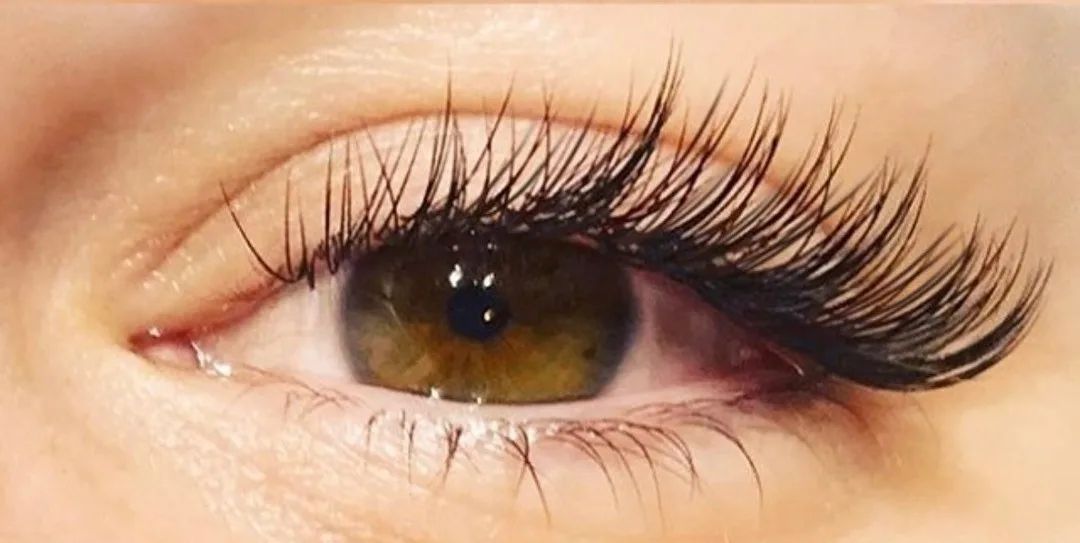
- ShapeHooded — lid skin lies over the lash line and takes the bottom off every length.
- EffectSquirrel in singles: three low zones, then a lift under the brow arch.
- Where everyone strugglesThe inner three stay low. Feed them and the lift has nothing to lift against.
Why Why it is laid out this way
Ask ten trainers for one hooded map and most of them land here, because the squirrel puts its height under the brow arch where the skin has already pulled away. Built in single strands it becomes the lightest way to get that lift, which makes it the version to reach for when her own lashes are fine. Nothing about it is dramatic until the fourth zone, and that is deliberate.
The order the zones go in
- Locate the arch on herEyes open and relaxed, find where her brow arch sits and where the skin stops covering. The lift belongs between those two marks.
- Keep the first three quietThree low zones stepping up barely at all. They are not filler — holding them down is what makes one zone look tall.
- Lift in two stepsTwo clear steps take you from the quiet zones to the longest singles. Small steps here and the lift never arrives.
- Put the peak under the archLongest strands in the fifth zone, standing above the skin line rather than tucked behind it.
- Fall, then finish shortCome down a step, then a bigger one, so the tail ends noticeably below the peak and above the inner corner.
The length curve on hooded eyes
Read the diagram as three flat zones and then a hill. The flat part is the covered part, so length spent there returns nothing — and by staying low it makes the fifth zone look considerably taller than the numbers suggest. The fall afterward is what keeps it a lift rather than a cat: the outer corner is not the destination, it is the way back down.
Where does a squirrel map go wrong on hooded eyes?
Deep The physics underneath
Every bit of this map's effect rests on one zone of single strands. That concentration is worth pricing properly.
The same map, built four ways
- Classic 1:1
- This cell, and the lightest way to build a hooded lift. Height comes from length alone, so you are asking one zone of lashes for the longest strand on the set with nothing helping them carry it.
- Handmade volume
- Reach the same peak height with less material per lash, which is the standard answer when the fifth zone cannot hold a long single. What you trade is time and the tidy simplicity that makes this cell easy to check.
- Promade / pre-made fans
- Uniform width would make the two-step lift very even, and evenness is what the lift depends on. The bulkier root is the catch, and it lands on the zone with the most skin resting on it.
- Woven / clover
- Width across a lift adds nothing, because the problem this map solves is vertical. It is the one technique whose main strength is irrelevant here.
Spread angle versus weight
Nothing fans out on this cell, so the equivalent question is how close together the peak strands sit. Crowd them and the fifth zone turns into a dark tuft that the skin above it makes look like a shadow rather than a lift. Space the peak so individual tips are visible against the lid and the same length reads as height.
What a hooded lash line can carry
- The whole effect leans on the fourth and fifth zones. A single strand there is doing what a fan would do elsewhere, so those lashes are the closest to their limit on the entire map.
- The two-step lift is also a two-step increase in leverage. Each step out adds weight and moves the load further from the root, which is why the second step is the one that costs you.
- Look at what the peak zone is made of before you decide how far to lift. If a third of those lashes are fine or newly grown, the zone cannot hold the height the map is asking for and the lift has to be shortened.
Where this map fails first
The zone after the peak is the quiet failure on this map. It carries almost peak length on lashes that are already thinning toward the outer end, so it empties first — and when it does the peak is left standing alone with nothing beside it. The lift stops reading as a lift and becomes a single tuft of long lashes, which clients describe as the set looking odd rather than sparse. Fill the fall zone at every appointment even when the peak still looks perfect.
FAQ Common questions
Why is squirrel the default recommendation for hooded eyes?
Its peak sits under the brow arch, which is the part of a hooded lid where the skin has already lifted away. Height there is height that survives the eye opening.
Should the inner corner really stay that short?
Yes, and shorter than instinct says. The lift is a contrast, and the only way to make one zone look tall is to keep the ones before it low.
Is classic strong enough for a hooded lift?
For a client with reasonable lash strength, yes, and it is the lightest option available. If the peak zone cannot hold a long single, build the same map in fans rather than shortening the lift.
What stops this becoming a cat-eye?
The fall after the peak. Hold the length out to the corner and you have changed effect, whatever the map is called.
Print this page or save it as PDF — the diagrams are drawn to stay readable in black and white on plain paper. Or download the diagrams below as SVG. No account, no fee, nothing to sign. Every file carries this page’s address, so wherever it ends up it can be traced back here.
Teaching from these? The offer, and how to credit it.
Also in: Hooded eyes · Squirrel / Fox · Classic 1:1
Read next: fox eye and squirrel lash mapping, and how they differ · questions clients ask about lash extensions