Monolid Eyes · Wispy · Hybrid
The wispy lash map for monolid eyes, built in Hybrid — zone order, where the length peaks, and the point this one usually goes wrong.
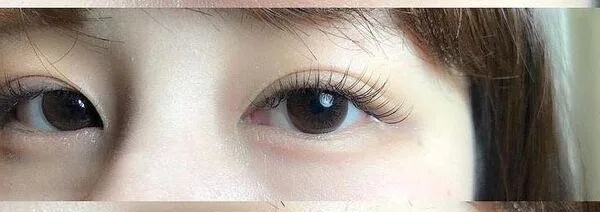
- ShapeMonolid — flat plane, low lash line; spikes are read against the eye itself.
- EffectWispy in a mix: a soft filled line with spikes standing out of it at intervals.
- Where everyone strugglesKeep the bed light. A dense line behind the spikes leaves nothing to stand out from.
Why Why it is laid out this way
This is the build most people mean by wispy: a light bed of fans and singles carrying the shape, with spikes set into it at irregular intervals. The bed is where a monolid gets caught out, because a flat lid shows fullness immediately and a full line erases the contrast the spikes need. Build the bed thinner than instinct says, then spend what is left on spikes that vary in height.
The order the zones go on, and where the fans land
- Lay a thin bedLight fans and singles across the level middle zones and down both falls, deliberately under-filled. This is the background, not the set.
- Vary every spikeNo two neighbouring spikes the same height. A run of matched spikes is the quickest way to make handmade work look manufactured.
- Use a tip-lifted curl on the spikesPick a curl that leaves the base fairly straight and turns up near the tip. It follows a forward-growing lash line and then lifts at the end, which is what a flat lid needs.
- Cluster loosely, never evenlyTwo spikes close, then a stretch of bed, then one alone. Regular spacing reads as a fence.
- Keep the ends quietThe covered inner corner and the last short zone stay bed-only. Neither can hold a spike where it would be seen.
- Comb through and editBrush the set out at the end and take off anything that has crossed a neighbour or lost its angle. Editing is part of this effect, not a repair.
The length curve on monolid eyes
The line above is a wide level top with matched falls, which is the calmest background this library draws — and it has to stay calm because the spikes are providing all the drama. Fans and singles in the bed give it depth without changing any zone's height, so the spikes keep their full contrast. On a lid with no crease, contrast is the only way texture reads at all, since there is no fold above the lash line to shade one part against another.
Where does a wispy map go wrong on monolid eyes?
Deep The physics underneath
Two different objects on one lash line, with very different appetites: a light fan and a spike are not the same purchase at all.
The same map, built four ways
- Classic 1:1
- Singles make the honest spike — one strand, all its mass on the lash's line, nothing to unwind. Most of the spikes in this build should be exactly that, whatever the bed is made of.
- Handmade volume
- The bed's job is depth for almost no weight, which is what fine fans do best. Keep them narrow and low so they never approach the height of the spikes above them.
- Promade / pre-made fans
- Even and quick through the bed, and the base is thicker than a hand-made fan's. On a lid that keeps its roots in plain view, a bed of bulky bases undoes the light look you were building.
- Woven / clover
- It closes the gaps that this effect is made of, and it repeats. If it goes anywhere, it goes low in the falls where the bed is thinnest anyway.
Spread angle versus weight
The bed's fans should be narrow enough to keep the line open, because every degree of extra spread pushes material off the lash's own line and slowly turns the strand. In a wispy set that turn is what makes a tidy scatter look scruffy after a fortnight — the fans blur while the spikes stay sharp, and the contrast that was the point starts to look like an accident. Narrow bed, sharp spikes, gaps left alone.
What a monolid lash line can carry
- The bed and the spikes reach their limits at different times, and the spikes get there first — one folds forward while the bed around it still looks fresh, so the set ages as a scatter of strays.
- A spike is a full step longer than the zone it lives in, which means its mass sits further from the root than anything else on that stretch of lash line. Pricing it against the fans beside it is what leads to too many.
- Match the object to the strand: spikes on the stoutest lashes you can find, fans on the middling ones, and nothing at all on the fine ones so the bed keeps its gaps honestly.
Where this map fails first
The spikes go first because they are the longest, most exposed objects on the map and they sit forward on a lid with nothing above them. Each one folds on its own rather than the line dropping together, so the effect frays instead of drooping. Behind them the thin bed loses fan bases to oil and rubbing, and the gaps stop looking chosen. Plan the spike count so that losing a third of them still leaves an even scatter.
FAQ Common questions
What curl should the spikes be on a monolid?
One that stays fairly straight at the base and lifts near the tip. A lash line with no crease grows forward, so a curl that turns early puts the tip back toward the lid instead of out and up.
How light should the bed be?
Lighter than a full set. If the bed reads as complete on its own, the spikes have nothing to stand out against and the effect is gone.
Should the spikes all be the same length?
No. Vary them, and especially vary neighbours. Matched spikes read as a manufactured strip, which is the look most wispy clients are trying to get away from.
Where should spikes not go?
In the covered inner corner and on the last short zone. One is hidden by the skin fold and the other is too short and too exposed to carry a raised strand.
Print this page or save it as PDF — the diagrams are drawn to stay readable in black and white on plain paper. Or download the diagrams below as SVG. No account, no fee, nothing to sign. Every file carries this page’s address, so wherever it ends up it can be traced back here.
Teaching from these? The offer, and how to credit it.
Also in: Monolid eyes · Wispy · Hybrid
Read next: what makes a lash map wispy rather than spiky · questions clients ask about lash extensions