Round Eyes · Cat-Eye · Hybrid
The cat-eye lash map for round eyes, built in Hybrid — zone order, where the length peaks, and the point this one usually goes wrong.
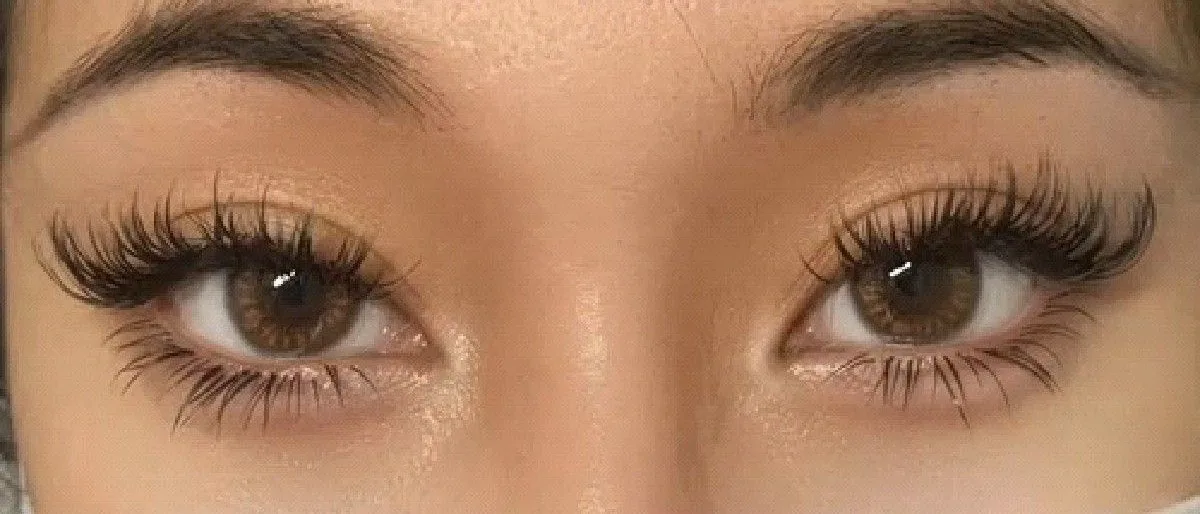
- ShapeRound — a high, short lid arc, so the eye already looks open.
- EffectCat-eye with texture: singles and fans over a line that keeps rising.
- Where everyone strugglesTexture follows the climb. Nothing tall breaks out over the pupil.
Why Why it is laid out this way
Texture is the reason to pick hybrid here, and texture is also what can wreck this shape. A cat map on a round eye is one long rise to the outer edge, and every mixed strand has to sit inside that rise rather than argue with it. Think of the grain running outward: singles and fans both point the same way.
The order the zones go on, and where the fans land
- Lay the rising base firstMap the whole line in singles before any texture goes in, shortest inner to longest outer.
- Fan the mid zones for bodySoft fans through the middle add fullness without adding height, so the centre gains weight of colour, not lift.
- Let texture grow outwardAny strand standing above its neighbours gets taller the further out it sits. The tallest textured points live in the last two zones.
- Space the texture unevenlyScatter the standout strands at uneven intervals. Regular spacing turns a wispy edge into a row of teeth.
- Hold the tail as the high pointThe outer zone stays the longest thing on the lid, textured or not. Nothing inboard may outrank it.
The length curve on round eyes
The line above never falls, which is unusual — most maps peak and then come back down. Round eyes need horizontal travel, so the map spends every zone getting longer and gives back nothing at the end. Hybrid texture rides on top of that curve: the mix changes the edge, never the direction.
Where does a cat-eye map go wrong on round eyes?
Deep The physics underneath
Mixing two build methods on one lid means two different loads on the same lash line. Worth knowing which one lands where.
The same map, built four ways
- Classic 1:1
- The singles carry the shape on this map — they are the ones that must step up cleanly zone after zone. Keep them for the spine of the rise and for every strand in the last zone, where predictability matters more than fullness.
- Handmade volume
- Handmade fans are the half of the mix that fills the long low inner run without lengthening it. Because you set the spread yourself, you can open them inboard and close them as the map climbs, which is exactly the gradient a fixed fan cannot give you.
- Promade / pre-made fans
- Quick, even, and the honest choice when the middle zones need bulk and nothing else. The uniformity that helps mid-lid is a liability at the outer edge, where a mixed set should look least regular.
- Woven / clover
- It bonds across neighbouring lashes, so it spreads load rather than concentrating it — attractive on a map that ends heavy. It also fixes the relationship between strands, and the whole point of hybrid here is that no two neighbours are quite alike.
Spread angle versus weight
The zone that ends up longest is also the zone where a wide fan hurts most, because the extra width sits far out on an already long lever. Open the fans inboard where the lengths are short and the natural lashes are strongest, then close them down as you travel out. By the last zone the mix should be mostly single strands and closed fans.
What a round lash line can carry
- The mix hides the load. Two neighbouring lashes on a hybrid map can be carrying very different amounts, so the ceiling has to be judged strand by strand, not zone by zone.
- The tallest textured strands are the longest objects on the set and sit furthest out on the lever, which makes them the first to bend and the first to be missed when they go.
- Every fan is still one object hanging on one natural lash. Splitting a strand into several buys coverage per unit of weight; it does not raise what the lash underneath can hold.
Where this map fails first
The standout strands near the tail go first. They are the longest, they sit on corner lashes that are fine and steeply angled, and they have nothing beside them to lean against. The early sign is rotation rather than loss — a spike lies over sideways, the edge goes smooth, and the set quietly becomes a plain cat map. Budget the outer texture thin enough that losing one strand costs you nothing.
FAQ Common questions
How much of a hybrid set should be fans?
Enough to fill the low inner and middle zones and no more. On this shape the fans are there for body; the singles are there for the rise, and the rise is the effect.
Can the texture be strongest in the middle for balance?
No. Whatever stands tallest sets the shape, so mid-lid texture rebuilds the roundness the map is trying to stretch out of. Keep the tall points in the outer third.
Why does this map never come back down after the peak?
Because the peak is the last zone. There is no lid left to taper across, and a taper would trade the elongation for a softer finish the shape does not need.
Is hybrid easier than classic on this map?
Not really. Fans let you fill gaps without lengthening, but you now have two textures to keep on one gradient, and mismatched neighbours show more than a plain set ever does.
Print this page or save it as PDF — the diagrams are drawn to stay readable in black and white on plain paper. Or download the diagrams below as SVG. No account, no fee, nothing to sign. Every file carries this page’s address, so wherever it ends up it can be traced back here.
Teaching from these? The offer, and how to credit it.
Also in: Round eyes · Cat-Eye · Hybrid
Read next: what a cat eye lash map actually is · questions clients ask about lash extensions