Round Eyes · Doll / Open-Eye · Volume
The doll lash map for round eyes, built in Volume — zone order, where the length peaks, and the point this one usually goes wrong.
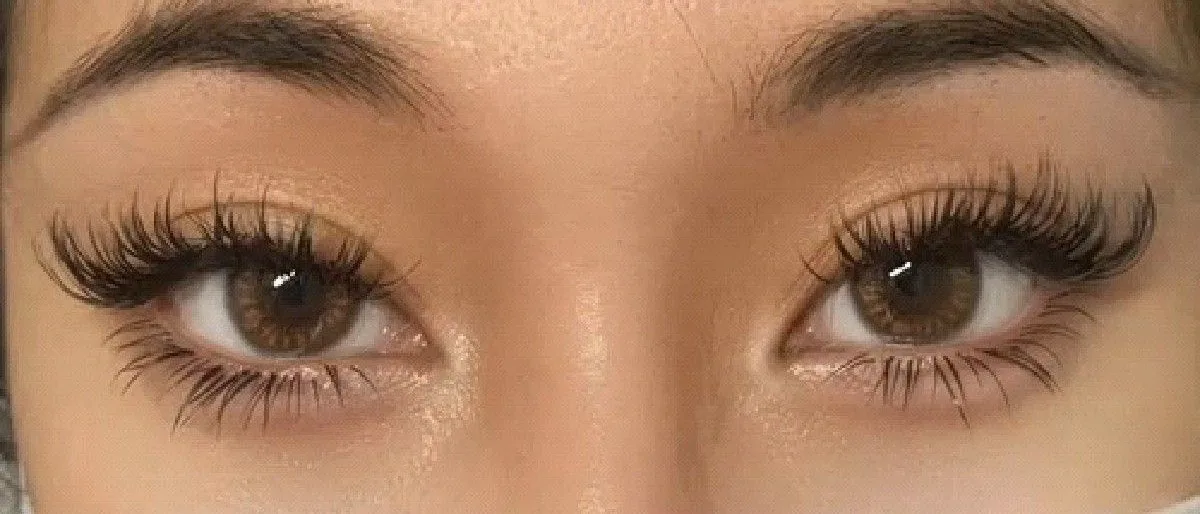
- ShapeRound — an eye with no shortage of openness to start with.
- EffectDoll in fans: level length across the middle, with the density pushed outward.
- Where everyone strugglesFullness over the pupil is a spotlight on the roundest part of the eye.
Why Why it is laid out this way
Volume is the technique that makes a doll map on round eyes hardest to save, because fans put their gain exactly where the length already sits. Density over the middle acts like a spotlight aimed at the roundest part of the face, and the client reads it as staring rather than open. The map that follows keeps the level middle as lean as fans allow and moves the fullness to the zones either side of it.
The order the zones go on, fan by fan
- Fix the lengths in advanceRise, level off for two zones, one step down, then run flat to the corner. Fan width is a separate decision from length.
- Fill the inner climb generouslyOpen fans across the short rising zones. This is the only part of the map where fullness costs nothing in shape.
- Keep the level middle narrowClose the fans down over the two plateau zones. Same length, less visible mass, less amplified roundness.
- Layer behind, not aboveStack the second layer under and behind the first so it adds depth. A layer riding on top of the middle zones raises the arc.
- Carry width into the tailLet the fans open again over the last zones. The corner is where extra fullness pulls the eye sideways instead of upward.
The length curve on round eyes
The lengths above are flat where most maps peak, and that flatness is deliberate — the arc of a round lid supplies all the height the middle needs. Volume does not change the profile at all; it changes how much of it you see. So the fan widths run opposite to the lengths on this map: narrowest where the lengths are longest, widest where they are short.
Where does a doll map go wrong on round eyes?
Deep The physics underneath
The fan discount is real, but it is spent in the wrong postcode on this map. Here is what each build actually costs over the middle.
The same map, built four ways
- Classic 1:1
- Dropping the plateau to single strands is the strongest correction available inside a volume set, and it is worth offering. You lose density exactly where density is the problem, which is not a loss.
- Handmade volume
- Being able to set a different width in every zone is what makes this map survivable — lean over the middle, generous either side. A volume tech who cannot vary spread will build a centre-heavy set here every time.
- Promade / pre-made fans
- One fixed width across the lid is the failure mode of this cell in physical form. They are fine on the inner climb and on the tail; they should not be the material of the plateau.
- Woven / clover
- A shared bond across neighbours gives high coverage per join, and coverage is the one thing the middle of this map should not maximise. Reserve it for the last zones, where extra body reads as width.
Spread angle versus weight
Opening a fan spreads the same mass across a wider footprint, and on the plateau that footprint sits directly over the pupil where the client sees it every time she looks in a mirror. Narrow fans on the middle zones read as a line; wide ones read as a band. Save the wide spreads for the tail, where a band is doing something useful.
What a round lash line can carry
- Weight is not the constraint over the middle — those lashes are the thickest on the lid and will hold far more than this map hands them. The constraint is what the client sees.
- Splitting a strand into finer ones cuts mass faster than coverage, so on this cell the discount should be taken as less material rather than more fullness.
- The tail runs level with no taper, so the outer lashes carry near-plateau length on much finer strands. That is where the arithmetic actually gets tight.
Where this map fails first
The middle fails first in the mirror and last on the lash line. Its fans sit on strong lashes and will hold for weeks, but the density there is what makes a round eye read heavy, so complaints arrive early even though nothing has moved. Real shedding starts at the outer corner, where the map refuses to taper and fine new lashes carry almost plateau length. Once the corner thins, the full middle stands alone and the set looks rounder every day.
FAQ Common questions
Can volume ever suit a doll map on round eyes?
Only as a controlled compromise. Keep the fans narrow over the middle and let the fullness live either side of it, so the density is not reinforcing the length.
How should the layers be arranged?
Front to back, adding depth rather than height. Any layer that sits above the middle zones raises the top of the set and rebuilds the roundness.
Where does the fullness go if not the middle?
Into the short inner zones and out along the tail. Both places take fullness without adding to the height over the pupil.
She wants maximum drama and a doll shape. What now?
Offer the drama as width and texture rather than centre density, or move her to a map that peaks past the middle. Doll plus volume on this shape is the combination most likely to come back as a complaint.
Print this page or save it as PDF — the diagrams are drawn to stay readable in black and white on plain paper. Or download the diagrams below as SVG. No account, no fee, nothing to sign. Every file carries this page’s address, so wherever it ends up it can be traced back here.
Teaching from these? The offer, and how to credit it.
Also in: Round eyes · Doll / Open-Eye · Volume
Read next: open eye versus doll — one family, two intents · questions clients ask about lash extensions