Round Eyes · Natural · Classic 1:1
The natural lash map for round eyes, built in Classic 1:1 — zone order, where the length peaks, and the point this one usually goes wrong.
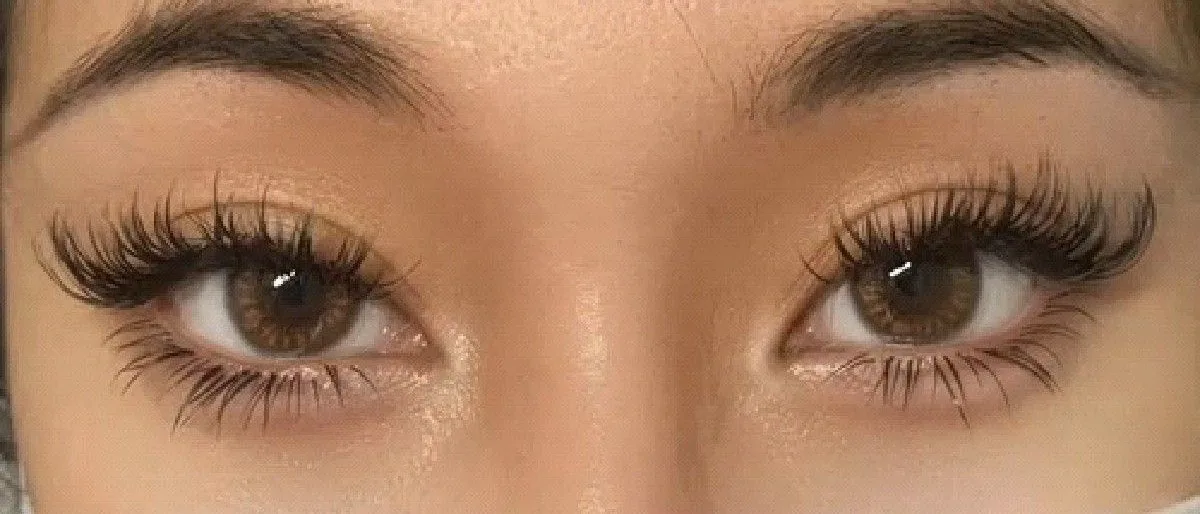
- ShapeRound — the arc peaks early and steeply over the middle.
- EffectNatural, single strands: one soft high point, set past the middle.
- Where everyone strugglesThe summit is not the centre. Move it out, or the eye looks startled.
Why Why it is laid out this way
Nothing on this map is trying to be seen, which is what makes it hard. A natural set on a round eye still has to solve the shape's one problem — the lid arch is already high in the middle, so the length has to sit further out than instinct suggests. Everything else is one small step at a time and a very short give-back at the end.
The order the zones go in
- Open short at the insideThe first zone is the shortest and finest thing on the lid. A natural set is judged there before anywhere else.
- One small step per zoneAdd the same modest increment across the lid. The steps stay small enough that no two neighbours look different.
- Put the summit past the middleThe longest zone sits in the outer third, well beyond the high point of the lid arch.
- Give back one step onlyAfter the summit, drop a single step and stop. A long fall at the end reads as a shaped set, not a natural one.
- One curl family, start to finishKeep a single soft open curl across the whole line. Changing curl part-way is visible immediately on a plain map.
The length curve on round eyes
The line above rises steadily, turns over late, and comes down by one step — no plateau, no drama, no second high point. The late summit is doing the shape work: it draws attention outward from the roundest part of the eye without ever looking like an effect. The single step down keeps the tail from either dominating or dropping away.
Where does a natural map go wrong on round eyes?
Deep The physics underneath
One strand, one follicle, one lever, and no fans to spread the difference. That is the whole mechanical picture on this cell.
The same map, built four ways
- Classic 1:1
- Every length on this map is a real length, paid for in mass and reach on the lash that carries it. On a shape that wants the summit out in the thinner outer third, that honesty is a constraint — you cannot fake the high point, you can only place it well.
- Handmade volume
- Splitting a strand would let the summit zone look fuller at the same length, which is genuinely tempting on a fine lash line. It also puts a visible fan shape on the plainest map in the shape's set, and plainness is the point of this one.
- Promade / pre-made fans
- The root node is a small weight in the cheapest place, and consistency across a gradient is worth something. What they cannot do is disappear, and every zone on this map is supposed to look like the client's own lash.
- Woven / clover
- Excellent coverage per bond, and completely wrong for a set whose success is measured by not being noticed. A repeating join across a quiet line is the one thing that makes a natural map look installed.
Spread angle versus weight
With single strands the spread question turns into a placement question: all the mass sits on the lash's own line, so the only variable left is how far out that mass reaches. The summit zone is where that reach is greatest, and it sits past the middle where the natural lashes have already begun to shorten. Choose the summit zone by what the lashes there can hold, not by where the lid looks highest.
What a round lash line can carry
- The set stops looking natural before anything falls off. When the summit strands bend under their own reach, the gentle rise flattens and the map reverts to the shape it was correcting.
- Reach costs twice over — more material and a longer arm to swing it on — which is why the summit sits one zone short of where the drama would be greatest.
- Averages lie on a quiet map. If a handful of strands in the summit zone are fine or newly grown, they will droop while their neighbours hold, and on a plain line that inconsistency is the whole failure.
Where this map fails first
The zone immediately beyond the high point goes first. It carries close to full length on natural lashes that are already thinning toward the corner, and it has no texture around it to disguise a gap. Because the effect is a smooth gradient, one missing strand there is visible in a way it would not be on a fuller map. Keep that zone a hair shorter than instinct says and the whole line lasts longer.
FAQ Common questions
Why not put the longest zone in the middle for a natural look?
On a round eye the middle is already the tallest point of the lid. Adding length there emphasises the height, which reads as surprise rather than as nothing at all.
How much should the length drop after the high point?
One step, then hold. A single give-back keeps the tail soft; anything more starts to shape the eye, which is not what this effect is for.
Is classic 1:1 enough for a client with fine lashes?
It is the honest option, but it will look sparse if her own line is thin, because single strands cannot fill gaps. Say so before the set rather than after.
How do I keep the gradient from looking stepped?
Keep every increment identical and small, and change nothing else along the way. Steps become visible when a length change and a curl change land in the same zone.
Print this page or save it as PDF — the diagrams are drawn to stay readable in black and white on plain paper. Or download the diagrams below as SVG. No account, no fee, nothing to sign. Every file carries this page’s address, so wherever it ends up it can be traced back here.
Teaching from these? The offer, and how to credit it.
Also in: Round eyes · Natural · Classic 1:1
Read next: questions clients ask about lash extensions