Round Eyes · Squirrel / Fox · Classic 1:1
The squirrel lash map for round eyes, built in Classic 1:1 — zone order, where the length peaks, and the point this one usually goes wrong.
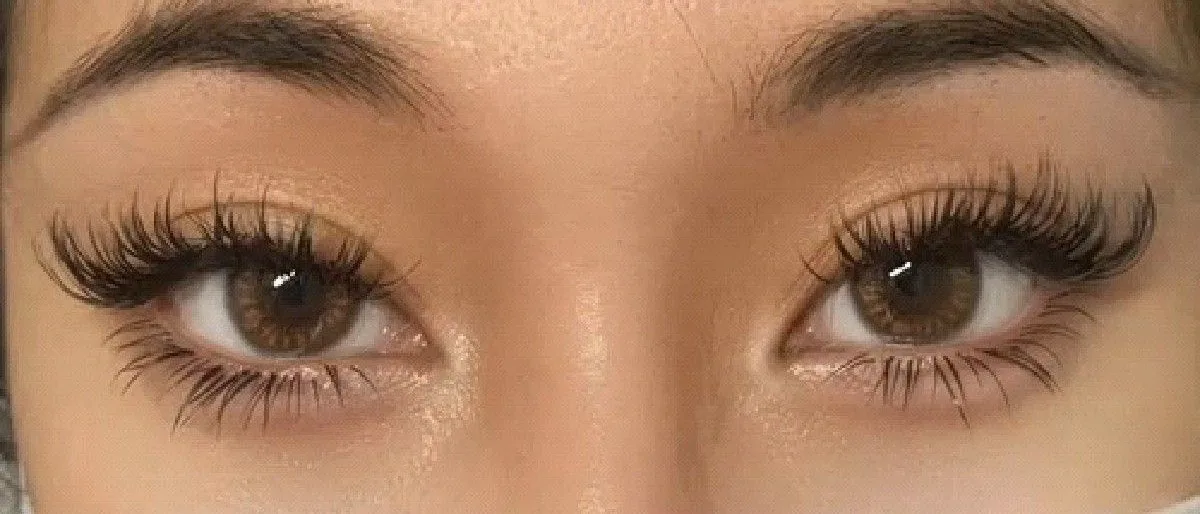
- ShapeRound — the white shows above and below the iris more than most.
- EffectSquirrel in single strands: peak just past centre, then an even fall.
- Where everyone strugglesPeak one zone late, not one zone early. Early is the startled look.
Why Why it is laid out this way
Squirrel sits between the two obvious answers for this shape — softer than a cat, longer-looking than a natural. It works on a round eye because the high point lands just outside the arch, so the eye is pulled sideways while the middle stays quiet. Built in single strands the whole effect is a wave that breaks past centre and settles down again.
The order the zones go in
- Anchor the peak past centreFind the middle of the lash line, then move one zone out. That zone carries the longest strands.
- Rise evenly to itStep up from a short inner corner in equal increments. The rise should take the whole inner half of the lid.
- Fall at the same rateCome back down in matching steps. A descent that matches the climb is what makes the shape read as soft.
- Keep the centre curl gentleThe zones over the middle take your softest curl. Lift there fights the elongation you are building.
- Finish shorter than you thinkThe outer corner ends noticeably short of the peak. That drop is what separates squirrel from a cat map.
The length curve on round eyes
The line above climbs, turns over one zone past the middle and comes back down by the same amount it went up. The symmetry is the softness: nothing on the map is abrupt, so the eye reads a long shape rather than a shaped effect. Moving the turn outward by a single zone is the whole correction for roundness — small on paper, obvious on a face.
Where does a squirrel map go wrong on round eyes?
Deep The physics underneath
One strand per lash, one turn in the line, and the turn happens to sit where the natural lashes start to shorten.
The same map, built four ways
- Classic 1:1
- The turn is made from length alone, so the peak zone carries the heaviest and longest single strands on the map. Since that zone sits just outside the middle, it is the last stretch of really strong lash line you have — place it well and the map is comfortable, place it one zone further out and it is not.
- Handmade volume
- Fans would let the peak look fuller at the same length, which matters if the descent needs to be visible on a fine line. The cost is that a fan at the turn is the most conspicuous object on the map, and this effect works by not being conspicuous.
- Promade / pre-made fans
- One width everywhere is a poor match for a curve that rises and falls, because the rise and the fall want different amounts of fill. If they appear at all, they belong on the inner climb where lengths are short.
- Woven / clover
- Joining neighbours spreads the load across the strong middle lashes, which is where this map is heaviest. It also freezes the spacing, and a symmetric curve is easiest to read when the strands beside the peak stay independent.
Spread angle versus weight
Single strands put everything on the lash's own line, which is why the peak of this map can sit as far out as it does without trouble. The moment you widen anything at the turn, the mass moves off that line and the strand twists to find its balance — and a twisted peak strand flattens a curve that depends on one clean high point. Keep any width you add on the inner climb.
What a round lash line can carry
- The map goes wrong before it goes sparse. When the peak strands bend, the curve loses its crest and the whole thing reads as a mild natural set with a low corner.
- Length is charged twice at the turn: the longest strand on the map, on lashes that have already begun to shorten past the middle. That is why the peak sits one zone out and not two.
- The descent is carried by fine outer lashes with modest lengths, so it usually survives. What decides the lifespan of this cell is the handful of thin strands mixed into the peak zone.
Where this map fails first
The turn is where this map dies. It holds the longest strands on a stretch of lash line that has passed its strongest point, and unlike a cat map there is nothing longer beyond it to distract the eye. When a few peak strands droop or shed, the curve smooths out and the elongation the client paid for disappears while the corner still looks perfectly fine. Map the peak zone a hair short if her lashes there are fine.
FAQ Common questions
What makes squirrel different from a cat map on round eyes?
The peak sits inside the lid rather than at the corner, and the length comes back down afterwards. You get elongation with a soft finish instead of a sharp one.
How far past the middle should the peak go?
One zone. Enough to clear the highest part of the lid arch, not so far that the map turns into a cat and the corner takes the load.
Should the outer corner be as long as the peak?
No. The corner ends clearly shorter, and that visible fall is what keeps the effect soft rather than sharp.
Why keep the curl gentle in the middle?
Because a round eye is already lifted there by its own arc. Extra lift over the pupil competes with the elongation and pushes the look toward surprise.
Print this page or save it as PDF — the diagrams are drawn to stay readable in black and white on plain paper. Or download the diagrams below as SVG. No account, no fee, nothing to sign. Every file carries this page’s address, so wherever it ends up it can be traced back here.
Teaching from these? The offer, and how to credit it.
Also in: Round eyes · Squirrel / Fox · Classic 1:1
Read next: fox eye and squirrel lash mapping, and how they differ · questions clients ask about lash extensions