Round Eyes · Squirrel / Fox · Volume
The squirrel lash map for round eyes, built in Volume — zone order, where the length peaks, and the point this one usually goes wrong.
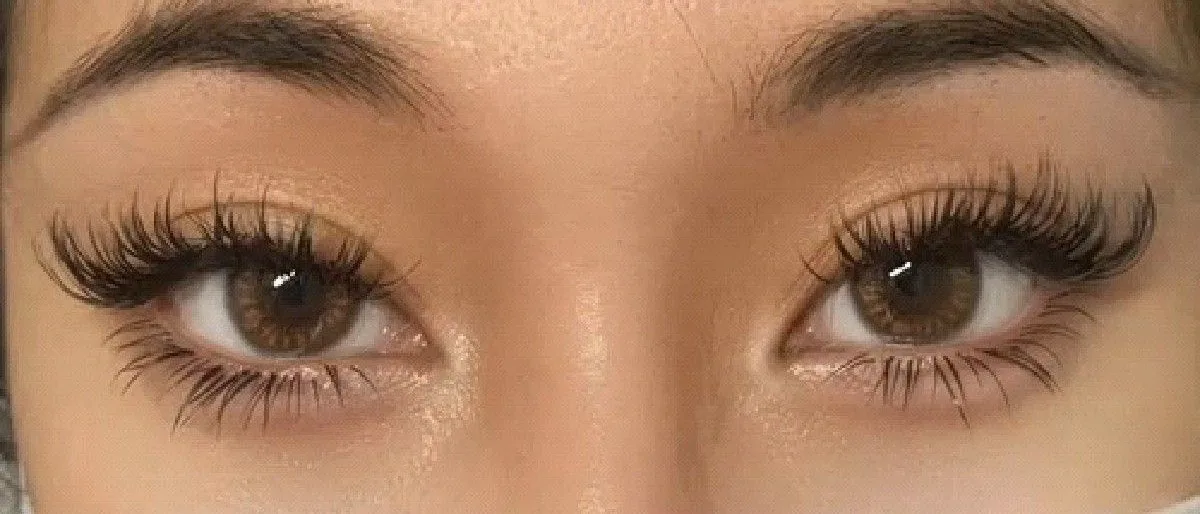
- ShapeRound — the eye is already lifted in the middle by its own arc.
- EffectSquirrel in fans: a full climb, a light turn past centre, a thinning fall.
- Where everyone strugglesDensity that keeps going past the turn erases the shape you built.
Why Why it is laid out this way
Built well, this is the most flattering map in the round set: fans give the line a wing-like body while the length still turns over past the middle. Built carelessly, volume fills the descent, the curve disappears and you are left with a full band across an eye that needed the opposite. The discipline is knowing which zones stop getting your best work.
The order the zones go on, fan by fan
- Curve first, fans secondDecide the rise, the turn one zone past the middle and the matching fall before you pick a single fan width.
- Base layer follows the curveThe lower layer runs the whole lid, taking the same shape as the map — full through the climb, easing after the turn.
- Top layer stops at the turnBring the second layer up to the peak zone and end it there. Carrying it further makes the fall look flat.
- Narrow fans at the peakThe longest fans on the map are also the leanest. Length is what the turn is for; width belongs further in.
- Let the corner go quietFewer fans, finer strands, shorter lengths. The descent should be the lightest part of the set.
The length curve on round eyes
The profile above turns over just outside the middle and comes back down at the rate it went up, which is what keeps this elongation soft. Fans make that curve visible on a thin lash line by closing the gaps between lengths, so the rise and fall read as a single edge instead of a row of points. The trap is that density is easier to add than to take away, and this map needs it removed after the turn.
Where does a squirrel map go wrong on round eyes?
Deep The physics underneath
Two layers and a turn. Everything below is about where those two things meet.
The same map, built four ways
- Classic 1:1
- Single strands are the cheapest thing to hang at the turn, and dropping the peak zone back to them is a legitimate answer on a fine lash line. You lose a little body exactly where the map is heaviest, which is a fair trade.
- Handmade volume
- Setting each fan yourself is what lets the width fall away after the turn while the base layer keeps running. That is the manoeuvre this cell is built on, and no other technique performs it as cleanly.
- Promade / pre-made fans
- Fast through the long inner climb where every zone wants the same thing. Past the crest they keep delivering fill you are trying to remove, and their stiffer base perches rather than wraps on the fine outer lashes.
- Woven / clover
- Sharing a bond between neighbours suits the dense base layer over the strong middle lashes. On the descent it defeats the purpose, since a thinning line needs strands that can be lost one at a time without pulling anything else with them.
Spread angle versus weight
The peak zone is where a wide fan costs the most: the longest reach on the map, on lashes that are already past their thickest, with the extra width hanging off the lash's line and twisting it. Keep the spread there tight and take your width earlier, over the short inner zones where a twisted strand barely shows. Spread and length should never both be at maximum in the same place.
What a round lash line can carry
- Fans buy coverage more cheaply than they buy weight, which is why this map can look full and still sit inside what the lashes will carry. Spend the saving on holding the turn up, not on thickening the fall.
- Two layers meeting in one zone is the quiet overload on this cell. The lengths look correct on paper while the lash underneath is carrying twice what the map appears to ask.
- The finest strands in the peak zone set the ceiling for the whole set, since the crest is the one feature nothing else can stand in for.
Where this map fails first
The turn goes first and takes the effect with it. It carries the longest fans and, if the layering is sloppy, the doubled ones, so those lashes deflect while everything around them still looks healthy — the client sees a full set that has stopped being a shape. The second, slower problem is at the inner corner, where wide fans in a crowded zone bridge to their neighbours and come out in pairs. Neither shows on the day; both show at the infill.
FAQ Common questions
How should the layers be arranged on a squirrel map?
The base layer runs the full lid and follows the curve. The top layer starts inboard and ends at the peak zone, so the fall is a single layer and stays light.
Why does the descent need to be thinner, not just shorter?
Because at conversational distance density reads as much as length. A dense fall looks level even when the lengths are stepping down, and the shape disappears.
Where does the widest fan belong?
In the short inner zones. Width there fills the line cheaply, whereas width at the peak adds twist to the strand carrying the most reach.
Is volume too heavy for round eyes generally?
No, but placement matters more than material. Weight over the middle makes a round eye look wider open, which is why this map keeps its fullest work on the climb and its lightest at the corner.
Print this page or save it as PDF — the diagrams are drawn to stay readable in black and white on plain paper. Or download the diagrams below as SVG. No account, no fee, nothing to sign. Every file carries this page’s address, so wherever it ends up it can be traced back here.
Teaching from these? The offer, and how to credit it.
Also in: Round eyes · Squirrel / Fox · Volume
Read next: fox eye and squirrel lash mapping, and how they differ · questions clients ask about lash extensions