Upturned Eyes · Doll / Open-Eye · Classic 1:1
The doll lash map for upturned eyes, built in Classic 1:1 — zone order, where the length peaks, and the point this one usually goes wrong.
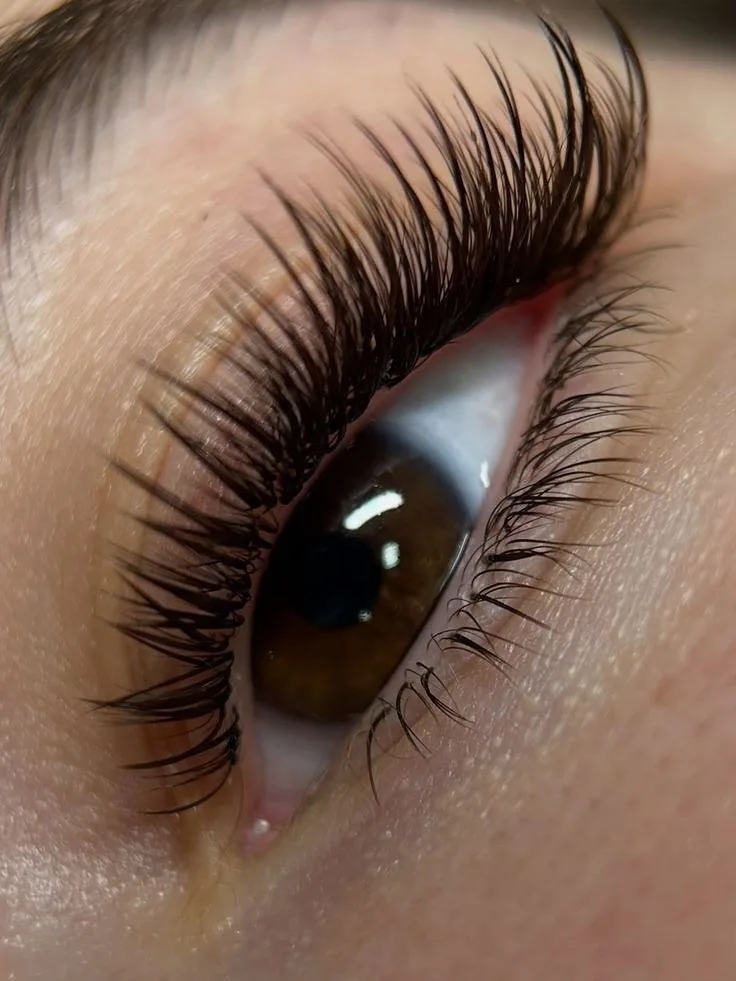
- ShapeUpturned — the outer corner rides higher than the inner one already.
- EffectDoll, in single strands: length gathered in the centre, corners short.
- Where everyone strugglesThis is the flagged mismatch. Flatten the peak or don't take the booking.
Why Why it is laid out this way
Doll is the one effect this shape argues with. A round open look wants its longest length in the middle and its shortest at both ends, while the eye underneath is doing the opposite at the outer end — rising as it goes. The map below is the compromise version, and it exists because clients ask for it, not because it flatters the shape.
The order the zones go in
- Say it out loud firstTell her a centre-weighted map will round an eye that naturally lifts. If she still wants it, build the flattened version, not a textbook doll.
- Keep the inner honest and shortInnermost zone stays the shortest on the lid. It is the lowest part of this eye and lengthening it drags the whole look down.
- Peak across two centre zonesGive the longest length to two neighbouring middle zones rather than one. A single sharp point looks like a mistake against a rising lid.
- Walk down evenly to the outer cornerStep the length back in equal notches after the peak. The taper needs to be visible and gradual, never a drop.
- Keep the corner filledShort does not mean skipped. Every lash out there still gets an extension, or the shortened tail reads as a bald patch on a lifted corner.
The length curve on upturned eyes
The curve rises to a plateau in the middle and falls symmetrically to short corners, which is what makes an eye look round and open. On this shape the second half of that fall is running against the lid, which is climbing while the lengths are shrinking. Spreading the peak across two zones and tapering in equal steps is what keeps that disagreement from showing as a kink.
Where does a doll map go wrong on upturned eyes?
Deep The physics underneath
The mechanics here are unusually kind, because the longest lengths land on the strongest lashes. What follows is where the slack actually goes.
The same map, built four ways
- Classic 1:1
- A centre-weighted map puts its heaviest work on mid-lid lashes, the thickest and most upright on the eye — so single strands go further here than on any outward-climbing map. The taper is what needs the control, and singles taper most predictably.
- Handmade volume
- Fans buy fullness across the centre plateau without pushing the length up, which is genuinely useful when the client wants bigger eyes and the map cannot give her more reach. Keep them narrow past the peak so the taper stays legible.
- Promade / pre-made fans
- Even and quick across a broad two-zone peak, which is the one place on this map where identical fans are not a liability. On the tapering half they flatten the very gradient the compromise depends on.
- Woven / clover
- Lateral coverage from a single bond is a fair way to fill short corner zones that must stay short. Across the centre it widens a peak that is already the widest part of the map.
Spread angle versus weight
The peak on this map sits over the two middle zones, on the strongest lashes of the lid, which is why spread is less punishing here than on an outward-weighted map. The real spread decision is on the way down: keep it narrowing as the length shortens, so the taper reads as a taper rather than as a line that just got thinner. A wide fan on a short corner lash is the one place this map wastes its allowance.
What an upturned lash line can carry
- The mid-lid lashes carrying this peak are the strongest on the eye, so the deflection ceiling sits higher here than on any tail-loaded map — the centre can genuinely hold what you plot on it.
- The corner is a different account: the lengths there are small, but so are the lashes, and a long lever is not needed to overwhelm a fine one.
- The weakest strand in a zone sets that zone's limit, and on this map the two zones either side of the peak are where a strong lash and a thin one are asked for nearly the same length.
Where this map fails first
The centre goes first by attrition rather than by overload — it holds the most extensions, so it also loses the most as the natural cycle turns over, and the plateau slumps into the taper. The outer corner fails a different way: it is mapped short, so a couple of shed lashes there leave a visible bare patch on the part of the lid that catches the light. Together those two make the doll effect degrade faster than a tail-weighted map on the same client.
FAQ Common questions
Can you do a doll-eye map on upturned eyes?
You can, but it is the flagged mismatch for this shape. A centre peak with short corners pulls against a lash line that naturally rises outward, so the compromise version flattens the peak and tapers gently.
What does the mismatch actually look like on a face?
A kink where the mapped length starts dropping and the lid keeps climbing. From the front the outer third looks abruptly cropped rather than rounded.
The client insists on doll — what do I offer instead?
Offer a balanced map with a mild centre bias. It gives most of the openness she is after while letting the outer zones stay long enough to follow the lid.
Why classic for a compromise map?
Because the compromise lives in the gradient, and single strands make a gradient measurable. Any softening technique blurs exactly the taper you are trying to control.
Print this page or save it as PDF — the diagrams are drawn to stay readable in black and white on plain paper. Or download the diagrams below as SVG. No account, no fee, nothing to sign. Every file carries this page’s address, so wherever it ends up it can be traced back here.
Teaching from these? The offer, and how to credit it.
Also in: Upturned eyes · Doll / Open-Eye · Classic 1:1
Read next: open eye versus doll — one family, two intents · questions clients ask about lash extensions