Upturned Eyes · Doll / Open-Eye · Volume
The doll lash map for upturned eyes, built in Volume — zone order, where the length peaks, and the point this one usually goes wrong.
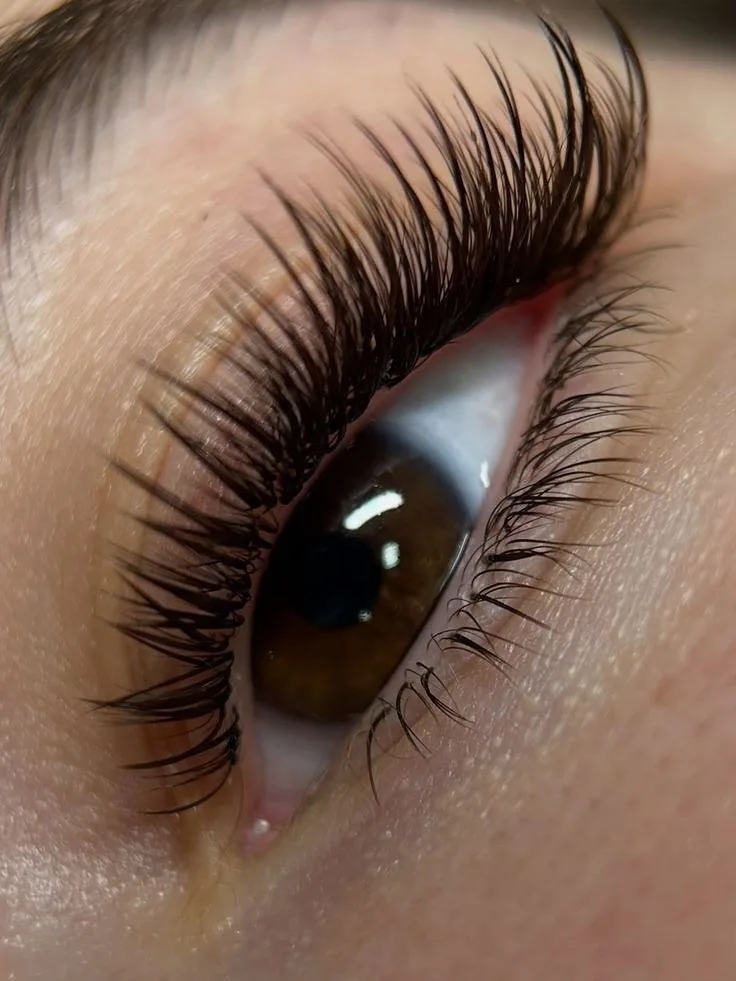
- ShapeUpturned — the outer corner is lifted before any product goes on.
- EffectDoll in fans: a layered middle, deliberately short at both ends.
- Where everyone strugglesBuy the roundness with fullness. Extra length is what starts the fight.
Why Why it is laid out this way
Where this effect and this shape disagree is length, so volume is the technique that gets closest to a truce. Fans let you make the middle of the eye look bigger without plotting a single step higher, which is the one concession the lid will accept. Everything below is about spending density instead of reach.
The order the zones go on, fan by fan
- Build the centre in two layersA fuller base layer with a narrower layer set over it, across both middle zones. Two layers at one length is what reads as open.
- Hold the plotted lengths exactlyDensity is the variable, length is not. If the middle still looks small, add fullness, never another step.
- Taper density as well as lengthComing off the peak, thin the layering at the same rate the length drops. A short zone at full density looks stubby.
- Keep the corners narrow and lightClose, tight fans on the outermost lashes. Wide fans on short corner lashes go blunt and pull the corner down.
- Fill the inner line completelyThe innermost zone is the shortest on the map and this eye sits low there. Every lash gets something, or it reads as an empty start.
- Check the round from a metre awayVolume closes gaps that make a shape look round. Step back before you decide it is finished.
The length curve on upturned eyes
The plotted curve holds its longest length across two middle zones and falls symmetrically to short corners, and roundness is what that shape is for. In fans you get a second dial that a single-strand map does not have: how much lash sits in each zone at that same length. Spending on the middle dial is how this map gets its openness without lengthening a tail that the lid is already lifting.
Where does a doll map go wrong on upturned eyes?
Deep The physics underneath
The mass here sits where the lashes are strongest, which makes this an unusually forgiving map to build in fans. The catch is elsewhere.
The same map, built four ways
- Classic 1:1
- Single strands make the taper legible and keep short corners light, but the middle can only be made bigger by going thicker or longer. On this shape the second of those is the move you were trying not to make.
- Handmade volume
- Openness bought with coverage rather than reach — the specific reason to build this compromise in fans. Adjustable spread also lets you narrow the fans as the map descends, so the taper stays honest.
- Promade / pre-made fans
- A broad flat peak is the one place on this map where identical fans are an advantage rather than a tell. Past the peak they hold a width the map wants shrinking.
- Woven / clover
- Efficient sideways coverage for the base layer under the plateau. On the short corner zones its fixed width is more than those lashes should be carrying.
Spread angle versus weight
The two middle zones hold the peak and sit on the strongest, most upright lashes of the eye, so a generous spread there costs less than it would anywhere else in this shape's library. The mistake is carrying that spread down the outer slope: the lengths shorten but the width does not, and the corner turns into a broad dark end on a lid that is climbing. Narrow the fans in step with the plotted length and the round shape survives.
What an upturned lash line can carry
- Centre-loaded maps are the kind volume flatters, because the deflection ceiling of a mid-lid lash is the highest on the eye — this plateau can hold two layers where a tail could not hold one.
- Reach is the expensive part, not fullness, which is why adding a layer at the same plotted length barely moves the load while adding a step would.
- Density hides the weakest strand in a zone until it gives, and then the gap is bigger because a fan takes several lashes' worth of coverage with it — most obvious on this map at the short corners, where there is no neighbour to lean on.
Where this map fails first
The plateau carries the most fans, so it also loses the most as lashes cycle, and the upper layer is what disappears first. Losing that layer costs the map its openness while the plotted lengths are still perfectly intact, which is why the client will say the set looks flat rather than sparse. The corners hold their look longer here because they were mapped light on purpose. Treat the top layer as the thing you are refilling, not the outline.
FAQ Common questions
Is volume a way to make a doll map work on upturned eyes?
It is the closest thing to a workaround. The conflict on this shape is length, and volume gives you a way to make the middle look bigger without plotting any more of it.
How many layers should the centre carry?
Two is the normal answer: a fuller base with a narrower directional layer above it. A third layer adds weight and no more openness.
Why do the short corners look heavy in volume?
Because the fans stayed wide when the length came down. Narrow the spread as the map descends and the corner reads short rather than blunt.
Should I talk clients out of this map?
Have the conversation before you start. This pairing is the flagged mismatch for the shape, and a client who understands the trade will accept a flattened peak instead of asking why her eyes look cropped.
Print this page or save it as PDF — the diagrams are drawn to stay readable in black and white on plain paper. Or download the diagrams below as SVG. No account, no fee, nothing to sign. Every file carries this page’s address, so wherever it ends up it can be traced back here.
Teaching from these? The offer, and how to credit it.
Also in: Upturned eyes · Doll / Open-Eye · Volume
Read next: open eye versus doll — one family, two intents · questions clients ask about lash extensions