Upturned Eyes · Squirrel / Fox · Classic 1:1
The squirrel lash map for upturned eyes, built in Classic 1:1 — zone order, where the length peaks, and the point this one usually goes wrong.
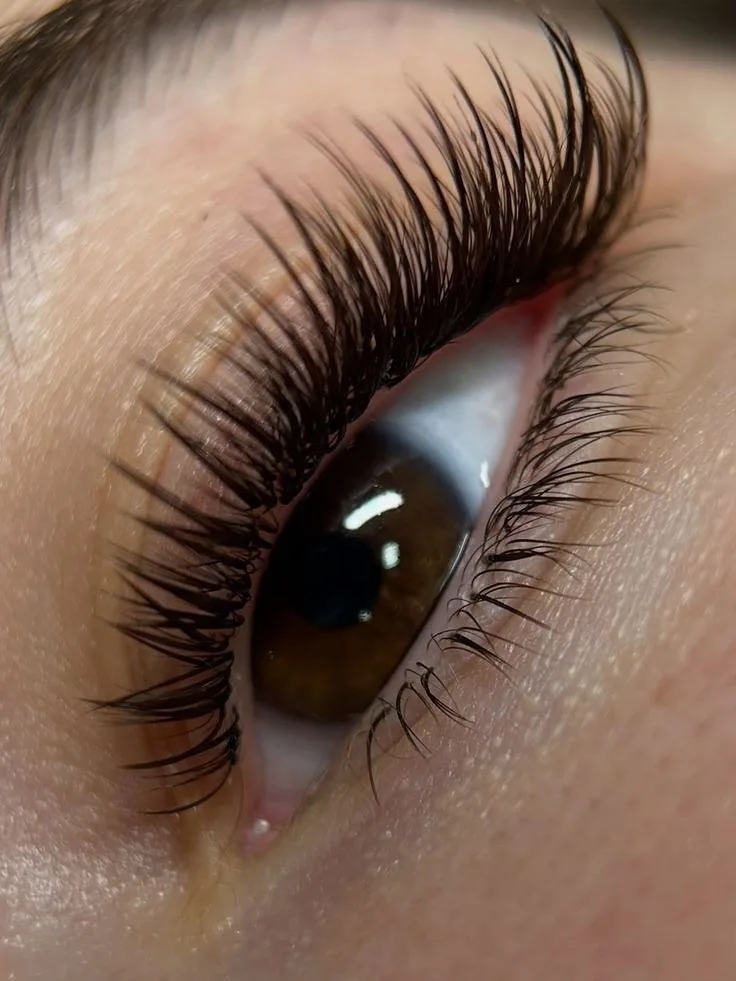
- ShapeUpturned — the corner is lifted, so it needs support and not more lift.
- EffectSquirrel, one on one: peak past the middle, then two visible steps down.
- Where everyone strugglesKeep the descent visible. Lose it and this is just a cat-eye.
Why Why it is laid out this way
Squirrel is the effect this shape wears best, because the peak lands where the lid is already on its way up and the corner behind it needs supporting rather than lifting. The whole map hangs on two small drops after the peak, and they are small enough to disappear if you are careless. Classic 1:1 is where you learn to place them.
The order the zones go in
- Keep the inner third lowThree short zones climbing gently. This is the end of the eye that sits lowest and it stays modest all the way.
- Jump once into the archOne deliberate larger step from the inner third to the zone below the peak. That jump is what gives the map its lift.
- Set the peak past the middleThe longest zone sits outer of centre, under the high point of the brow. One zone only.
- Come down in two clear stepsTwo equal drops from the peak to the outer corner. If a client cannot see them in a mirror, they are too small.
- Land the corner supported, not shortThe last zone stays comfortably longer than the inner third. This eye holds it high, so it needs length to look finished.
The length curve on upturned eyes
The line stays low over the inner third, jumps once into the arch, peaks just past the middle and then falls in two even steps to a corner that is still reasonably long. That corner length is what separates a squirrel from a doll on this shape — the lid is up out there and a short end looks cut. The two steps are what separate it from a cat, which never comes down at all.
Where does a squirrel map go wrong on upturned eyes?
Deep The physics underneath
Above is placement. Below is what one strand on one lash can do at the peak of an arch and on the corner behind it.
The same map, built four ways
- Classic 1:1
- Single strands make the two steps after the peak measurable, and measurable is the entire requirement on this map. The cost is that the arch can only be made fuller with thicker material, right where the lever is longest.
- Handmade volume
- Fanning the arch buys presence at the peak for less mass than a thicker single, which is the sensible place to spend the discount here. Keep the fans narrowing as you come down the steps so the descent stays readable.
- Promade / pre-made fans
- Quick and even, and even is what flattens a two-step descent. If you use them, use them across the low inner third where nothing much is changing.
- Woven / clover
- Wide coverage from a single bond, useful for closing a sparse inner line. Over the arch and the descent it adds width where the map is trying to describe height.
Spread angle versus weight
The peak is a single zone here, which concentrates both the length and whatever spread you give it onto one narrow strip of lid. A wide fan up there sits off the lash's own line and rotates as it settles, which pulls the top of the arch sideways and blunts the very point the map is built around. Narrow at the peak, a little wider through the low inner third where the lengths are short.
What an upturned lash line can carry
- The arch is where deflection is decided: one zone carrying the longest strands, and when those settle low the peak flattens into the descent and the squirrel shape stops existing.
- The jump from the inner third into the arch is the biggest single length step on this map, so it is also the biggest jump in load — treat the zone below the peak as part of the peak when you are budgeting weight.
- The supported corner is long by design on lashes that are usually fine, so the weakest strand out there sets the limit for the whole outer half, not just for itself.
Where this map fails first
The arch flattens before anything else, because it carries the longest strands in a single zone and there is no neighbouring zone at the same length to prop the shape up. Once it settles, the two steps below it merge and the outer half becomes a shallow slope. The supported corner is the second casualty: it is mapped long on thin lashes at the most exposed part of the lid. Between them, this map loses its identity well before it looks sparse.
FAQ Common questions
Why does squirrel suit upturned eyes so well?
The peak lands where the lid is already rising, and the corner behind it only needs supporting rather than lifting. The map works with the eye instead of correcting it.
How do I stop a squirrel map turning into a cat-eye?
Make the two drops after the peak big enough to see in a mirror. A descent you have to look for is a descent the client will never register.
How short should the outer corner be?
Not short — supported. It stays clearly longer than the inner third, because this eye holds that corner high and a cropped end looks like a mistake there.
Why keep the inner third so low?
Because the map spends its rise in one jump into the arch. Climb early and you arrive at the peak with nothing left to lift with.
Print this page or save it as PDF — the diagrams are drawn to stay readable in black and white on plain paper. Or download the diagrams below as SVG. No account, no fee, nothing to sign. Every file carries this page’s address, so wherever it ends up it can be traced back here.
Teaching from these? The offer, and how to credit it.
Also in: Upturned eyes · Squirrel / Fox · Classic 1:1
Read next: fox eye and squirrel lash mapping, and how they differ · questions clients ask about lash extensions