Upturned Eyes · Squirrel / Fox · Volume
The squirrel lash map for upturned eyes, built in Volume — zone order, where the length peaks, and the point this one usually goes wrong.
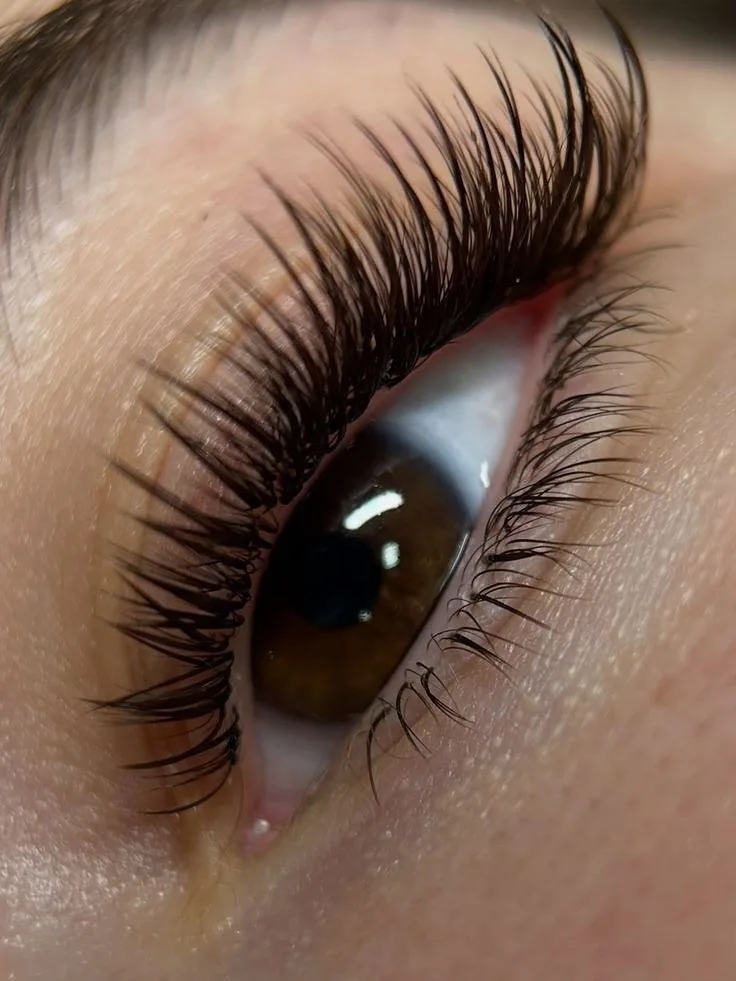
- ShapeUpturned — the outer end is already high and only needs supporting.
- EffectSquirrel in fans: a layered arch past centre, stepping down to a long corner.
- Where everyone strugglesDensity must fall with the length. Equal fullness erases the steps.
Why Why it is laid out this way
Fans give a squirrel map its best arch and its most common failure in the same appointment. Build the peak in layers and it stands up beautifully; carry that fullness down the two steps and the descent stops registering, which on this eye means the effect quietly becomes a cat. Density has to follow the plotted line, not sit on top of it.
The order the zones go on, fan by fan
- Close the inner third with narrow fansThree low zones, one layer each, tight spread. They are short by design and this eye keeps them low.
- Step up once into the archOne large length gain into the zone below the peak, with fullness rising alongside it. That single jump is what makes the arch look built rather than grown.
- Layer the peak zone onlyA second light layer across the arch and nowhere else. This is where the map spends its depth.
- Drop length and fullness togetherBoth steps down lose a notch of length and a share of density. Two signals of the same descent are what make it visible from a metre away.
- Keep the corner long and airyThe last zone stays clearly longer than the inner third but thins out. Long supports the lift, airy stops it going hard.
The length curve on upturned eyes
The plotted line sits low across the inner third, jumps into an arch just outer of centre, then falls in two steps to a corner that stays long. In fans, that shape has to be drawn twice — once with length and once with fullness — and it is the fullness the eye actually reads at conversational distance. A descent plotted in length but flat in density is not a descent anybody sees.
Where does a squirrel map go wrong on upturned eyes?
Deep The physics underneath
All of this map's weight goes into one strip of lid. What follows is what that strip can be asked for.
The same map, built four ways
- Classic 1:1
- Singles keep the arch as light as an arch can be and make both steps readable, but fullness at the peak can then only be bought with thickness. On the longest zone of the map that is the expensive way to pay.
- Handmade volume
- Several fine strands give the peak its depth for far less mass than one thick strand, which is the reason to build a squirrel this way. Hand-made spread also lets the fans narrow zone by zone as the descent begins.
- Promade / pre-made fans
- Even and quick through the low inner third, where the map is not changing much. Across the arch and the steps their uniform width flattens exactly the contrast the effect is made of.
- Woven / clover
- Broad coverage per bond, sensible as a base layer under the inner zones. At the peak it widens the one place this map wants concentrated.
Spread angle versus weight
The peak is a single zone, so every choice you make there is concentrated rather than averaged across neighbours. Wide fans at the arch hang mass either side of the lash's line, and the twist that follows tips the top of the arch sideways — the shape survives but it stops pointing where you put it. Widen through the low inner third if you need coverage, and keep the arch and the two steps narrow.
What an upturned lash line can carry
- A single-zone peak means the ceiling is local: one strip of lid holds the longest and fullest work on the eye, with no neighbouring zone at the same length to disguise it when it settles.
- Length is the double charge, mass plus reach, so the jump into the arch is where most of this map's load appears — and it appears in one step rather than accumulating.
- Volume's saving is per lash, and the arch is asked for the most of any zone here, so the finest natural lashes inside it are what really decide whether the peak holds through a cycle.
Where this map fails first
The arch is both the highest load and the lowest redundancy on this map, so it is the first thing to go and the most obvious when it does. As the peak settles, the two steps behind it flatten against it and the outer half turns into the gentle slope this effect is defined against. Density hides the early stage of that, which is why clients often report it suddenly rather than gradually. Refill the peak zone on its own schedule.
FAQ Common questions
How many layers can the arch take?
Two. A base layer with one lighter layer over it gives the peak its depth; a third puts more on a single strip of lid than the lashes there will hold.
Why does my volume squirrel look like a cat-eye?
The density stayed flat after the peak. At normal viewing distance fullness is what the eye reads, so a descent plotted only in length disappears.
Should the outer corner be dense or airy?
Airy, and still long. This shape holds the corner high, so it needs the length for support but not the weight, and thinning is how you lighten it.
Where should the widest fans go?
Across the low inner third. The lengths are short there, the geometry is forgiving, and the coverage closes a thin end without lengthening it.
Print this page or save it as PDF — the diagrams are drawn to stay readable in black and white on plain paper. Or download the diagrams below as SVG. No account, no fee, nothing to sign. Every file carries this page’s address, so wherever it ends up it can be traced back here.
Teaching from these? The offer, and how to credit it.
Also in: Upturned eyes · Squirrel / Fox · Volume
Read next: fox eye and squirrel lash mapping, and how they differ · questions clients ask about lash extensions