Wide-Set Eyes · Cat-Eye · Classic 1:1
The cat-eye lash map for wide-set eyes, built in Classic 1:1 — zone order, where the length peaks, and the point this one usually goes wrong.
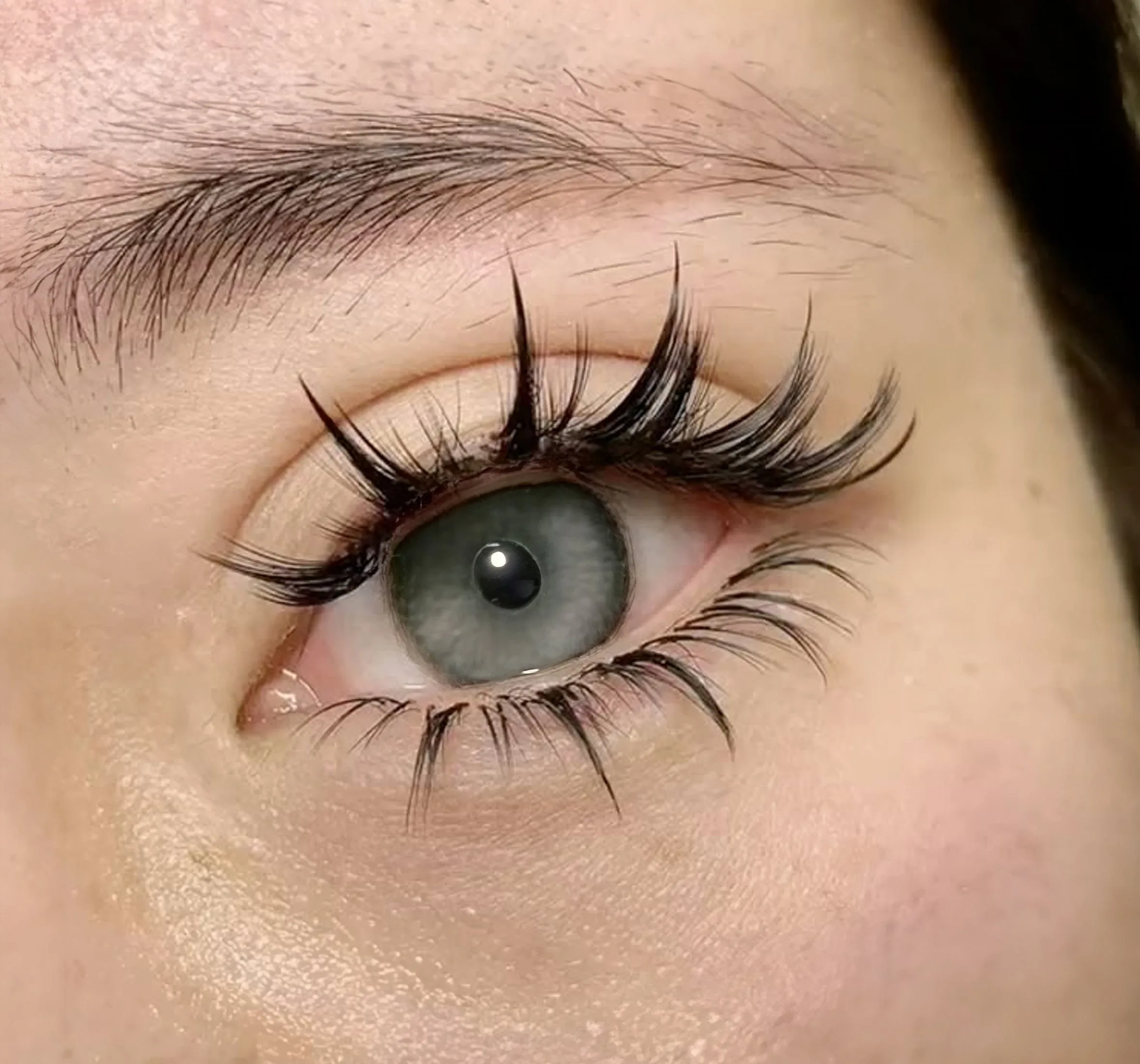
- ShapeWide-set — more than one eye's width of space between them.
- EffectCat-eye, moderated: the flare stops at the outer iris.
- Where everyone strugglesNever extend past the peak. Outward length widens the face.
Why Why it is laid out this way
Cat is the one direction wide-set spacing cannot afford, and clients ask for it anyway. What follows is the compromise version: the flare is pulled back to the outer iris and the tail is capped, so the eye reads elongated without the length ever travelling outward. Tell her it is a moderated cat, not the textbook one.
The order the zones go in
- Start the inner shortThe innermost zone is the shortest on this map — that is the cost of a cat read. Keep it fine rather than absent so the corner does not go bare.
- Climb steadily to centreStep up a hair per zone through the first half. The rise is what does the elongating.
- Hold the peak twiceTwo zones share the longest length, sitting over the outer iris. That pair is the furthest the flare is allowed to travel.
- Cap the tail hardAfter the peak, drop back to roughly the middle of your range. Nothing at the corner may match the peak.
- Keep one curl familyOne curl across the whole lid. Reaching for a stronger curl at the tail reintroduces the outward pull you just removed.
The length curve on wide-set eyes
The line rises to a two-zone top just past centre and then falls away, and that fall is the whole correction. On eyes already spaced wide, any length surviving past the outer iris adds apparent distance between them, so the map spends its height inboard of the corner and refuses to spend any beyond it. You get the stretch of a cat without the travel.
Where does a cat-eye map go wrong on wide-set eyes?
Deep The physics underneath
Under the styling question sits a simpler one: what the outer lashes can hold, and why capping the tail is mechanics as much as taste.
The same map, built four ways
- Classic 1:1
- One strand per lash means the only way to build the top is length, and length is the exact variable this map has to ration. That tension is the cell — you are asked to draw a flare with the one tool that widens the eye when overused.
- Handmade volume
- Fans would thicken the top without lengthening it, which matters here because darkness inboard reads as a cat almost as well as length does. Out of scope on a 1:1 map, but it is the upgrade path when the capped tail looks too quiet.
- Promade / pre-made fans
- Speed, at the price of choosing spread on the lid. On a map whose entire discipline is where the last long lash sits, a pre-set base tempts you to place by habit rather than by zone.
- Woven / clover
- Repeating spread reads as pattern, and pattern along the outer third is where a wide-set eye can least afford attention. If it is used at all, keep it inboard of the peak.
Spread angle versus weight
The top of this map is two zones wide, which is where any fan spread would land. Opening a fan there moves mass sideways off the lash's own line and the strand rotates to relieve it, which on a capped cat shows up as the tail wandering outward again. Narrow spread, or none.
What a wide-set lash line can carry
- The two top zones hold the longest strands on this map, and they sit on mid-to-outer lashes already shorter than the centre ones — the ceiling is reached there first, and it shows as the top sagging into the tail.
- Length is charged twice: more mass, further out on the lever. Capping the tail is partly a mechanical decision, because the corner cannot hold what the peak holds even if the look allowed it.
- The lightest strands in a zone set its limit, not the average. On a sparse outer third this map is already at the edge, which is one more reason not to negotiate the cap upward.
Where this map fails first
Two edges. Just past the peak the longest strands sit on lashes with less to give, so those go first and the capped shoulder rounds off into a straight outward line — the moderated cat quietly becomes a plain one. At the inner corner the starting zone is the shortest and finest on the map, so the smallest loss there opens the gap this spacing most wants closed. Watch both at the three-week mark.
FAQ Common questions
Can you do a cat-eye on wide-set eyes?
Not a textbook one. Corner-weighted length adds apparent distance between eyes that are already far apart, so the only honest version is this moderated map: flare stopped at the outer iris, tail capped.
Why does the peak sit over the outer iris instead of the corner?
Because that is the furthest out this spacing can take length without getting worse. Past the iris, every extra zone of length is read by the face as extra width.
What if the client insists on a full cat-eye?
Run the moderated map and let her see it before promising anything more. If she still wants the corner flare, be clear that it works against her spacing — it is a preference, not a correction.
Is classic 1:1 the wrong technique for a capped cat?
No, but it is the strictest. With no fans to add darkness, the shape lives entirely in the length steps, so one sloppy zone shows immediately.
Print this page or save it as PDF — the diagrams are drawn to stay readable in black and white on plain paper. Or download the diagrams below as SVG. No account, no fee, nothing to sign. Every file carries this page’s address, so wherever it ends up it can be traced back here.
Teaching from these? The offer, and how to credit it.
Also in: Wide-Set eyes · Cat-Eye · Classic 1:1
Read next: what a cat eye lash map actually is · questions clients ask about lash extensions