Wide-Set Eyes · Natural · Classic 1:1
The natural lash map for wide-set eyes, built in Classic 1:1 — zone order, where the length peaks, and the point this one usually goes wrong.
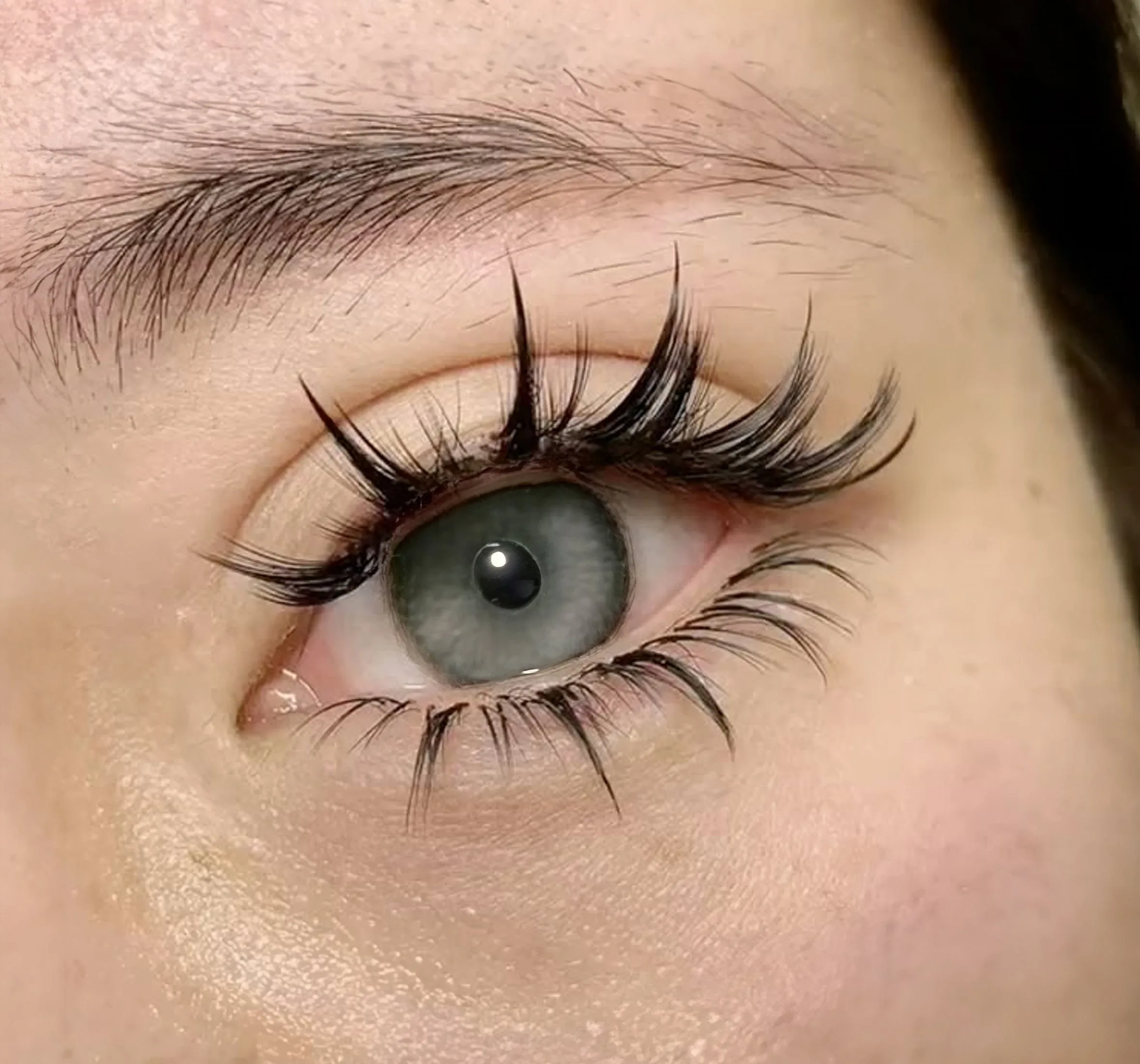
- ShapeWide-set — a wider-than-an-eye gap sits between the corners.
- EffectNatural, pulled inward: peak over the pupil, tail short.
- Where everyone strugglesThe inner corner is not the shortest zone here. The tail is.
Why Why it is laid out this way
Most natural maps taper toward both corners and finish a little longer on the outside. This one does the opposite: it starts fuller at the inner corner, peaks a touch inside the middle, and finishes shortest at the tail. It is a spacing correction wearing a natural label, so it feels wrong to place long before it looks right on the face.
The order the zones go in
- Begin fuller than instinctThe first zone runs noticeably longer than a standard natural start. Anything shorter opens a pale patch beside the nose.
- Reach full height earlyTwo steps up and you are at the longest length, sitting just inside the middle of the lid.
- Hold two zones levelKeep the peak level across a pair of zones so the middle of the eye reads full rather than pointed.
- Step down outwardFrom the peak, drop steadily to the shortest zone on the map at the outer corner.
- Keep the curl steadyHold a single curl family. Strengthening it toward the tail throws length outward, which is the one thing this map refuses.
The length curve on wide-set eyes
The high point sits inboard of where a natural map usually puts it, and the shortest lashes are at the tail rather than the inner corner. Those are the same instruction written twice: move the eye's weight toward the nose. The gradient stays gentle enough to read as natural, but the shape underneath is a correction.
Where does a natural map go wrong on wide-set eyes?
Deep The physics underneath
One strand, one follicle, one lever — and the unusual thing about this map is that its biggest ask lands on the weakest lashes.
The same map, built four ways
- Classic 1:1
- The fuller inner start has to be bought with length, and length on inner lashes is the most expensive purchase in the whole library. That single constraint is what makes this cell harder than it looks.
- Handmade volume
- Fans would let the inner corner read full through darkness rather than length, which is exactly the discount those fine lashes need. Out of scope here, and the obvious move if the inner start will not hold.
- Promade / pre-made fans
- Their consistency is worth most where the steps are even, which on this map is the outward run. At the inner corner a fixed base perches instead of wrapping, and perching is what lifts first on fine lashes.
- Woven / clover
- Coverage per bond is good and the repeated shape is obvious. A natural map cannot carry a visible repeat anywhere, least of all along the run to the tail where the eye is meant to stop looking.
Spread angle versus weight
There are no fans in a 1:1 set, but placement angle does the job spread does — anything sitting off the lash's own line becomes a twist instead of length. The two peak zones hold the longest strands, so an off-square bond there rotates soonest and the level top starts to wobble. Set the peak pair first and square, then work both ways from it.
What a wide-set lash line can carry
- The peak sits on strong mid-lid lashes and is not the limiting zone here. The limit is the inner corner, where the map asks the finest lashes on the eye to run longer than they normally would.
- Length costs mass and lever together, so a small increase inside is worth several outside. Buy the inner fullness with the smallest step that closes the gap and take the rest of the effect from how short you finish the tail.
- A zone's finest strands decide its ceiling, not its average. On the inner zones the distance between finest and average is widest, which is why the same map holds on one client and droops on the next.
Where this map fails first
The inner corner, because that is where this map does something the anatomy never asked for. Those lashes are the finest and shortest on the eye and they are carrying more length than a standard natural set would give them. When they droop, the correction goes before the set does — the gap beside the nose reopens while the rest of the line still looks fine. That is the zone to check at every fill.
FAQ Common questions
Why is the inner corner longer than usual on this map?
Because a short inner corner leaves a pale gap next to the nose, and on wide-set spacing that gap is read as extra width. Starting fuller closes it.
Where exactly does the peak sit?
Just inside the middle of the lid, over the pupil rather than the outer iris. That is one zone further in than most natural maps place it.
Isn't a natural map supposed to be longer at the outer corner?
On balanced eyes, usually. Here the outer corner is the shortest zone on the map, because every unit of tail length reads as more distance between the eyes.
Will the client notice this is a correction?
She should not. The gradient is gentle and reads as a natural set; what she notices is that her eyes look closer together without being able to say why.
Print this page or save it as PDF — the diagrams are drawn to stay readable in black and white on plain paper. Or download the diagrams below as SVG. No account, no fee, nothing to sign. Every file carries this page’s address, so wherever it ends up it can be traced back here.
Teaching from these? The offer, and how to credit it.
Also in: Wide-Set eyes · Natural · Classic 1:1
Read next: questions clients ask about lash extensions