Close-Set Eyes · Doll / Open-Eye · Classic 1:1
The doll lash map for close-set eyes, built in Classic 1:1 — zone order, where the length peaks, and the point this one usually goes wrong.
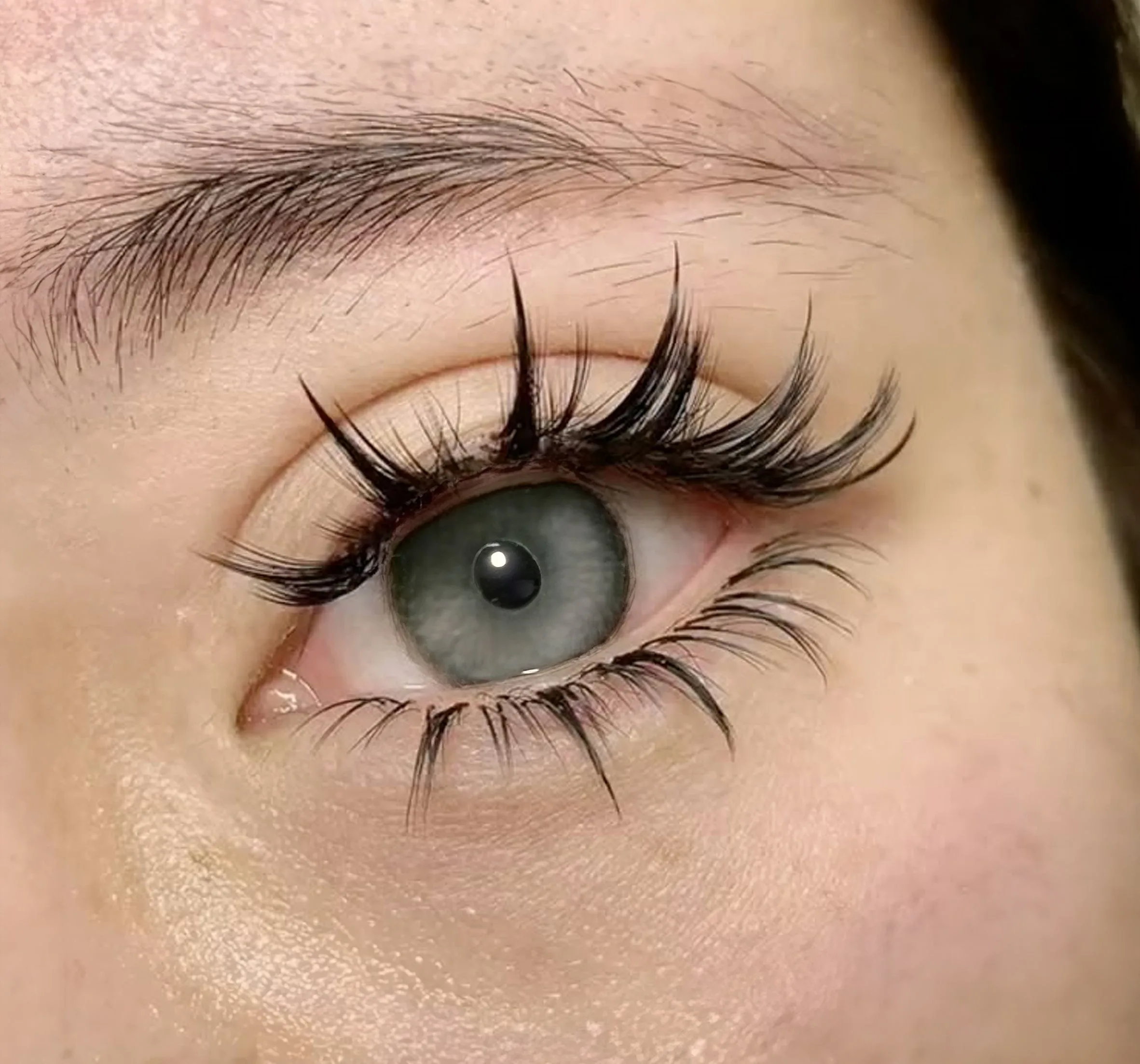
- ShapeClose-set — under an eye's width between the corners, so weight has to travel out.
- EffectDoll, shifted: a round peak moved off centre to sit over the outer iris.
- Where everyone strugglesDon't centre this peak. A centred round map gathers close-set eyes further.
Why Why it is laid out this way
Doll is a round, centred effect, and centring anything on eyes that already sit close pulls them nearer still — this is the one pairing on this shape that argues with itself. What follows is doll pushed as far outboard as it can go while still reading round: high point at the outer iris, inner corner left bare. If the client is not set on the doll look, a cat or squirrel map corrects the spacing properly and this page is the compromise.
The order the zones go in
- Leave the inner corner bareFirst two zones stay the shortest and finest on the lid. Doll normally spends here, and here it must not.
- Climb hard through mid-lidStep up quickly from the third zone so the roundness has room to form further out.
- Set the peak at the outer irisThe high point sits over the outer edge of the iris, not over the pupil. That shift is the whole correction.
- Round the top, don't point itNeighbours either side of the peak sit close to it in length, so the top reads as a curve rather than a spike.
- Let the tail fall shortLength drops away sharply after the peak. The short corner is what keeps the read round.
The length curve on close-set eyes
A doll map normally puts its high point over the pupil, which is the one place close-set eyes cannot afford one. Moving it out to the outer iris keeps the curve round but carries its centre of interest away from the nose, and the bare inner corner takes a second slice of weight off that end. Be clear about what this is: the peak still sits nearer the middle than a corrective map would place it.
Where does a doll map go wrong on close-set eyes?
Deep The physics underneath
Everything above is a negotiation about placement. What follows does not negotiate: it is what one strand at that peak can physically hold.
The same map, built four ways
- Classic 1:1
- The peak is a row of the longest single strands sitting over the fullest part of the lid, which is the best-supported spot on this map. That is classic's advantage in this cell — the heaviest load lands on the strongest lashes.
- Handmade volume
- Fans would give the peak fullness without the strand thickness a round top usually needs. The trade is that a fanned peak reads softer at the edge, and doll is asking for a defined curve.
- Promade / pre-made fans
- Even width across a top that has to look even is a genuine argument for them. The catch is that a peak built quickly is a peak easily centred by habit, and the outward shift is the one thing here you cannot let habit undo.
- Woven / clover
- A repeating spread across a round top gives a scalloped edge, and scallops break the single smooth curve the effect depends on. Base zones only, if you use them at all.
Spread angle versus weight
Classic gives you no spread to set, so the fullness of this peak comes from placing strands close together and keeping their direction identical across the row. Mass stays on each lash's own line, which is why a well-placed classic peak holds its curve longer than a fanned one — nothing is trying to twist back to where it would rather sit.
What a close-set lash line can carry
- The peak sits over the deepest stretch of lash line, where the natural lashes are longest and strongest, so this map's deflection ceiling sits higher than a corner-loaded one. Push past it anyway and the round top settles into a flat top, which reads as no map at all.
- The climb into that peak is the steepest step on the set, and length charges twice — more mass, and further out along the lever. Take it in two smaller steps rather than one if the mid-lid lashes look at all fine.
- A zone's ceiling is set by its weakest strands, never its average. On the peak row that means looking at the shortest lashes in the row before committing to the longest length.
Where this map fails first
The peak goes first, and it fails by flattening rather than by leaving a gap — the longest strands settle a little, the curve loses its top, and the round read is gone while the set still looks full. The short tail almost never fails, because there is very little out there to lose. The slow failure is inboard: weight collected at the inner corner over successive fills drags the map back toward centre, which is the direction this cell was already leaning. Cut the first two zones back at every visit.
FAQ Common questions
Can you do a doll set on close-set eyes at all?
Yes, but it is honestly the weakest fit on this shape. A round centred effect gathers eyes that are already close, so the version here shifts the peak out as far as it will go and still read as doll.
What corrects close-set spacing better than doll?
Cat or squirrel. Both put their longest lashes in the outer third, which is the move this spacing actually needs, and neither has to fight its own effect to get there.
Why is the tail so short here?
The short corner is what keeps the map reading round. Build it up and you have drifted into a cat map — which may well be the better answer, but it should be a decision rather than a drift.
Is classic the right technique for this map?
It suits it. A doll top wants a defined curve rather than a soft one, and single strands hold that line while putting their load on the strongest lashes available.
Print this page or save it as PDF — the diagrams are drawn to stay readable in black and white on plain paper. Or download the diagrams below as SVG. No account, no fee, nothing to sign. Every file carries this page’s address, so wherever it ends up it can be traced back here.
Teaching from these? The offer, and how to credit it.
Also in: Close-Set eyes · Doll / Open-Eye · Classic 1:1
Read next: open eye versus doll — one family, two intents · questions clients ask about lash extensions