Every eyelash extension map drawn for close-set eyes — all five effects in all three techniques. The shape decides what the map has to correct; the effect and technique decide how.
Also called close-set eyes. The same layout is meant in each case — the name changes, the geometry does not.
Close-set eyes sit less than one eye's width apart. Lash mapping for close-set eyes moves weight outward — the longest lashes belong past the middle, and a bright inner corner shortens the apparent gap further. The wide-set instruction is the mirror image of this one, and confusing the two is the single most common spacing error in the library.
The fifteen maps below are the five effects in all three techniques, drawn for this shape. Each states the zone order, the length curve and where it gets away from people — for a working lash tech mid-appointment and for a learner still building a reference.
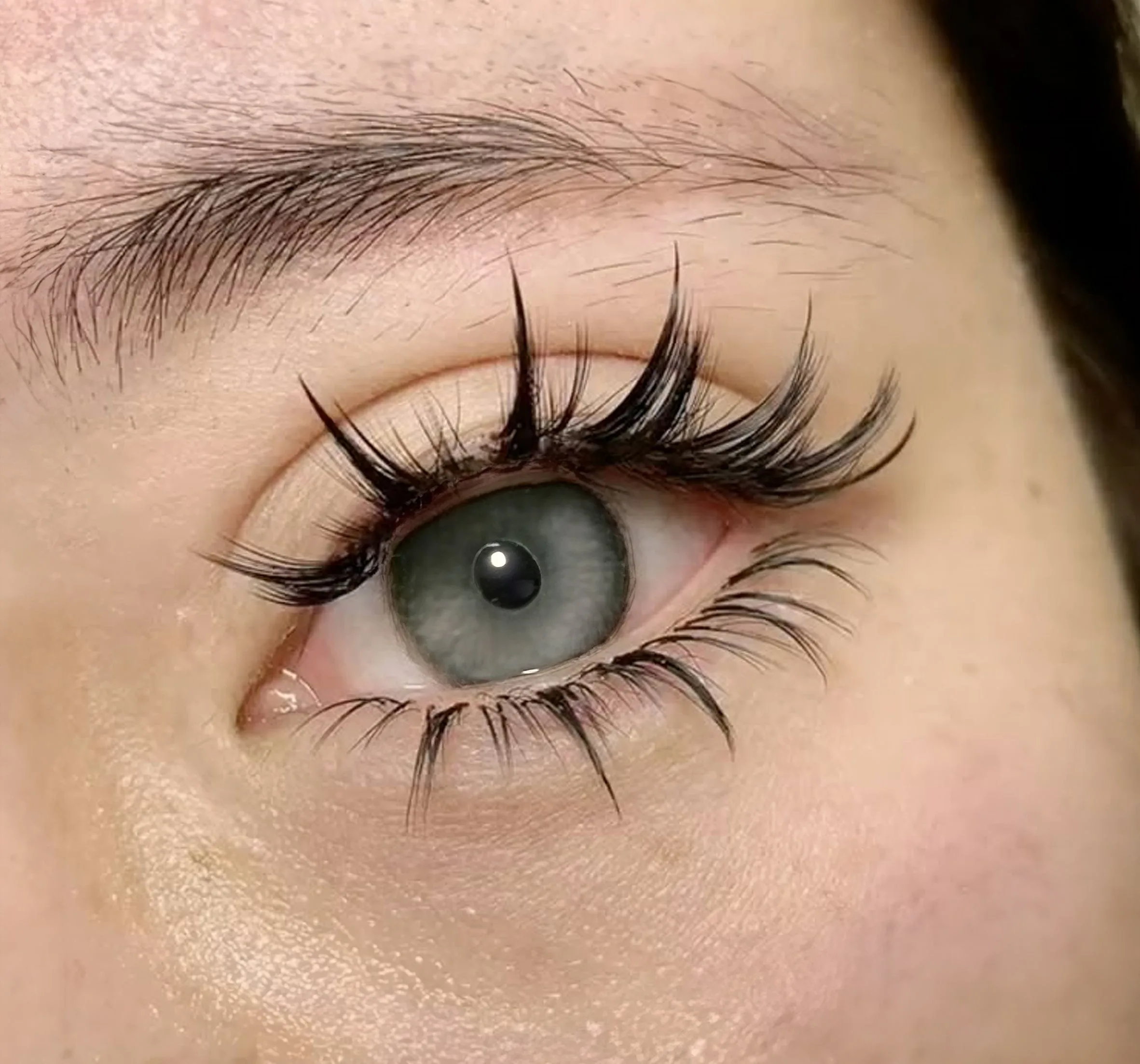
The lid reads almond, and that is not what makes this shape — the distance between the two eyes is, and no single-eye photograph can show it. We are still looking for one that can. Photo source & removal
Less than an eye's width between the inner corners.
Natural
Natural, shifted outward: the high point sits past the middle, not on it.
Don't taper the tail off. A short corner pulls the weight back to the nose.