Close-Set Eyes · Doll / Open-Eye · Volume
The doll lash map for close-set eyes, built in Volume — zone order, where the length peaks, and the point this one usually goes wrong.
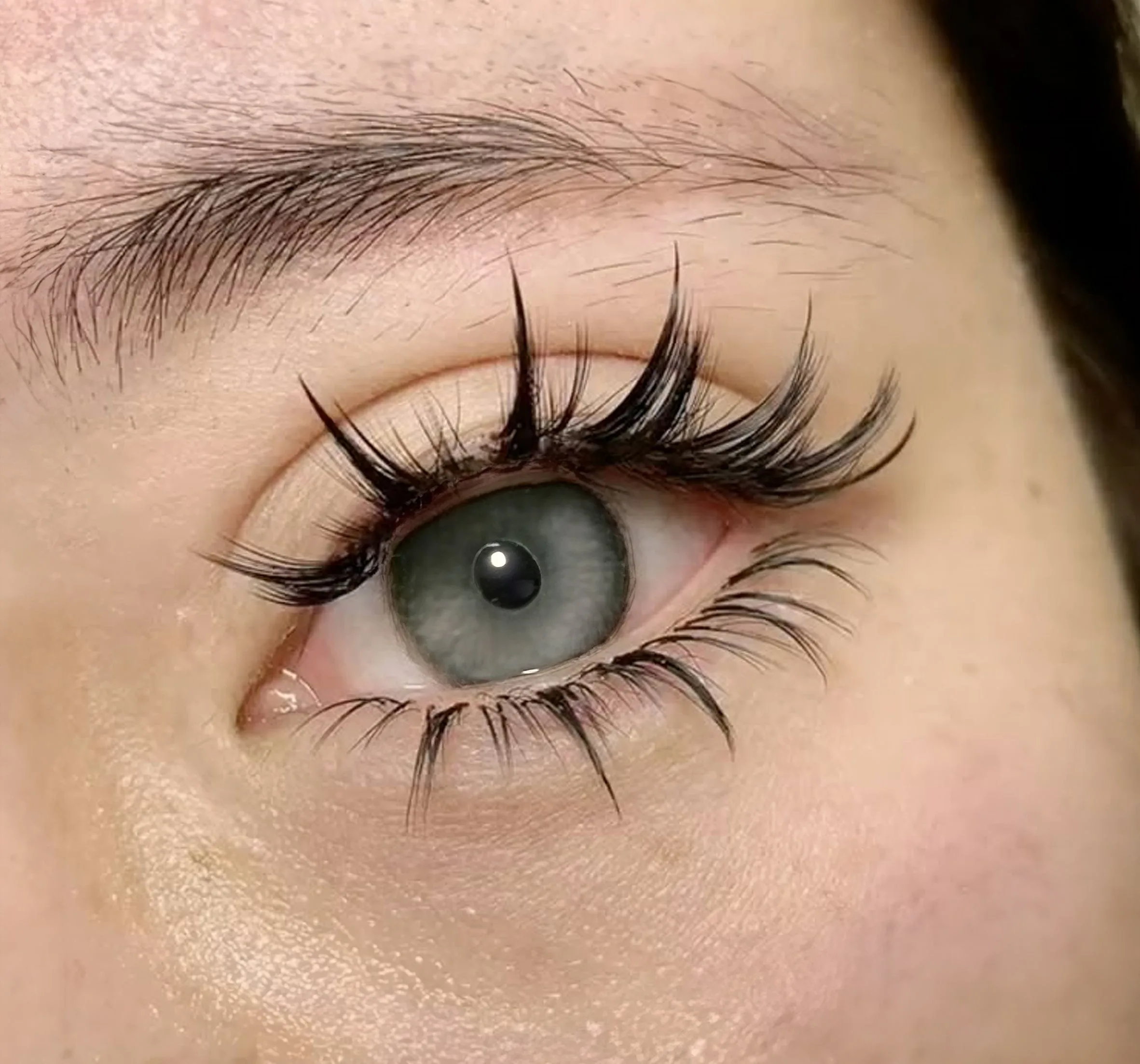
- ShapeClose-set — a short bridge between the eyes, so every choice has to push outward.
- EffectDoll in fans: the fullest, roundest top, shifted out to the outer iris.
- Where everyone strugglesDon't leave the density even. The darkest zone belongs at the peak, not the middle.
Why Why it is laid out this way
Of the three techniques this one gives the roundest, fullest top, and on this spacing that is also the most dangerous thing you can build. Volume decides how dark each zone reads, and a dark round mass near the middle of the eye is the opposite of what these eyes need. The map only survives because length and density are dragged outboard together — and if the client is open to another effect, cat or squirrel is the honest recommendation.
The order the zones go on, fan by fan
- Fewest strands at the nose endInner two zones take the narrowest fans on the set, or plain singles. This end is not for building.
- Grow width with lengthFan width climbs alongside the length curve so the line darkens as it travels away from the bridge.
- Stack only around the peakThe second layer starts one zone before the high point and stops one zone after it. Everywhere else stays single-layer.
- Keep the peak row evenFans across the high point match each other for width and direction. An uneven peak reads as a wobble rather than a curve.
- Thin out fast to the cornerWidth and length both fall away past the shoulder. A dense short tail looks like a smudge on the lid.
The length curve on close-set eyes
Length and density say the same thing to a face, and on this map they travel out to the outer iris together. That doubled shift is what earns a round effect any place on close-set eyes. Past the peak the line thins quickly so the roundness stays round, and the inner corner is left with the least of everything on the set.
Where does a doll map go wrong on close-set eyes?
Deep The physics underneath
Density is the extra variable volume hands you, and on this cell it is also the extra risk. Below is what that peak can hold and where the darkness is allowed to sit.
The same map, built four ways
- Classic 1:1
- A round top in single strands places exactly but stays thin at the edge, and the only way to make it full is to go thicker. On this spacing, thicker in the middle of the eye is the last thing you want.
- Handmade volume
- Fans give a full round top for a fraction of the mass a thick single would cost, and they let you shrink width toward the nose independently of length. That second control is what makes the compromise workable.
- Promade / pre-made fans
- Even width along a row that has to read as one arc is genuinely useful. Their base is stiffer, though, and the shoulder past the peak has too little lid to forgive a base that perches instead of wrapping.
- Woven / clover
- Coverage per bond is excellent; the repeat is the trouble. A round top built from identical units reads as a row of scallops, and the eye finds the repeat before it finds the shape.
Spread angle versus weight
Spread is how you aim the darkness on this map. Wide fans over the peak fill the top of the curve; the same fans two zones inboard would park the heaviest black nearest the nose, same material, opposite result. Let width drop off toward the inner corner faster than length does, so the quiet end is quiet in both senses.
What a close-set lash line can carry
- The peak lands on the deepest, strongest lashes on the lid, which is the only reason a dense round top is possible here. Its ceiling is still a settling: when the widest fans out-weigh what those lashes hold square, the curve loses its top and the effect goes with it.
- Length and width both cost, but not in the same currency — length puts mass further out along the lever, width puts mass off the axis. This map runs both to maximum on the same row, so that row is where you check rather than assume.
- Whatever the row averages, its thinnest lash sets the limit. In a stacked peak that lash is holding a base fan and a top fan, and neither of them knows the other is there.
Where this map fails first
The peak carries the most of everything and settles first. It fails as a loss of curve rather than as a gap, which clients report as the set looking tired rather than as lashes missing. The tail is far too light to fail visibly. The slower failure runs the other way: fills tend to add density inboard, and on a round map that drift lands precisely where close-set eyes can least take it — so rebuild the inner corner narrow each visit instead of topping up what is already there.
FAQ Common questions
Why is volume doll the riskiest cell on close-set eyes?
It maximises the two things this spacing dislikes at once: a round centred shape and a dark, dense line. The map works only because both are shifted out to the outer iris together.
Where should the darkest part of the line sit?
At the peak over the outer iris and nowhere closer to the nose. If a photo shows the heaviest black in the middle of the eye, the width grading has failed even when the lengths are right.
How many layers does this map need?
Two, and only around the peak. A layer running corner to corner lifts the inner half and gives back the shift the whole map was built to make.
Would you steer a close-set client away from doll?
Toward cat or squirrel, yes, and tell her why — both put the length in the outer third where this spacing needs it. If she still wants round, build this one and keep it strictly outboard.
Print this page or save it as PDF — the diagrams are drawn to stay readable in black and white on plain paper. Or download the diagrams below as SVG. No account, no fee, nothing to sign. Every file carries this page’s address, so wherever it ends up it can be traced back here.
Teaching from these? The offer, and how to credit it.
Also in: Close-Set eyes · Doll / Open-Eye · Volume
Read next: open eye versus doll — one family, two intents · questions clients ask about lash extensions