Close-Set Eyes · Natural · Classic 1:1
The natural lash map for close-set eyes, built in Classic 1:1 — zone order, where the length peaks, and the point this one usually goes wrong.
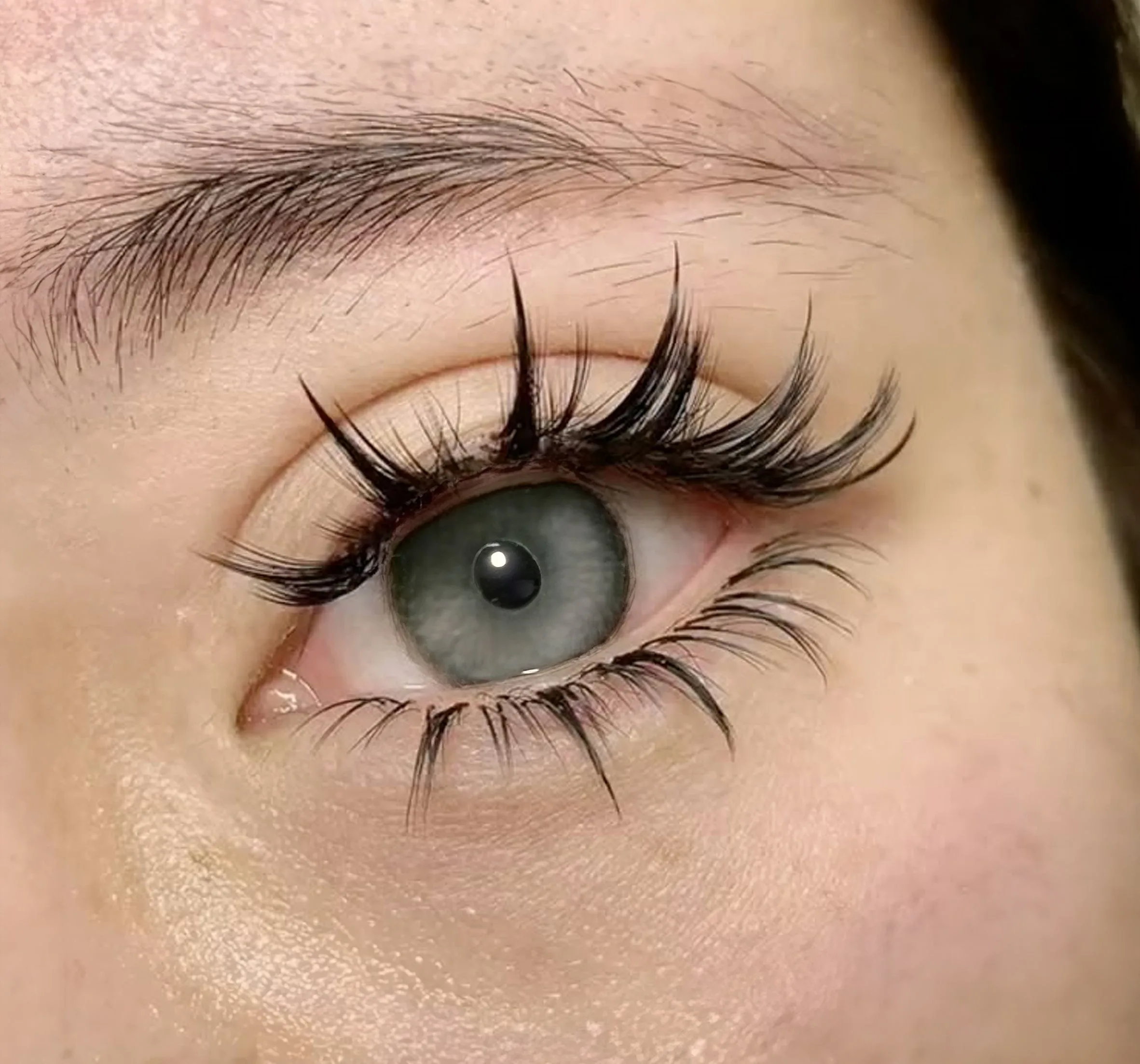
- ShapeClose-set — less than an eye's width of skin between the inner corners.
- EffectNatural, shifted outward: the high point sits past the middle, not on it.
- Where everyone strugglesDon't taper the tail off. A short corner pulls the weight back to the nose.
Why Why it is laid out this way
Natural means the client cannot point at what you did, and a spacing correction is still a correction — so this map works quietly. The peak leaves the middle for the outer third, the inner corner stays the shortest and finest thing on the lid, and the tail is carried almost full so the line does not fall away at the end. Nothing reads as a style; it reads as her own lashes, sitting further apart than they did.
The order the zones go in
- Shortest at the nose endFirst two zones are the shortest and finest on the lid, and the same as each other.
- Climb in even stepsFrom the third zone up, one hair's difference per zone. Even steps are what keep it looking untouched.
- Peak in the outer thirdThe high point sits well past the middle, between the outer iris and the corner.
- Carry the tail nearly fullCome down only slightly after the peak. Dropping the corner sends the weight back inward.
- Hold curl and weight constantKeep one curl family and one strand weight, so length is the only thing changing along the line.
The length curve on close-set eyes
This looks like an ordinary natural curve with one difference: the high point has moved out of the middle. That single move is the correction, because a face reads the tallest part of a lash line as where the eye is aimed. The tail then stays nearly full so the line finishes wide instead of tapering back toward the bridge.
Where does a natural map go wrong on close-set eyes?
Deep The physics underneath
One strand per lash, no fans to share the load, and a tail carried close to full. The margins on this map are thinner than its quiet look suggests.
The same map, built four ways
- Classic 1:1
- Every point on this line is one strand on one lash, so the length curve is the whole design and a misjudged zone has nowhere to hide. The tail is the exposed part: near-full length in single strands, on the shallowest stretch of lid.
- Handmade volume
- Fans would hold that tail height for less weight, which is the one thing this cell would truly benefit from. What they cost is edge definition, and a softer edge is easier to spot as a set.
- Promade / pre-made fans
- A small node of mass at the root, cheap in lever terms, and consistent from lash to lash. Consistency is a mixed blessing on a natural map, which is convincing partly because it is slightly irregular.
- Woven / clover
- Wide coverage from a single bond, delivered in a shape that repeats. A repeat down a plain lash line is exactly what tells a viewer the lashes are not hers.
Spread angle versus weight
There is no spread to manage in a classic set — each strand's mass sits on the axis of the lash beneath it and stays there. That matters most at the tail on this map, where the finest lashes on the lid are asked to hold near-full length: they have only downward pull to resist, not rotation as well.
What a close-set lash line can carry
- The tail sets the ceiling on this cell, not the peak. It is carried close to full on lashes shorter and finer than the peak's, so the first strand to sit low will be out there.
- Adding length to a zone charges twice — more mass, and applied further along the lever. On a map that moves only a hair between neighbours, that bill is easy to underestimate across the whole outer half.
- A zone's ceiling is its weakest lashes, and there is no fan work here to spread a misjudgement around. One overloaded lash sitting low is visible on a line this plain.
Where this map fails first
The tail holds near-full length on the weakest part of the lash line, so it gives out first — and since this cell's correction is a peak sitting outboard, losing the tail hands the visual weight back to the centre. That is the thing worth explaining to the client: it does not look sparser, it looks close-set again. The inner corner fails the opposite way, by quietly gaining length at fills that nobody decided on. Book the next visit before the tail thins rather than after.
FAQ Common questions
What makes a natural map close-set rather than just natural?
Only where the peak sits and how short the corners are. The high point moves out of the middle into the outer third and the inner corner is held shorter than usual; the rest is an ordinary natural set.
Why is the tail nearly as long as the peak?
So the line finishes wide. A standard natural taper brings the corner back down, which drags the visual weight toward the nose and cancels the shift you just built.
Can a natural set really change how far apart the eyes look?
The change is small and it is real. A face reads the tallest part of a lash line as where the eye is aimed, so moving that point outward buys apparent distance with nothing looking done.
Is classic enough here, or does she need fans?
Classic is enough and it keeps the effect quietest. Fans earn their place only if her outer lashes cannot hold the carried tail in single strands.
Print this page or save it as PDF — the diagrams are drawn to stay readable in black and white on plain paper. Or download the diagrams below as SVG. No account, no fee, nothing to sign. Every file carries this page’s address, so wherever it ends up it can be traced back here.
Teaching from these? The offer, and how to credit it.
Also in: Close-Set eyes · Natural · Classic 1:1
Read next: questions clients ask about lash extensions