Monolid Eyes · Doll / Open-Eye · Classic 1:1
The doll lash map for monolid eyes, built in Classic 1:1 — zone order, where the length peaks, and the point this one usually goes wrong.
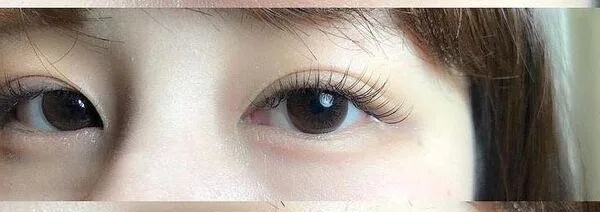
- ShapeMonolid — flat lid, no crease, lash line low and pointing forward.
- EffectDoll: one tall zone over the centre of the eye, falling away both sides.
- Where everyone strugglesCheck her lid coverage first. On a heavy lid a centre peak reads more closed.
Why Why it is laid out this way
Doll mapping puts its tallest zone in the middle so the eye reads round and wide awake. That is a genuinely conditional map on a monolid: it works when the lid only lightly covers the lash line, and it backfires when the lid sits heavily over it, because a tall centre then hides behind lid rather than standing clear of it. Assume the consultation decides this cell, not the client's photo.
The order the zones go in
- Test the coverage before you mapEyes open and relaxed, look from the front: how much of her own lash line does the lid plane cover? Heavy coverage means this map is the wrong one.
- Clip the inner corner shortThe innermost zone stays very short — much shorter than its neighbour. It is the one zone this map deliberately gives up.
- Come up fast to the crownRise quickly through the second and third zones to the tall zone above the centre of the eye. The rounding depends on getting there early.
- Fall away evenly on both sidesStep down at a steady rate after the crown so the two sides mirror each other. An uneven fall makes one eye look bigger than the other.
- Finish the tail shortestOutermost zone ends shorter than everything but the inner corner. Length at the tail cancels the roundness you just built.
- Go a step firmer on curlPick a curl one step stronger than a creased lid would need — the centre is the zone with the most lid above it and the least help from the eye's own shape.
The length curve on monolid eyes
The curve is a single tall zone over the middle with symmetrical falls, and that symmetry is what the eye reads as round. It is raised more than a doll map on other shapes because a flat lid plane eats some of the visible height, so a standard centre would look level rather than crowned. Both ends are cut back hard: the inner corner because it is covered anyway, the tail because a long tail turns a round eye into a stretched one.
Where does a doll map go wrong on monolid eyes?
Deep The physics underneath
The crown is the tallest single strand on the lid and it sits where the lid presses hardest. That is a mechanics problem before it is a design one.
The same map, built four ways
- Classic 1:1
- This cell. A tall centre in single strands means the height is bought entirely with length, and length is the one purchase that adds reach and weight in the same move. It keeps the map crisp, and it leaves you no way to make the crown fuller without making it heavier.
- Handmade volume
- Fine strands fanned on one lash would give the crown its width for less mass, which matters because the centre lashes take the most lid contact. That is the trade the volume version of this cell makes.
- Promade / pre-made fans
- Consistent height across the crown with less time spent, but the base is thicker and it lands on the part of the lash line the lid rests on most directly. Keep them off the centre zones if you use them at all.
- Woven / clover
- Fixed lateral spread gives width, and width across the crown is not what this map is short of — it needs height. Useful only as a filler on the falling sides.
Spread angle versus weight
Nothing is fanned in this cell, but the crown answers the same question a fan does: every bit of material you place there should sit on the lash's own line, pointing away from the eye. Anything that leans sideways at the centre widens a zone that is supposed to be tall, and on a flat plane a widened crown flattens the whole round read. Keep the centre narrow, straight and on-axis.
What a monolid lash line can carry
- The centre zone reaches its ceiling first and shows it first — a crown that has drooped by a fraction stops being a crown, and the eye goes from round back to level.
- Length at the middle is doubly expensive on this shape: the strand is the longest on the map and it is the one the lid plane bears down on all day, so it is loaded from above as well as from its own weight.
- Judge the crown zone by its weakest lashes, because a doll map is read as a curve. Two drooping strands in the middle put a dent in that curve where the same two lost at the tail would go unnoticed.
Where this map fails first
The middle fails first, which is unusual — most maps give at the tail. The crown carries the longest strands and takes the most pressure from the lid, so it settles forward while the shorter sides hold, and the round shape sinks into a level line. The inner corner never really works: it is short by design and covered by corner skin, so it is not a failure so much as a zone this map has already written off. Map the crown so a small loss there does not read as a dent.
FAQ Common questions
Can monolid eyes wear a doll map at all?
Only some. If the lid plane covers most of the lash line, a tall centre hides behind it and the eye reads more closed; on a lighter or double-lid-leaning cover it works and gives a genuinely round result.
Why is the centre longer here than on a doll map for other shapes?
Because a flat lid absorbs some of the visible height. Raising the crown a step buys back what the lid takes, so it reads as a curve rather than as a level line.
What happens if I leave the tail long?
The map drifts toward a cat. Roundness comes from the fall being steeper than the rise on both sides, and a long tail flattens one of those falls.
Which map should I offer instead when coverage is heavy?
A map that peaks past the middle rather than at it, so the tallest zone sits where the lid plane has already begun to open away from the lash line.
Print this page or save it as PDF — the diagrams are drawn to stay readable in black and white on plain paper. Or download the diagrams below as SVG. No account, no fee, nothing to sign. Every file carries this page’s address, so wherever it ends up it can be traced back here.
Teaching from these? The offer, and how to credit it.
Also in: Monolid eyes · Doll / Open-Eye · Classic 1:1
Read next: open eye versus doll — one family, two intents · questions clients ask about lash extensions