Monolid Eyes · Doll / Open-Eye · Volume
The doll lash map for monolid eyes, built in Volume — zone order, where the length peaks, and the point this one usually goes wrong.
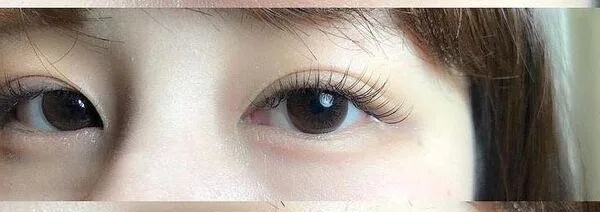
- ShapeMonolid — flat lid, low lash line, weight is felt and seen immediately.
- EffectDoll in fans: height over the middle, falling evenly to two short ends.
- Where everyone strugglesHeight opens the eye. Darkness over the pupil closes it. Keep them apart.
Why Why it is laid out this way
Fans give you two separate controls at the middle of the eye — how tall it stands and how dark it looks — and only the first of those opens an eye. Push both up at once and you get a shaded band directly over the pupil, which is the fastest way to make a monolid read sleepy in the very zone meant to wake it up. So the volume version of this map is mostly an exercise in restraint at its highest point.
The order the zones go on, fan by fan
- Rule the map in or out firstRelaxed, eyes open: if the lid plane covers most of the lash line, a raised middle will hide behind it. Offer a different map rather than a bigger one.
- Keep the inner zone almost bareA tiny narrow fan or nothing at all at the innermost zone. Corner skin covers it, and density there is pure cost.
- Rise to the middle in height, not in countGet the tall zone with length and a firm curl, keeping the fan count level with its neighbours. Adding both is what shades the eye.
- Layer low and narrow at the topA tight base layer against the lash line and a narrow directional layer over it at the middle. Depth from the front, not width across the lid.
- Fall away in equal stepsStep the fans down evenly either side so both falls match. Volume hides an uneven fall on a creased lid; a flat lid shows it.
- Finish with the shortest tailThe last zone stays the shortest after the inner corner. A long, dense tail turns the round result into a stretched one.
The length curve on monolid eyes
The curve peaks over the centre of the eye and drops symmetrically, so the map's whole meaning is in a height difference between the middle and the two ends. Fans let you fill that curve without thickening any single strand, which matters on a lash line that carries the lid's own pressure across its roots. Read the drawing as heights only — nothing about the shape asks the middle to be the darkest place on the lid.
Where does a doll map go wrong on monolid eyes?
Deep The physics underneath
The middle of a monolid lash line is the most loaded real estate on the lid: longest strands, most fans, and a lid plane resting on the roots.
The same map, built four ways
- Classic 1:1
- Single strands would put the height in place with no shading risk at all, but the only way to make the middle look fuller is to make each strand thicker — and thickness there sits directly under the lid. Predictable, and it runs out of room fast.
- Handmade volume
- This cell. Fine strands fanned on one lash buy cover at a discount and let you tune width zone by zone, which is what keeps the tallest point from also becoming the darkest.
- Promade / pre-made fans
- Even height across the middle in less time, at the price of a firmer, bulkier base sitting exactly where the lid presses. If they go anywhere here, put them on the falls.
- Woven / clover
- Wide, repeating cover per bond. It trades away the one control this map depends on — the ability to narrow the fan as the zone gets taller — so keep it low on the sides or leave it out.
Spread angle versus weight
Opening a fan does not add material; it moves what you already have off the lash's line and out to the sides. At the top of this map that trade is a bad one twice over: sideways material widens a zone whose whole job is height, and off-line material makes the strand turn, which blurs the top of the curve. Keep the middle fans tight and let the width open up only as the map comes back down.
What a monolid lash line can carry
- The middle reaches its limit first, and the symptom is the shape going, not the density: once those fans lean forward the eye stops reading round and starts reading level, with every lash still attached.
- A tall zone is expensive twice — the longest extensions on the map, on lashes that also spend the day under the lid plane. Treat the middle as having a lower allowance than its neighbours, even though it is asking for the most.
- Fan the strong lashes and leave the fine ones single, especially at the top. On a curve, two dropped fans in the middle read as a dent, while the same two lost at the ends would never be missed.
Where this map fails first
This map fails from the middle outward, which is the reverse of most. The centre carries the longest fans on lashes already pressed by the lid, so it leans forward first and the curve levels off. The client will not describe that as shedding — she will say it stopped looking open, usually a week or two before anything is visibly missing. Build the middle at the light end of what it can hold so that the curve survives its own settling.
FAQ Common questions
Does volume make a doll map work on a covered monolid lid?
No. Fans change how full the middle looks, not how high it stands, and a covered lid hides height. If the coverage is heavy, the peak needs to move outward, not get denser.
Why should the middle not be the darkest part of the set?
Because darkness directly over the pupil reads as shade and makes the eye look more closed. Get the middle's effect from height and curl, and keep the fan count level with its neighbours.
How should this map be layered?
A tight base layer along the lash line with a narrow directional layer over it. One layer at one width lies down against a flat lid and comes out looking painted on.
What is the safe tail length here?
Shorter than everything except the inner corner. A tail that keeps pace with the middle drags the round shape sideways and you end up with a soft cat by accident.
Print this page or save it as PDF — the diagrams are drawn to stay readable in black and white on plain paper. Or download the diagrams below as SVG. No account, no fee, nothing to sign. Every file carries this page’s address, so wherever it ends up it can be traced back here.
Teaching from these? The offer, and how to credit it.
Also in: Monolid eyes · Doll / Open-Eye · Volume
Read next: open eye versus doll — one family, two intents · questions clients ask about lash extensions