Monolid Eyes · Natural · Volume
The natural lash map for monolid eyes, built in Volume — zone order, where the length peaks, and the point this one usually goes wrong.
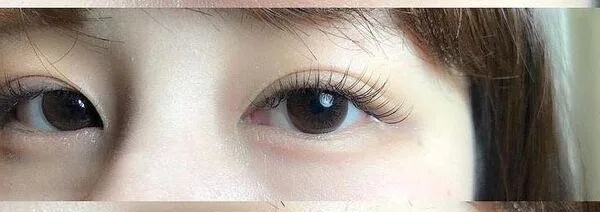
- ShapeMonolid — flat lid, low lash line; density is read as a line, not as lashes.
- EffectNatural in fans: one level length, filled out rather than lengthened.
- Where everyone strugglesToo much fill and the band stops looking like lashes and starts looking drawn on.
Why Why it is laid out this way
There is a built-in tension in this cell: volume exists to add fullness and this map exists to be quiet. It only makes sense one way round — use the fans to hold the same level band with finer material than a classic set would need, so the line has body without gaining weight. The moment fullness becomes the goal, a flat lid turns a dense level run into something that reads as a drawn line above the eye.
The order the zones go on, fan by fan
- Set the ceiling before the first fanDecide the total load this lash line can take, then plan the fan width to fit inside it. On a lid with no crease it is easier to see too much than too little.
- Lay one length across the runEvery fan in the visible zones sits at the same length. Level is the map, and volume does not get to change it.
- Leave the corners nearly emptyInner two zones and the tail stay short and thin. Density under a fold of skin is weight with nothing to show for it.
- Keep the fans narrow and lowTight fans hugging the lash line give body from the front without widening the run. Wide fans here fill the gaps until the line goes solid.
- Split the layer if you need depthA short base with a level layer over it beats one dense layer. Depth is what a flat lid shows; sheer width is not.
- Check it from the front, sitting upA level band looks lovely from above and can look like a stripe head-on. The front view is the only one she will see.
The length curve on monolid eyes
The picture is four zones at one length with both ends dropped, and volume changes nothing about that outline. What fans change is how that outline is filled: fine strands split across each lash give body at a fraction of the weight a thicker single strand would carry, which is the only way a quiet map can also look present. Push the fill and the outline stops mattering, because the eye reads a solid edge rather than a set of lashes.
Where does a natural map go wrong on monolid eyes?
Deep The physics underneath
Volume's licence is coverage per unit of mass. This map is the one place in the shape's set where that licence is most likely to be spent badly.
The same map, built four ways
- Classic 1:1
- A single strand per lash keeps the level run as light as anything can be, and its limit is that fullness can only be bought with thickness. On a flat lid, thickness is the fastest route to a set that looks drawn on.
- Handmade volume
- This cell, used correctly: split the same material across several finer strands, keep the outline identical, and gain body rather than weight. The width has to be chosen fan by fan, which is exactly the control this map needs.
- Promade / pre-made fans
- Even fans and a quick set, with a firmer base sitting on a lash line the lid rests against. In a run of four identical zones their sameness also shows more than it would on a shaped map.
- Woven / clover
- Maximum cover for each bond you place, and a repeat that becomes obvious across a level band. It is the technique most likely to tip this map from soft into solid.
Spread angle versus weight
Fan width is the dial that decides whether this map reads as lashes or as a line: the material is the same either way, but a wide fan spends it sideways closing the gap to the next lash. Gaps are what a natural set is made of, so keep the fans narrow enough that light still passes through the run. Where you do want more cover, add a second low layer rather than opening the fans you already have.
What a monolid lash line can carry
- The ceiling announces itself as the band tipping forward as one piece, because all four visible zones share a length and reach their limit together — the whole run sits down on the eye at once.
- A level band hides its own worst spot. The outer zones of the run sit on finer lashes but carry the same length as the middle, so the load-to-strength ratio is worst there while the drawing shows no difference at all.
- Fan the stronger lashes and leave the fine ones alone. In a run where every zone is at maximum, the thinnest strands set the whole map's length, and no amount of splitting changes what one follicle will hold.
Where this map fails first
The outer part of the band is where this map comes apart. It carries the same length as the rest of the run on the finest natural lashes, and on a flat lid it also takes the most rubbing from a pillow and a towel. Fans there lean forward and turn before they let go, so the first sign is the band losing its clean level top, not going sparse. Because level is all this map has, that is effectively the end of the effect — book the refill on the short side.
FAQ Common questions
Does volume make a natural map work better on a monolid?
Only in the sense that it lets you keep the same quiet outline with lighter material. It does not make a level band more visible, and using it to add fullness produces a set that reads as liner.
How narrow should the fans be?
Narrow enough that gaps remain between them. Once the fans touch each other across the run, the line reads as solid from the front, which is the failure this cell is most prone to.
Can I add a bit of length since fans weigh less?
No. The map is level and its length is set by the finest lashes in the run. Lighter material earns you body, not reach.
What is a better use of the same appointment?
A map with a defined high zone past the middle, built in the same fans. Same weight, same time, and the client actually sees a difference on a lid with no crease.
Print this page or save it as PDF — the diagrams are drawn to stay readable in black and white on plain paper. Or download the diagrams below as SVG. No account, no fee, nothing to sign. Every file carries this page’s address, so wherever it ends up it can be traced back here.
Teaching from these? The offer, and how to credit it.
Also in: Monolid eyes · Natural · Volume
Read next: questions clients ask about lash extensions