Monolid Eyes · Squirrel / Fox · Hybrid
The squirrel lash map for monolid eyes, built in Hybrid — zone order, where the length peaks, and the point this one usually goes wrong.
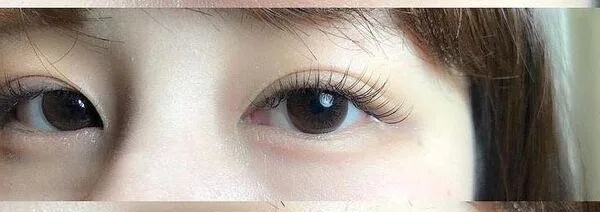
- ShapeMonolid — flat plane, low lash line, corner skin covering the inner third.
- EffectSquirrel with texture: a high zone past centre, softened as it comes down.
- Where everyone strugglesSpikes point, they do not lift. A tall one at the peak reads as a hair sticking up.
Why Why it is laid out this way
The high zone on this map is a direction as much as a height, and that is what makes it worth building in a mix — single strands set where the top of the line sits, and the textured work says which way it is going. Placed well, the spikes read as the peak carrying on outward and the shoulder behind it softening. Placed badly, they look like strays on a flat lid with nothing above them to sit against.
The order the zones go on, and where the fans land
- Mark the covered cornerLook at the inner third with her eyes open and note where the skin stops covering the lash line. Nothing textured goes inboard of that line.
- Draw the shape in singlesSlow climb, high zone in the outer third, two steps down to the tail — all in singles before you mix anything in.
- Angle the spikes outward, not upSet the raised strands at the peak so they continue the map's outward direction. Vertical spikes on a flat lid have nothing to point at.
- Keep the shoulder readableIn the zone just past the peak, add fans for depth but no new high points. That shoulder is what makes the peak look like a peak.
- Thin the texture toward the tailEase off the mixed work as the length comes down so the tail fades. A busy tail turns the fox shape into a frayed one.
The length curve on monolid eyes
The line rises past the middle and comes back down, and everything mixed into it has to respect that single high point. Singles fix the heights because their length is unarguable; fans fill in behind them for depth; the raised strands do nothing but reinforce the direction the map already has. On a lid with no crease, that direction is the reason the set reads as lift rather than as length lying over the eye.
Where does a squirrel map go wrong on monolid eyes?
Deep The physics underneath
Three kinds of object on one lash line, each with a different appetite. The one that looks most casual is the greediest.
The same map, built four ways
- Classic 1:1
- The singles here own the geometry — the slow climb, the height of the peak, the two steps down. Everything else is dressing on top of them and cannot be allowed to change a single zone's length.
- Handmade volume
- Light fans behind the peak give the shoulder depth for very little mass, which is what stops the descent looking bare next to a strongly built high zone.
- Promade / pre-made fans
- Identical fans quickly, which is fine down in the climb and wrong anywhere the edge is meant to look accidental. Their firmer bases also sit exposed on a lid with no fold to cover the roots.
- Woven / clover
- Wide cover for a single bond and a repeating spread that gets noticed on a map with only one high point to look at. Use it as filler in the inner climb, never at the peak or the shoulder.
Spread angle versus weight
Fan width decides how much of the material sits off the lash's own line, and an off-line load makes a strand turn over the weeks. The zone behind the peak is where that matters most here: when those fans turn, the shoulder blurs and the peak stops looking deliberate. Keep the fans narrow from the peak outward and save the wider ones for the low zones of the climb.
What a monolid lash line can carry
- The peak sets the ceiling for the whole map, because a spike sitting on it is a single thick object on one fine outer lash, and that pairing gives out before anything else on the lid.
- A raised strand pays the length penalty twice over — it is longer than its zone and it sits at the map's tallest point, so its reach and its weight climb together. Treat each one as a decision, not as a scatter.
- Sort lashes as you go. In the outer third the difference between a stout lash and a fine one is the difference between a spike that lasts a cycle and one that takes its host lash with it.
Where this map fails first
Spikes go first and they go by rotating, not by falling — they are the heaviest single objects on the map and they sit on the outer third's finest lashes. A turned spike at the peak reads as untidy immediately, well before anything is missing. The tail then loses its softest work and the fade turns patchy. Place fewer spikes than you think the peak needs, and put every one of them on a lash you have looked at.
FAQ Common questions
Where do the spikes go on a monolid squirrel map?
At and just after the high zone, angled outward rather than upward. They extend the direction the map already has; a vertical spike on a flat lid simply stands off the eye with nothing to align to.
How tall should a spike be?
A clear step above its own zone and never above the peak. If a spike becomes the highest thing on the lid, the map has lost the single feature it was built around.
Why keep texture out of the inner corner?
Because the skin fold there covers the lash line. Texture under it is invisible while its weight still sits on the finest lashes you have.
Does hybrid change where the peak should sit?
No. The peak belongs in the outer third whatever technique you use — hybrid only changes how the line looks between the peaks and the corners.
Print this page or save it as PDF — the diagrams are drawn to stay readable in black and white on plain paper. Or download the diagrams below as SVG. No account, no fee, nothing to sign. Every file carries this page’s address, so wherever it ends up it can be traced back here.
Teaching from these? The offer, and how to credit it.
Also in: Monolid eyes · Squirrel / Fox · Hybrid
Read next: fox eye and squirrel lash mapping, and how they differ · questions clients ask about lash extensions